
SEARCH WHAT YOU WANT
Why the Polish, Brush and Cloth in a Shoe Care Kit Are Three Separate Jobs
Time:2026-10-27
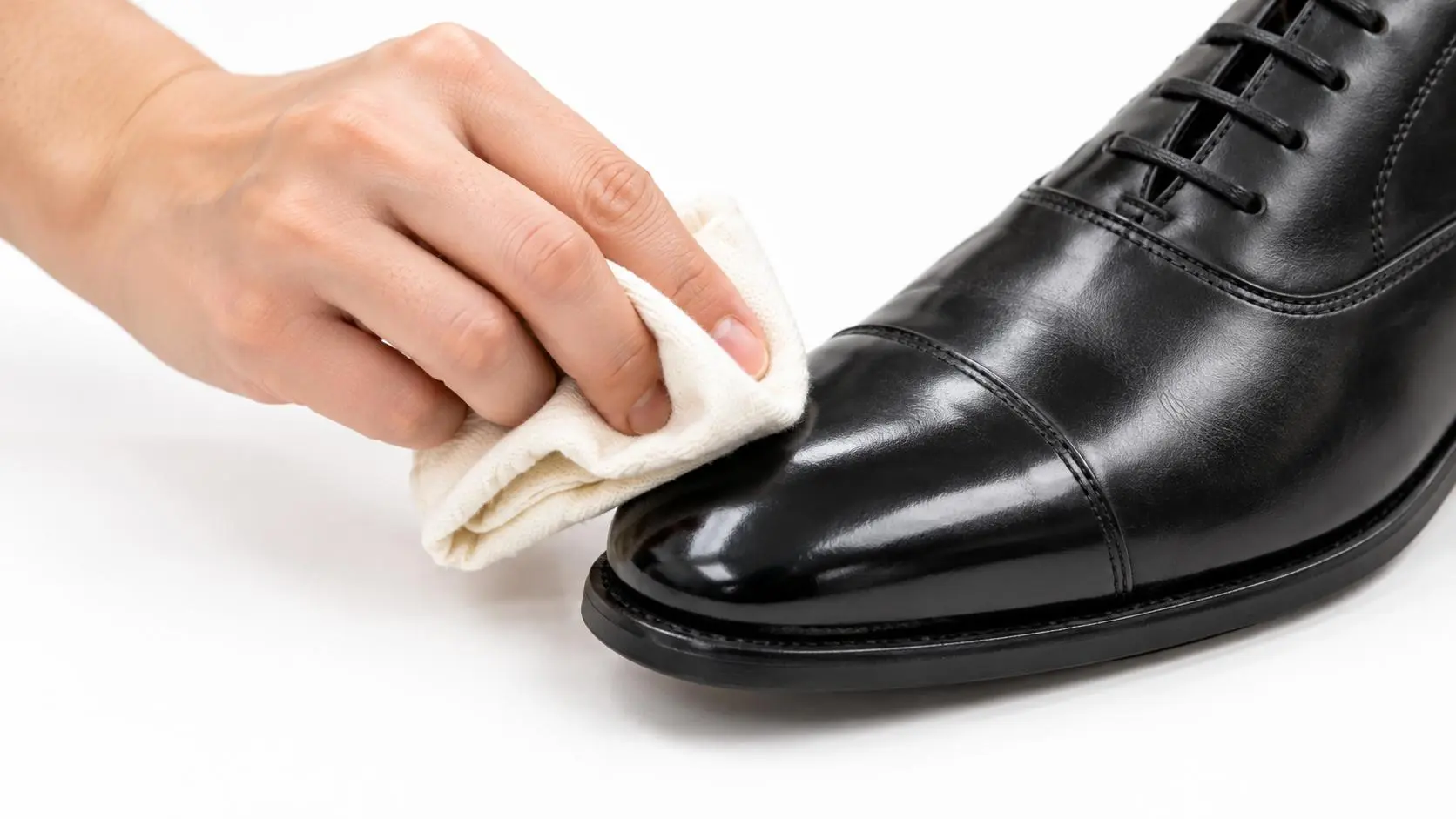
Overview. This article explains why the polish, the brush and the cloth that come with a shoe care kit are not three similar ways to “rub your shoes,” but three different tools that each do one job. It breaks down what polish actually does to leather, why a brush spreads product differently from a cloth, and why buffing by hand with a t-shirt never replaces a proper buffing cloth. By the end you should understand what each item in a kit is for, why using the wrong tool wastes product, and how to tell a kit that is put together sensibly from one that bundles random accessories to look fuller.
A Kit That Looks Like One Pouch Is Really Three Steps
When a shoe care kit is unzipped, the polish tin, the brush and the cloth often look like three small objects that all touch the shoe. People naturally treat them as interchangeable “cleaning tools.” In practice, each one handles a different stage of the care process, and swapping one for another either leaves the leather under-cared for or wastes product.
The polish is the product: it feeds the leather, adds a little colour and leaves a thin protective layer. The brush is the applicator and the first buffing tool: it moves the polish around, spreads it evenly and lifts excess wax before it dries. The cloth is the final polisher: it does not carry product, it removes residue and builds the shine. None of them can fully do another’s job.
|
Tool |
Its One Job |
What It Cannot Do |
|
Polish (cream / wax) |
Feed leather, even colour, leave a thin protective layer |
Spread itself evenly or buff to a shine |
|
Polish brush |
Work polish into the grain and seams, lift excess, first buffing |
Produce the final smooth gloss on its own |
|
Buffing cloth |
Remove residue and bring out the shine with light fast passes |
Apply or work polish into the leather |
What the Polish Actually Does
Polish is not paint. It is a blend of conditioning oils, waxes and, in coloured versions, a small amount of pigment. Its first job is to feed the leather, because dry leather cracks long before it looks dirty. Its second job is to even out the colour on scuffed or faded areas. Its third job is to leave a very thin film that protects against dust and light moisture.
A cream polish does most of the feeding and colour work. A wax polish adds the firm, glossy surface that dress shoes are known for. A kit that only includes one type of polish is covering only part of the job — which is why many complete kits carry both a cream and a wax, or a neutral cream that works across colours.
What the Brush Does That a Cloth Cannot
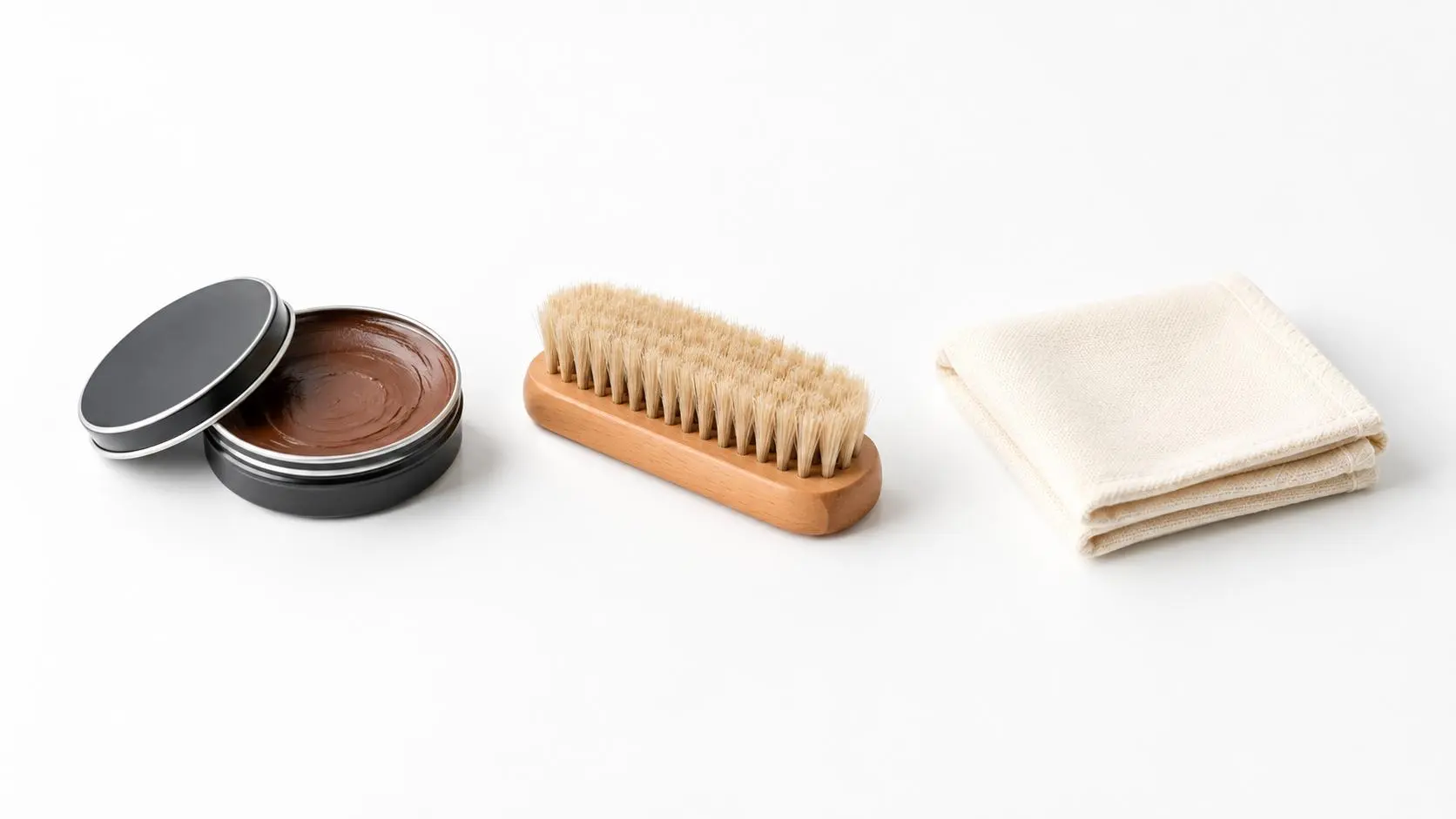
A brush has stiff, evenly spaced bristles that work product into the grain and around seams. When you use your finger or a cloth to apply polish, the product sits on the surface and never really reaches the edges of the leather. The brush pushes polish into the creases, around the tongue and into the welt line, then sweeps up the excess so it does not dry in thick patches.
The same brush later does the first buffing: once the polish has set for a few minutes, a brisk brush lifts the hazy surface layer and turns it into an even satin finish. A cloth can polish, but it cannot agitate the leather the way bristles can, which is why the final gloss always looks softer when you skip the brush stage entirely.
What the Cloth Does That a Brush Cannot
A buffing cloth is soft, lint-free and used with light, fast movements. Its job is not to move product but to remove the last thin film of residue and bring out the shine. Because it is smooth, it does not scratch and it allows you to control pressure — a light touch on the toe box, a slightly firmer pass on the heel.
An old cotton t-shirt is close, but not the same: it sheds lint, it is not woven to hold a fine surface, and it tends to drag rather than glide. A dedicated buffing cloth is thin and smooth, which is what lets it produce that clean, mirror-like pass on the toe without leaving streaks.
Why Swapping the Tools Wastes Product
· Using a cloth to apply polish means the product sits on top of the leather and wipes off again — you think you fed the shoe, but most of it ended on the cloth.
· Using the brush for the final buff means the shine comes out matte, because bristles cannot produce the smooth surface the cloth is for.
· Skipping the polish and just brushing the shoe only removes dust; the leather stays dry and eventually cracks.
· Using the same brush for dust and polish means old wax gets worked back into the leather, leaving a dull grey film over time.
Yinghuameng designs its shoe care kits around these three jobs: a matching cream or wax, a firm horsehair brush for application and first buffing, and a smooth buffing cloth for the final shine, so nothing in the pouch is doing a job it was not built for (yhmshoecare.com).
How to Read a Kit With This in Mind
When you look at a kit, do not count the items — count the jobs. A kit with three polishes but no proper brush is incomplete. A kit with a large brush and a colourful cloth but only a single liquid polish is light on the care side. A sensible kit matches one applicator brush, one buffing cloth and at least one cream or wax to a pair of shoes, so every stage of the routine has a tool that fits it.
Frequently Asked Questions
Q1: Can I use my finger instead of a brush to apply polish?
You can, but the product stays on the surface and unevenly. A brush works polish into the grain and seams, which a finger cannot reach.
Q2: Is a buffing cloth the same as an old cotton t-shirt?
Close, but not the same. A buffing cloth is lint-free and smooth enough to glide; a t-shirt sheds lint and tends to drag.
Q3: Why do some kits include both a cream and a wax?
The cream feeds and evens colour; the wax builds the firm glossy surface. Doing both jobs with one product means one of them is done lightly.
Q4: Can one brush handle both dusting and polish application?
It is better to keep two brushes. A dust brush stays clean and lifts grit; a polish brush carries product. Mixing them works old wax back into the leather.
Q5: What happens if I only buff with the cloth and skip the brush?
The shine comes out soft and uneven. The brush stage lifts the hazy layer the cloth needs to work on.
Q6: Is liquid polish a real polish?
It is a lighter format for quick touch-ups. It conditions less than a cream and rarely builds a deep wax finish, so it is best as a supplement, not the only polish.
Q7: Do I need a separate cloth for each colour of shoe?
Yes, ideally. Using the same cloth on black and brown can transfer pigment, so keep one cloth per colour or use a neutral cloth between colours.
Q8: How long does a brush last?
A good horsehair brush lasts years if it is kept dry and clean. It is time to replace it when the bristles go limp, shed heavily or hold an obvious build-up of old wax.
Q9: Is a kit with more items always better?
No. A sensible kit matches tools to the three jobs. Extra items that do a job already covered usually add bulk more than value.
Q10: Where should I start if I only buy one thing?
Start with a cream polish in your shoe colour, then add a brush and a buffing cloth. The product without the applicators still does most of the care work.
Editor’s Note. This article describes general shoe care practice and product categories; it contains no performance claims or numerical data. Leather type, wear conditions and climate vary, so always test any product on a small unseen area first, follow the label instructions, and consult a professional shoe repairer for valuable or delicate footwear.
Overview. This article explains why the polish, the brush and the cloth that come with a shoe care kit are not three similar ways to “rub your shoes,” but three different tools that each do one job. It breaks down what polish actually does to leather, why a brush spreads product differently from a cloth, and why buffing by hand with a t-shirt never replaces a proper buffing cloth. By the end you should understand what each item in a kit is for, why using the wrong tool wastes product, and how to tell a kit that is put together sensibly from one that bundles random accessories to look fuller.
A Kit That Looks Like One Pouch Is Really Three Steps
When a shoe care kit is unzipped, the polish tin, the brush and the cloth often look like three small objects that all touch the shoe. People naturally treat them as interchangeable “cleaning tools.” In practice, each one handles a different stage of the care process, and swapping one for another either leaves the leather under-cared for or wastes product.
The polish is the product: it feeds the leather, adds a little colour and leaves a thin protective layer. The brush is the applicator and the first buffing tool: it moves the polish around, spreads it evenly and lifts excess wax before it dries. The cloth is the final polisher: it does not carry product, it removes residue and builds the shine. None of them can fully do another’s job.
|
Tool |
Its One Job |
What It Cannot Do |
|
Polish (cream / wax) |
Feed leather, even colour, leave a thin protective layer |
Spread itself evenly or buff to a shine |
|
Polish brush |
Work polish into the grain and seams, lift excess, first buffing |
Produce the final smooth gloss on its own |
|
Buffing cloth |
Remove residue and bring out the shine with light fast passes |
Apply or work polish into the leather |
What the Polish Actually Does
Polish is not paint. It is a blend of conditioning oils, waxes and, in coloured versions, a small amount of pigment. Its first job is to feed the leather, because dry leather cracks long before it looks dirty. Its second job is to even out the colour on scuffed or faded areas. Its third job is to leave a very thin film that protects against dust and light moisture.
A cream polish does most of the feeding and colour work. A wax polish adds the firm, glossy surface that dress shoes are known for. A kit that only includes one type of polish is covering only part of the job — which is why many complete kits carry both a cream and a wax, or a neutral cream that works across colours.
What the Brush Does That a Cloth Cannot
A brush has stiff, evenly spaced bristles that work product into the grain and around seams. When you use your finger or a cloth to apply polish, the product sits on the surface and never really reaches the edges of the leather. The brush pushes polish into the creases, around the tongue and into the welt line, then sweeps up the excess so it does not dry in thick patches.
The same brush later does the first buffing: once the polish has set for a few minutes, a brisk brush lifts the hazy surface layer and turns it into an even satin finish. A cloth can polish, but it cannot agitate the leather the way bristles can, which is why the final gloss always looks softer when you skip the brush stage entirely.
What the Cloth Does That a Brush Cannot
A buffing cloth is soft, lint-free and used with light, fast movements. Its job is not to move product but to remove the last thin film of residue and bring out the shine. Because it is smooth, it does not scratch and it allows you to control pressure — a light touch on the toe box, a slightly firmer pass on the heel.
An old cotton t-shirt is close, but not the same: it sheds lint, it is not woven to hold a fine surface, and it tends to drag rather than glide. A dedicated buffing cloth is thin and smooth, which is what lets it produce that clean, mirror-like pass on the toe without leaving streaks.
Why Swapping the Tools Wastes Product
· Using a cloth to apply polish means the product sits on top of the leather and wipes off again — you think you fed the shoe, but most of it ended on the cloth.
· Using the brush for the final buff means the shine comes out matte, because bristles cannot produce the smooth surface the cloth is for.
· Skipping the polish and just brushing the shoe only removes dust; the leather stays dry and eventually cracks.
· Using the same brush for dust and polish means old wax gets worked back into the leather, leaving a dull grey film over time.
Yinghuameng designs its shoe care kits around these three jobs: a matching cream or wax, a firm horsehair brush for application and first buffing, and a smooth buffing cloth for the final shine, so nothing in the pouch is doing a job it was not built for (yhmshoecare.com).
How to Read a Kit With This in Mind
When you look at a kit, do not count the items — count the jobs. A kit with three polishes but no proper brush is incomplete. A kit with a large brush and a colourful cloth but only a single liquid polish is light on the care side. A sensible kit matches one applicator brush, one buffing cloth and at least one cream or wax to a pair of shoes, so every stage of the routine has a tool that fits it.
Frequently Asked Questions
Q1: Can I use my finger instead of a brush to apply polish?
You can, but the product stays on the surface and unevenly. A brush works polish into the grain and seams, which a finger cannot reach.
Q2: Is a buffing cloth the same as an old cotton t-shirt?
Close, but not the same. A buffing cloth is lint-free and smooth enough to glide; a t-shirt sheds lint and tends to drag.
Q3: Why do some kits include both a cream and a wax?
The cream feeds and evens colour; the wax builds the firm glossy surface. Doing both jobs with one product means one of them is done lightly.
Q4: Can one brush handle both dusting and polish application?
It is better to keep two brushes. A dust brush stays clean and lifts grit; a polish brush carries product. Mixing them works old wax back into the leather.
Q5: What happens if I only buff with the cloth and skip the brush?
The shine comes out soft and uneven. The brush stage lifts the hazy layer the cloth needs to work on.
Q6: Is liquid polish a real polish?
It is a lighter format for quick touch-ups. It conditions less than a cream and rarely builds a deep wax finish, so it is best as a supplement, not the only polish.
Q7: Do I need a separate cloth for each colour of shoe?
Yes, ideally. Using the same cloth on black and brown can transfer pigment, so keep one cloth per colour or use a neutral cloth between colours.
Q8: How long does a brush last?
A good horsehair brush lasts years if it is kept dry and clean. It is time to replace it when the bristles go limp, shed heavily or hold an obvious build-up of old wax.
Q9: Is a kit with more items always better?
No. A sensible kit matches tools to the three jobs. Extra items that do a job already covered usually add bulk more than value.
Q10: Where should I start if I only buy one thing?
Start with a cream polish in your shoe colour, then add a brush and a buffing cloth. The product without the applicators still does most of the care work.
Editor’s Note. This article describes general shoe care practice and product categories; it contains no performance claims or numerical data. Leather type, wear conditions and climate vary, so always test any product on a small unseen area first, follow the label instructions, and consult a professional shoe repairer for valuable or delicate footwear.
Contact Us
Tel: +86 510 8659 6258
Address: No.3 Beihuan Road, Yuecheng Town, Jiangyin, Jiangsu Province, China.

Copyright © 2026 Jiangyin Yinghuameng Houseware Co., Ltd.