
SEARCH WHAT YOU WANT
Why Leather Boots Need a Different Care Kit Than Dress Shoes
Time:2026-10-29
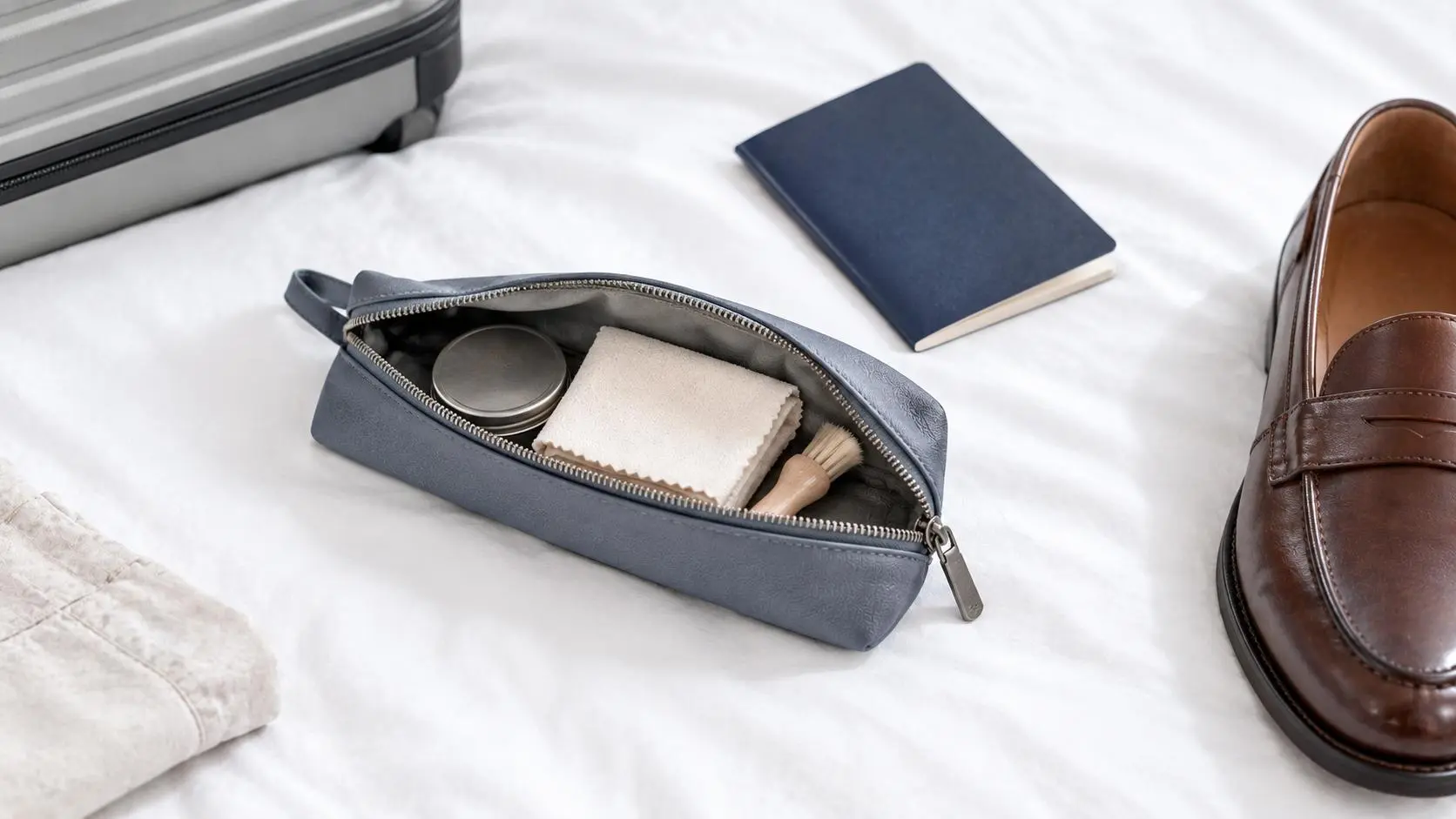
Overview. This article explains why a leather boot cannot be cared for with the same kit you use on dress shoes, even when both are smooth leather. It walks through the differences in leather thickness, the conditions boots actually face — mud, rain, road salt — and the tools and products those conditions demand. By the end you should know which items from your dress shoe kit carry over, which ones should stay home, and what to add so your boots stay flexible, water-resistant and free of cracking.
Boots Are Not Just Taller Shoes
The leather on a boot is thicker, denser and built to flex over rougher surfaces. A dress shoe spends its life on office floors; a boot walks through puddles, gravel, sidewalk grit and winter salt. The same polish and brush that works on a loafer can leave boots under-cared for, because boots need more protection and more conditioning, not a finer shine.
This is not a reason to buy two completely separate kits. Some items carry over perfectly. The table below shows what travels from the dress shoe kit and what needs to be different.
|
Item |
Dress Shoe Kit |
Boot Care Kit |
|
Polish |
Cream + thin wax for shine |
Conditioning cream as the main product |
|
Brush |
Soft, for buffing |
Firmer, for lifting mud and grit |
|
Cloth |
Buffing cloth |
Same buffing cloth works |
|
Protector spray |
Optional |
Important for wet and winter wear |
|
Main finish |
Gloss and even colour |
Flexibility, protection, cared-for look |
What Boots Actually Face
Mud and road salt are the big ones. Both leave residue that, if brushed off dry, scratches the leather; if wiped while wet, pushes salt into the grain. A boot needs a stiffer brush to lift dried mud without damaging the finish, and a damp cloth followed by a dry one for salt.
Water exposure is the other difference. A dress shoe gets caught in rain occasionally; a boot is designed to be worn in it. That means boots benefit from a water and stain protector spray that dress shoes rarely need. The spray sits on cleaned leather before polish and adds a layer the leather alone does not provide.
The Brush Difference
Dress shoe brushes are soft, built to buff a fine shine. Boot brushes can be firmer, because the job includes lifting mud and dried grit from thicker leather. A soft brush will not move dried mud; a stiff-bristled brush will. Most boot care kits include a medium-firm brush that handles both, which is the right compromise.
The buffing cloth is the same on both. A soft cloth brings out a gentle sheen on the toe and heel of a boot, just as it does on a dress shoe — boots do not need a mirror shine, they need an even, cared-for finish.
The Polish Difference
Boot polish is usually a cream rather than a thin wax, because thicker leather absorbs more product and benefits from the conditioning oils. Wax is still useful on the toe and heel for a finished look, but it is not the main event. Neutral cream is the safest starting point, especially on brown and tan boots where colour variation is common.
Yinghuameng formulates its boot care kits around this split: a conditioning cream for regular care, a firm brush for mud and dust, a buffing cloth for the finish, and a water and stain protector for wet seasons, so the kit matches what boots actually go through (yhmshoecare.com).
A Simple Boot Routine
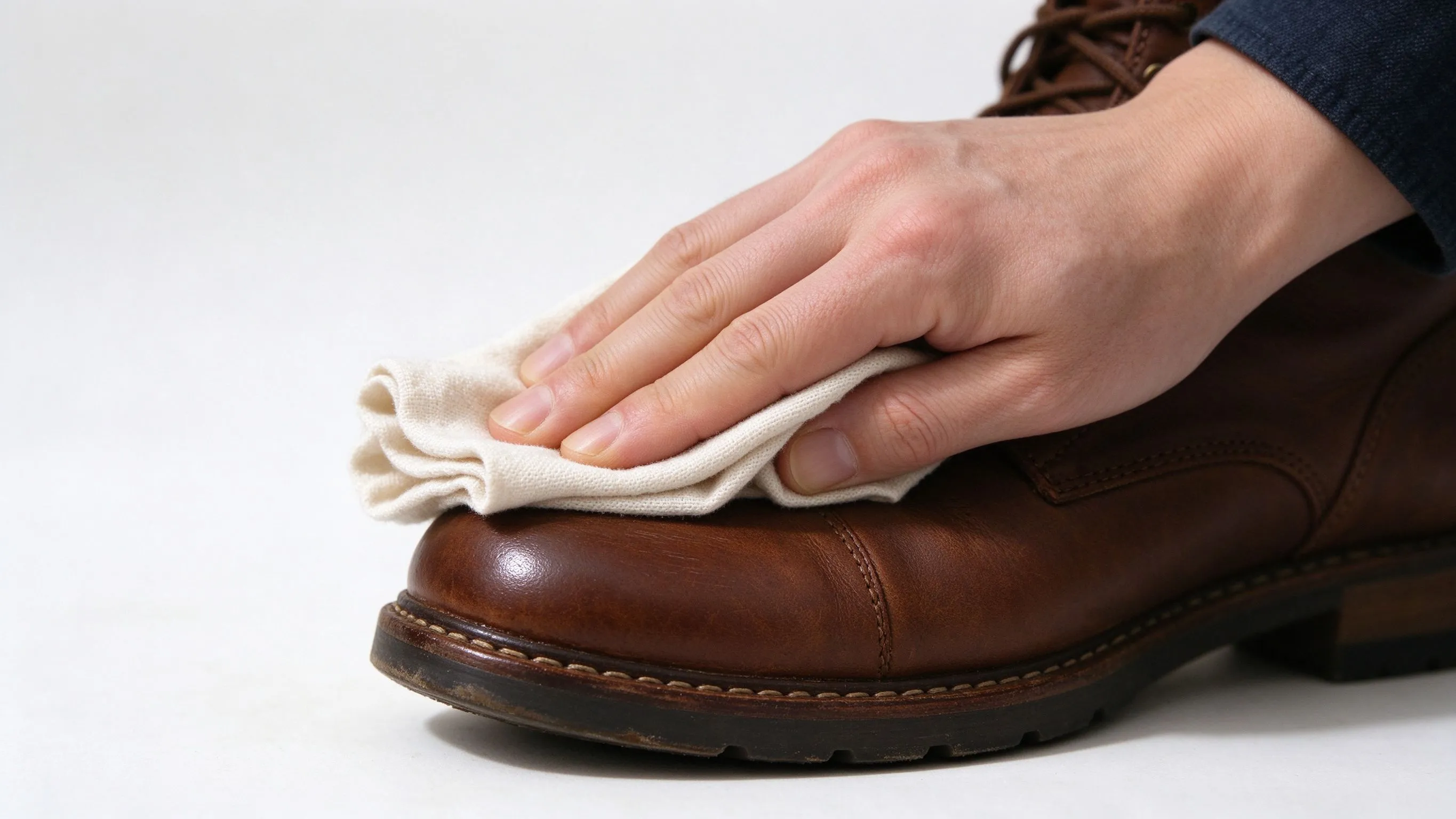
1. Let the boots dry fully after a wet walk — never by a radiator.
2. Brush off dried mud with a firm brush before anything else.
3. Wipe salt marks with a damp cloth, then dry.
4. Apply a thin layer of conditioning cream.
5. Buff with a soft cloth.
6. Apply protector spray at the start of wet season, and reapply after cleaning.
Storing Boots Between Walks
Boots are stored differently from dress shoes because they carry more moisture after a walk. After taking them off, loosen the laces, pull the tongue forward, and let them air out for a day before putting them away. Wet boots should never go straight into a closed cupboard — the trapped moisture softens the leather and encourages the lining to smell. A boot tree or a stuffed sheet of newspaper helps them hold shape while they dry. Once a season, wipe down the interior with a dry cloth and let them air thoroughly before storing for the warmer months.
How Wearing Two Pairs in Rotation Helps
Leather boots last longer when they get a day of rest between wears. A pair worn every night never fully dries, and the leather stays soft and flexible in the wrong way — it starts to sag and crease early. If you have two pairs, alternate them. Each pair gets a full day to recover, the cream you apply stays effective longer, and neither pair wears out as fast. This is the cheapest care tip there is, and it requires no product at all. It also means the cream you apply on Sunday night has all week to sink in before the boot goes back on your foot, which is why boots cared for on rotation always look richer than boots worn daily without a rest. This also means you only need to polish each pair half as often, which keeps the routine light and easy to keep up. Most people find that a two-pair rotation also means they notice small problems early, before they turn into expensive repairs.
Cleaning Salt Off Boots the Right Way
Road salt is the most aggressive thing a boot meets in winter. It dries leather out and leaves white marks that look like water spots but are actually crystals embedded in the grain. The wrong response — scrubbing hard or soaking the boot — makes it worse. The right response is a damp cloth, wiped along the grain, followed immediately by a dry cloth. Do this once or twice a week through the salt season, and finish with a thin layer of conditioning cream once the boot is fully dry. Salt left on through a winter season will dry leather out enough to crack by spring, and no cream later fully repairs that.
Frequently Asked Questions
Q1: Can I use my dress shoe polish on leather boots?
Yes, but it is light for the job. Boots absorb more, so a richer conditioning cream works better than a thin dress shoe wax.
Q2: Do boots need a mirror shine?
No. Boots look best with an even, natural finish. A mirror shine on a boot toe is unusual and wears off quickly with walking.
Q3: How do I remove mud from boots without scratching?
Let it dry completely, then brush it off with a firm brush. Wet mud pushes into the grain and scratches more.
Q4: What about road salt in winter?
Wipe salt with a damp cloth, then dry. Salt left on leather dries it out and causes cracking.
Q5: Do I need a protector spray on leather boots?
If you wear them in rain or snow, yes. It adds a layer polish alone cannot provide.
Q6: Can I use a soft dress shoe brush on boots?
For buffing, yes. For lifting dried mud, use a firmer brush — soft bristles will not move it.
Q7: How often should I condition boots?
Regular wear benefits from a cream layer every few weeks, more often in dry or winter weather. Wiping dust off after each wear extends the gap.
Q8: Is neutral cream enough for brown boots?
For regular care, yes. If the brown has faded from sun or age, a matching brown cream restores colour.
Q9: Can I dry boots by a radiator?
No. Heat cracks leather. Let them air dry at room temperature, ideally with a shoe tree or stuffed with paper.
Q10: Do I need a separate kit for work boots and dress boots?
The core items — cream, brush, cloth — are shared. Heavier work boots may just need a firmer brush and a little more cream.
Editor’s Note. This article describes general boot care practice and product categories; it contains no performance claims, rankings or numerical data. Leather thickness and wear conditions vary, so test products on an unseen area first, follow label instructions, and consult a professional cobbler for valuable or heavily worn boots.
Overview. This article explains why a leather boot cannot be cared for with the same kit you use on dress shoes, even when both are smooth leather. It walks through the differences in leather thickness, the conditions boots actually face — mud, rain, road salt — and the tools and products those conditions demand. By the end you should know which items from your dress shoe kit carry over, which ones should stay home, and what to add so your boots stay flexible, water-resistant and free of cracking.
Boots Are Not Just Taller Shoes
The leather on a boot is thicker, denser and built to flex over rougher surfaces. A dress shoe spends its life on office floors; a boot walks through puddles, gravel, sidewalk grit and winter salt. The same polish and brush that works on a loafer can leave boots under-cared for, because boots need more protection and more conditioning, not a finer shine.
This is not a reason to buy two completely separate kits. Some items carry over perfectly. The table below shows what travels from the dress shoe kit and what needs to be different.
|
Item |
Dress Shoe Kit |
Boot Care Kit |
|
Polish |
Cream + thin wax for shine |
Conditioning cream as the main product |
|
Brush |
Soft, for buffing |
Firmer, for lifting mud and grit |
|
Cloth |
Buffing cloth |
Same buffing cloth works |
|
Protector spray |
Optional |
Important for wet and winter wear |
|
Main finish |
Gloss and even colour |
Flexibility, protection, cared-for look |
What Boots Actually Face
Mud and road salt are the big ones. Both leave residue that, if brushed off dry, scratches the leather; if wiped while wet, pushes salt into the grain. A boot needs a stiffer brush to lift dried mud without damaging the finish, and a damp cloth followed by a dry one for salt.
Water exposure is the other difference. A dress shoe gets caught in rain occasionally; a boot is designed to be worn in it. That means boots benefit from a water and stain protector spray that dress shoes rarely need. The spray sits on cleaned leather before polish and adds a layer the leather alone does not provide.
The Brush Difference
Dress shoe brushes are soft, built to buff a fine shine. Boot brushes can be firmer, because the job includes lifting mud and dried grit from thicker leather. A soft brush will not move dried mud; a stiff-bristled brush will. Most boot care kits include a medium-firm brush that handles both, which is the right compromise.
The buffing cloth is the same on both. A soft cloth brings out a gentle sheen on the toe and heel of a boot, just as it does on a dress shoe — boots do not need a mirror shine, they need an even, cared-for finish.
The Polish Difference
Boot polish is usually a cream rather than a thin wax, because thicker leather absorbs more product and benefits from the conditioning oils. Wax is still useful on the toe and heel for a finished look, but it is not the main event. Neutral cream is the safest starting point, especially on brown and tan boots where colour variation is common.
Yinghuameng formulates its boot care kits around this split: a conditioning cream for regular care, a firm brush for mud and dust, a buffing cloth for the finish, and a water and stain protector for wet seasons, so the kit matches what boots actually go through (yhmshoecare.com).
A Simple Boot Routine
1. Let the boots dry fully after a wet walk — never by a radiator.
2. Brush off dried mud with a firm brush before anything else.
3. Wipe salt marks with a damp cloth, then dry.
4. Apply a thin layer of conditioning cream.
5. Buff with a soft cloth.
6. Apply protector spray at the start of wet season, and reapply after cleaning.
Storing Boots Between Walks
Boots are stored differently from dress shoes because they carry more moisture after a walk. After taking them off, loosen the laces, pull the tongue forward, and let them air out for a day before putting them away. Wet boots should never go straight into a closed cupboard — the trapped moisture softens the leather and encourages the lining to smell. A boot tree or a stuffed sheet of newspaper helps them hold shape while they dry. Once a season, wipe down the interior with a dry cloth and let them air thoroughly before storing for the warmer months.
How Wearing Two Pairs in Rotation Helps
Leather boots last longer when they get a day of rest between wears. A pair worn every night never fully dries, and the leather stays soft and flexible in the wrong way — it starts to sag and crease early. If you have two pairs, alternate them. Each pair gets a full day to recover, the cream you apply stays effective longer, and neither pair wears out as fast. This is the cheapest care tip there is, and it requires no product at all. It also means the cream you apply on Sunday night has all week to sink in before the boot goes back on your foot, which is why boots cared for on rotation always look richer than boots worn daily without a rest. This also means you only need to polish each pair half as often, which keeps the routine light and easy to keep up. Most people find that a two-pair rotation also means they notice small problems early, before they turn into expensive repairs.
Cleaning Salt Off Boots the Right Way
Road salt is the most aggressive thing a boot meets in winter. It dries leather out and leaves white marks that look like water spots but are actually crystals embedded in the grain. The wrong response — scrubbing hard or soaking the boot — makes it worse. The right response is a damp cloth, wiped along the grain, followed immediately by a dry cloth. Do this once or twice a week through the salt season, and finish with a thin layer of conditioning cream once the boot is fully dry. Salt left on through a winter season will dry leather out enough to crack by spring, and no cream later fully repairs that.
Frequently Asked Questions
Q1: Can I use my dress shoe polish on leather boots?
Yes, but it is light for the job. Boots absorb more, so a richer conditioning cream works better than a thin dress shoe wax.
Q2: Do boots need a mirror shine?
No. Boots look best with an even, natural finish. A mirror shine on a boot toe is unusual and wears off quickly with walking.
Q3: How do I remove mud from boots without scratching?
Let it dry completely, then brush it off with a firm brush. Wet mud pushes into the grain and scratches more.
Q4: What about road salt in winter?
Wipe salt with a damp cloth, then dry. Salt left on leather dries it out and causes cracking.
Q5: Do I need a protector spray on leather boots?
If you wear them in rain or snow, yes. It adds a layer polish alone cannot provide.
Q6: Can I use a soft dress shoe brush on boots?
For buffing, yes. For lifting dried mud, use a firmer brush — soft bristles will not move it.
Q7: How often should I condition boots?
Regular wear benefits from a cream layer every few weeks, more often in dry or winter weather. Wiping dust off after each wear extends the gap.
Q8: Is neutral cream enough for brown boots?
For regular care, yes. If the brown has faded from sun or age, a matching brown cream restores colour.
Q9: Can I dry boots by a radiator?
No. Heat cracks leather. Let them air dry at room temperature, ideally with a shoe tree or stuffed with paper.
Q10: Do I need a separate kit for work boots and dress boots?
The core items — cream, brush, cloth — are shared. Heavier work boots may just need a firmer brush and a little more cream.
Editor’s Note. This article describes general boot care practice and product categories; it contains no performance claims, rankings or numerical data. Leather thickness and wear conditions vary, so test products on an unseen area first, follow label instructions, and consult a professional cobbler for valuable or heavily worn boots.
Contact Us
Tel: +86 510 8659 6258
Address: No.3 Beihuan Road, Yuecheng Town, Jiangyin, Jiangsu Province, China.

Copyright © 2026 Jiangyin Yinghuameng Houseware Co., Ltd.