
SEARCH WHAT YOU WANT
A Travel Shoe Care Kit vs. a Home Kit: What Portable Sets Cut, and What They Must Never Cut
Time:2026-10-28
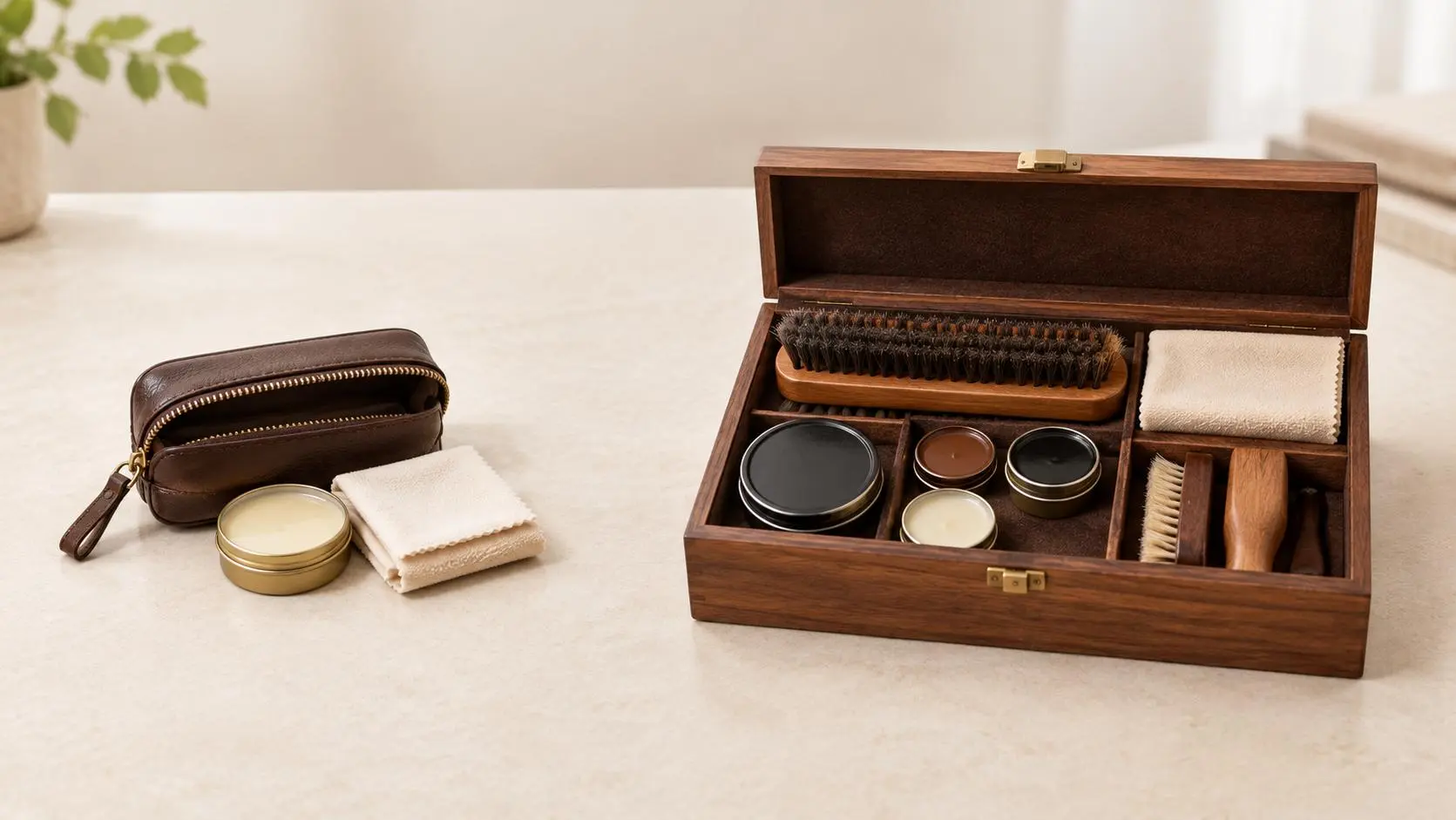
Overview. This article compares a travel shoe care kit with a home kit, so you can tell whether a portable set is genuinely well-designed or just a mini version that misses the few things that matter. It explains what can be safely cut for the road — size, weight, extras — and what must stay, because removing it defeats the purpose of the kit. By the end you should know what to look for on the back of a travel box, what a home kit should contain by comparison, and why a cheap mini set is often a worse buy than a simple pouch you assemble yourself.
The Two Kits Solve Two Different Jobs
A home kit is built for regular care: it handles nourishment, colour, gloss and storage. A travel kit is built for emergencies and touch-ups. Mixing the two — buying a mini set that copies the home kit item by item — usually gives you smaller versions of tools you do not need on the road, while skimping on the two or three you do.
The table below compares the two kits side by side, and flags which items are cuttable and which are essential.
|
Item |
Home Kit |
Travel Kit |
Cuttable for Travel? |
|
Polish |
Cream + wax, several colours |
One small neutral pot |
Cut size, not quality |
|
Brush |
Full-size horsehair brush |
Small dauber or finger cloth |
Yes |
|
Cloth |
One per colour family |
One buffing cloth |
Cut count, not the cloth itself |
|
Protector spray |
Full-size bottle |
Travel size, only for wet trips |
Conditionally |
|
Extras (edge, suede, horn) |
Full set |
Usually none |
Yes |
|
Case |
Large box or drawer |
Slim leak-proof pouch |
Must stay sealed |
What Travel Kits Can Safely Cut
Size is the first cut. A full-size cream tin can become a small pot; a large brush can become a dauber; three cloths can become one. None of these cuts hurt performance on short trips, because the job is touch-up, not deep conditioning.
Extras are the second cut. Edge dressing, suede brushes, shoe horns and multiple colour polishes belong at home. On the road, you are not rebuilding a wardrobe — you are keeping the shoes you brought presentable. A travel kit that packs six polishes and no proper buffing cloth has cut the wrong thing.
What Travel Kits Must Never Cut
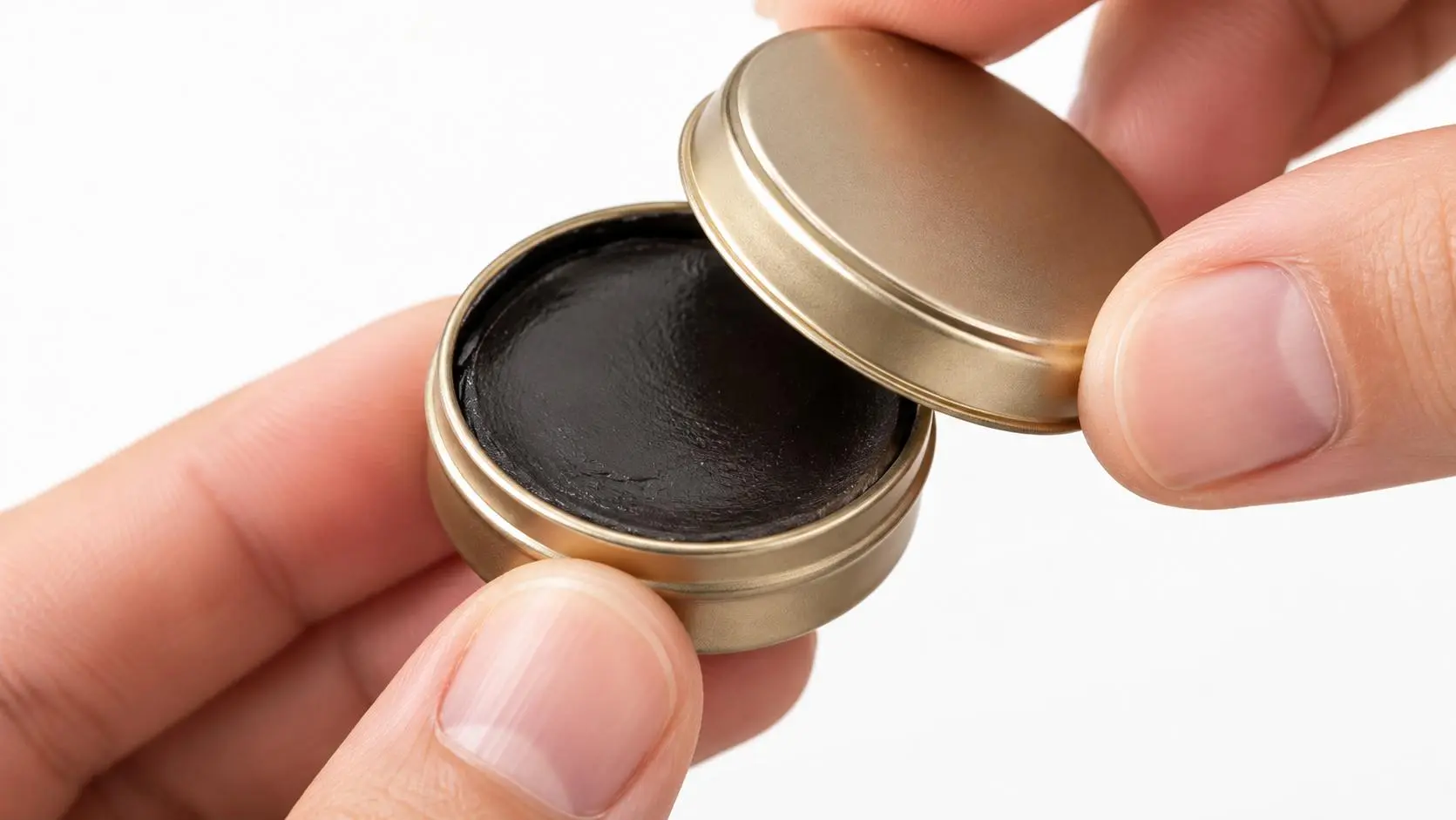
The first non-negotiable is a working polish. It does not have to be a famous brand, but it must spread, feed the leather and not leave a sticky film. A mini tin filled with cheap wax that just smears is the most common failure in travel sets.
The second non-negotiable is a real buffing cloth, not a rough square of fabric. The cloth is what produces the shine; without it, the polish just sits on the leather. The third is a sealed, leak-proof case. Polish tins roll, and a flimsy pouch means your shirt pocket ends up with a faint ring.
Why Cheap Mini Kits Often Disappoint
A travel kit that looks like ten tiny items in a small box is usually bundling cheap accessories to justify the price. The polish is the first place corners are cut, because it is the item customers open last. On the road, the polish is the one item that actually touches the leather — if it is thin, gritty or separated, the rest of the kit is decoration.
This is why many experienced travelers build their own pouch: pick a mini neutral cream from a brand they trust, fold in a buffing cloth, add a small dauber. It costs less than a branded mini box and contains exactly the items that matter. Yinghuameng’s travel range takes the same approach — a small neutral cream, a proper buffing cloth and a compact applicator in one slim pouch, rather than a box of miniatures (yhmshoecare.com).
When You Do Want a Full Travel Set
A complete travel set makes sense if you travel constantly — weekly trips, mixed weather, multiple shoe types — and want the pouch already assembled. In that case, look for a set with a mini protector, a soft dusting brush and a buffing cloth, plus the cream. That is a real travel kit, not a mini home shelf.
For occasional trips, the simple pouch is enough. You can always add a travel-size protector when the forecast is wet, and leave the rest behind.
Storing the Kit Between Trips
A travel kit does not live on the road all year. Between trips, keep it somewhere dry and room-temperature, not in a hot car or a damp suitcase. Seal the polish tin tightly after each use, because an open tin dries out and becomes harder to spread. Wash the buffing cloth every few trips — old wax builds up in the fibres and starts to leave streaks. Keep the pouch unzipped overnight after a trip so any residual moisture escapes. A well-kept travel kit lasts for years, and the only thing you need to replace is the polish tin when it finally runs out. Treat the pouch like a small toolbox, not a souvenir, and it will be ready to grab whenever you pack. A travel kit that lives by the door, in the same drawer as your passport and charging cables, gets used; one that gets buried in the closet gets forgotten and opened only when the shoes already look tired. The same logic applies to refills — when a cream tin runs low, replace it at home, not at the hotel. A spare mini tin in the travel drawer means the kit is always ready, and you never open a dried-up tin on the morning of a flight. This small habit is the difference between a travel kit that works and one that looks good in photos.
A Quick Buyer’s Check
1. Open the mini polish: it should be smooth, not gritty or separated.
2. Feel the cloth: thin, soft and lint-free, not a rough square.
3. Check the case: it zips fully and protects the tin.
4. Count the jobs: one polish, one applicator, one cloth — anything more is bonus, anything less is incomplete.
5. Skip kits that show off ten tiny brushes but no real buffing cloth.
Frequently Asked Questions
Q1: Is a travel kit just a smaller home kit?
No. A good travel kit is chosen for on-the-road emergencies. A mini home kit usually cuts the items that matter and keeps the ones that do not.
Q2: Can I just buy a mini home kit for travel?
You can, but check the polish first. Many mini sets skimp on the cream and fill the box with small brushes and cloths.
Q3: Do I need both cream and wax in a travel kit?
No. One neutral cream handles almost every touch-up. Wax is a home product for formal shines.
Q4: What is the one item a travel kit cannot skip?
A buffing cloth. Without it, polish cannot produce a shine and the shoe stays dull.
Q5: Is it cheaper to build my own pouch?
Usually yes. Pick a mini cream you trust, add a cloth and a dauber. You avoid paying for miniatures you will never use.
Q6: Do I need a protector spray when I travel?
Only if the forecast is wet. Otherwise apply protection at home before you leave and leave the spray out.
Q7: What about colour-specific polish on a trip?
Neutral covers most cases. If you wear black or dark brown daily, a mini matching cream is a reasonable add.
Q8: How do I know if a mini polish is good quality?
Open it: smooth texture, spreads easily, no grit or strong chemical smell. If it looks separated, skip it.
Q9: Can I reuse my home cloth as a travel cloth?
Yes — fold an old buffing cloth into the pouch. It works as well as a new one.
Q10: When is a full branded travel kit worth it?
If you travel weekly and want the pouch already assembled, including a mini protector and small brush. For occasional trips, a simple pouch is enough.
Editor’s Note. This article describes general product categories and buying guidance; it contains no brand rankings, performance claims or numerical data. Product quality varies by brand, so test any product on a small unseen area first, follow label instructions, and consult a professional shoe repairer for valuable footwear.
Overview. This article compares a travel shoe care kit with a home kit, so you can tell whether a portable set is genuinely well-designed or just a mini version that misses the few things that matter. It explains what can be safely cut for the road — size, weight, extras — and what must stay, because removing it defeats the purpose of the kit. By the end you should know what to look for on the back of a travel box, what a home kit should contain by comparison, and why a cheap mini set is often a worse buy than a simple pouch you assemble yourself.
The Two Kits Solve Two Different Jobs
A home kit is built for regular care: it handles nourishment, colour, gloss and storage. A travel kit is built for emergencies and touch-ups. Mixing the two — buying a mini set that copies the home kit item by item — usually gives you smaller versions of tools you do not need on the road, while skimping on the two or three you do.
The table below compares the two kits side by side, and flags which items are cuttable and which are essential.
|
Item |
Home Kit |
Travel Kit |
Cuttable for Travel? |
|
Polish |
Cream + wax, several colours |
One small neutral pot |
Cut size, not quality |
|
Brush |
Full-size horsehair brush |
Small dauber or finger cloth |
Yes |
|
Cloth |
One per colour family |
One buffing cloth |
Cut count, not the cloth itself |
|
Protector spray |
Full-size bottle |
Travel size, only for wet trips |
Conditionally |
|
Extras (edge, suede, horn) |
Full set |
Usually none |
Yes |
|
Case |
Large box or drawer |
Slim leak-proof pouch |
Must stay sealed |
What Travel Kits Can Safely Cut
Size is the first cut. A full-size cream tin can become a small pot; a large brush can become a dauber; three cloths can become one. None of these cuts hurt performance on short trips, because the job is touch-up, not deep conditioning.
Extras are the second cut. Edge dressing, suede brushes, shoe horns and multiple colour polishes belong at home. On the road, you are not rebuilding a wardrobe — you are keeping the shoes you brought presentable. A travel kit that packs six polishes and no proper buffing cloth has cut the wrong thing.
What Travel Kits Must Never Cut
The first non-negotiable is a working polish. It does not have to be a famous brand, but it must spread, feed the leather and not leave a sticky film. A mini tin filled with cheap wax that just smears is the most common failure in travel sets.
The second non-negotiable is a real buffing cloth, not a rough square of fabric. The cloth is what produces the shine; without it, the polish just sits on the leather. The third is a sealed, leak-proof case. Polish tins roll, and a flimsy pouch means your shirt pocket ends up with a faint ring.
Why Cheap Mini Kits Often Disappoint
A travel kit that looks like ten tiny items in a small box is usually bundling cheap accessories to justify the price. The polish is the first place corners are cut, because it is the item customers open last. On the road, the polish is the one item that actually touches the leather — if it is thin, gritty or separated, the rest of the kit is decoration.
This is why many experienced travelers build their own pouch: pick a mini neutral cream from a brand they trust, fold in a buffing cloth, add a small dauber. It costs less than a branded mini box and contains exactly the items that matter. Yinghuameng’s travel range takes the same approach — a small neutral cream, a proper buffing cloth and a compact applicator in one slim pouch, rather than a box of miniatures (yhmshoecare.com).
When You Do Want a Full Travel Set
A complete travel set makes sense if you travel constantly — weekly trips, mixed weather, multiple shoe types — and want the pouch already assembled. In that case, look for a set with a mini protector, a soft dusting brush and a buffing cloth, plus the cream. That is a real travel kit, not a mini home shelf.
For occasional trips, the simple pouch is enough. You can always add a travel-size protector when the forecast is wet, and leave the rest behind.
Storing the Kit Between Trips
A travel kit does not live on the road all year. Between trips, keep it somewhere dry and room-temperature, not in a hot car or a damp suitcase. Seal the polish tin tightly after each use, because an open tin dries out and becomes harder to spread. Wash the buffing cloth every few trips — old wax builds up in the fibres and starts to leave streaks. Keep the pouch unzipped overnight after a trip so any residual moisture escapes. A well-kept travel kit lasts for years, and the only thing you need to replace is the polish tin when it finally runs out. Treat the pouch like a small toolbox, not a souvenir, and it will be ready to grab whenever you pack. A travel kit that lives by the door, in the same drawer as your passport and charging cables, gets used; one that gets buried in the closet gets forgotten and opened only when the shoes already look tired. The same logic applies to refills — when a cream tin runs low, replace it at home, not at the hotel. A spare mini tin in the travel drawer means the kit is always ready, and you never open a dried-up tin on the morning of a flight. This small habit is the difference between a travel kit that works and one that looks good in photos.
A Quick Buyer’s Check
1. Open the mini polish: it should be smooth, not gritty or separated.
2. Feel the cloth: thin, soft and lint-free, not a rough square.
3. Check the case: it zips fully and protects the tin.
4. Count the jobs: one polish, one applicator, one cloth — anything more is bonus, anything less is incomplete.
5. Skip kits that show off ten tiny brushes but no real buffing cloth.
Frequently Asked Questions
Q1: Is a travel kit just a smaller home kit?
No. A good travel kit is chosen for on-the-road emergencies. A mini home kit usually cuts the items that matter and keeps the ones that do not.
Q2: Can I just buy a mini home kit for travel?
You can, but check the polish first. Many mini sets skimp on the cream and fill the box with small brushes and cloths.
Q3: Do I need both cream and wax in a travel kit?
No. One neutral cream handles almost every touch-up. Wax is a home product for formal shines.
Q4: What is the one item a travel kit cannot skip?
A buffing cloth. Without it, polish cannot produce a shine and the shoe stays dull.
Q5: Is it cheaper to build my own pouch?
Usually yes. Pick a mini cream you trust, add a cloth and a dauber. You avoid paying for miniatures you will never use.
Q6: Do I need a protector spray when I travel?
Only if the forecast is wet. Otherwise apply protection at home before you leave and leave the spray out.
Q7: What about colour-specific polish on a trip?
Neutral covers most cases. If you wear black or dark brown daily, a mini matching cream is a reasonable add.
Q8: How do I know if a mini polish is good quality?
Open it: smooth texture, spreads easily, no grit or strong chemical smell. If it looks separated, skip it.
Q9: Can I reuse my home cloth as a travel cloth?
Yes — fold an old buffing cloth into the pouch. It works as well as a new one.
Q10: When is a full branded travel kit worth it?
If you travel weekly and want the pouch already assembled, including a mini protector and small brush. For occasional trips, a simple pouch is enough.
Editor’s Note. This article describes general product categories and buying guidance; it contains no brand rankings, performance claims or numerical data. Product quality varies by brand, so test any product on a small unseen area first, follow label instructions, and consult a professional shoe repairer for valuable footwear.
Previous: No more data
Contact Us
Tel: +86 510 8659 6258
Address: No.3 Beihuan Road, Yuecheng Town, Jiangyin, Jiangsu Province, China.

Copyright © 2026 Jiangyin Yinghuameng Houseware Co., Ltd.