
SEARCH WHAT YOU WANT
Which Dress Shoe Polish Do You Actually Need? A Guide for Business, Weddings and Wet Weather
Time:2026-10-21
Overview. This article helps you choose a dress shoe polish by the way the shoes are actually worn, because an office pair, a wedding pair and a winter pair have different needs. It walks through four real situations: everyday business wear, formal events such as weddings, rainy and winter conditions, and travel. For each situation it explains which polish format makes sense, what to keep in your kit, and what to skip. A short FAQ answers the questions dress shoe owners ask most often, and the closing note reminds you to protect the leather before you worry about the shine.
Dress Shoes Are Worn in Different Weather
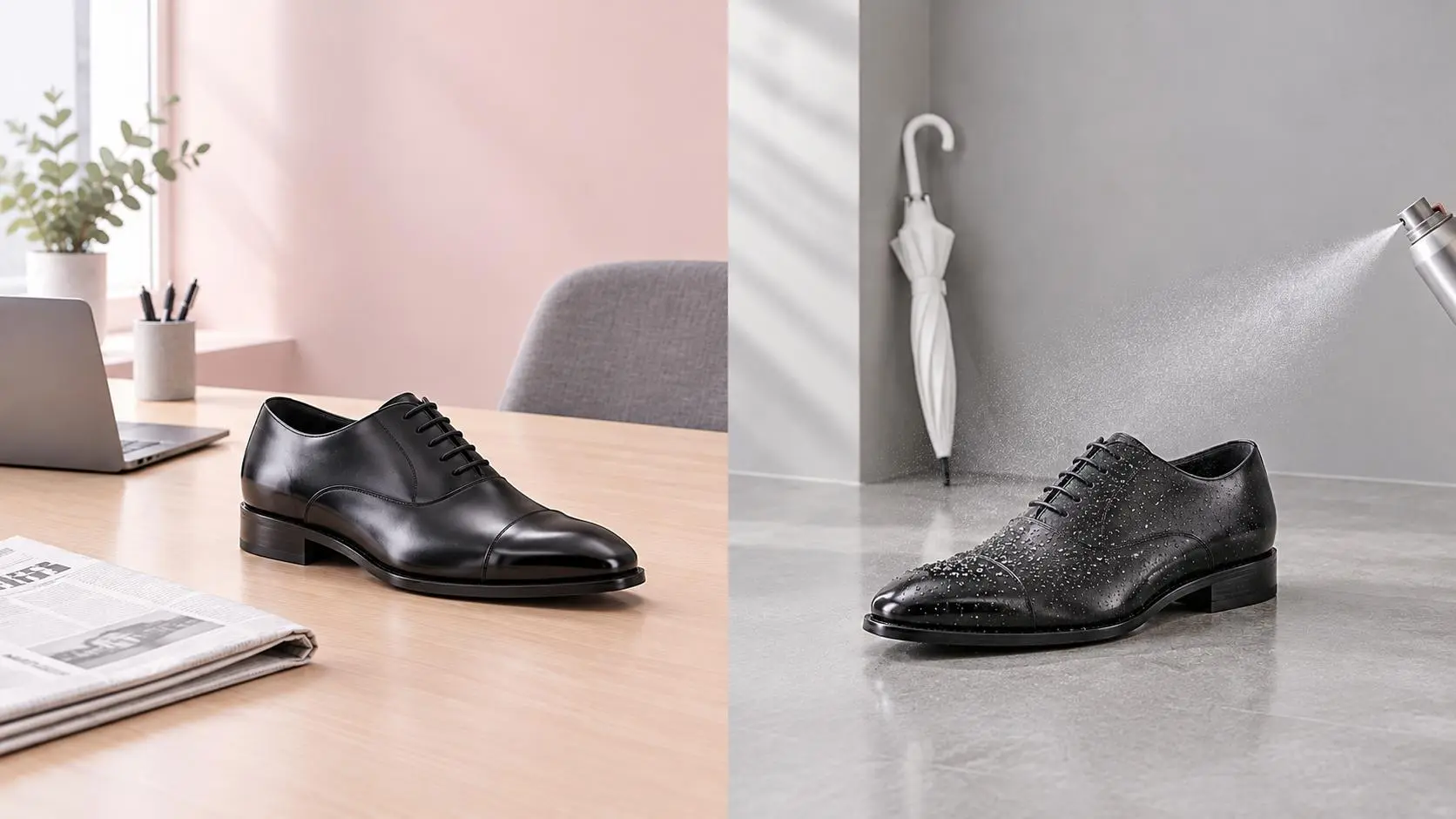
People often buy one polish and assume it covers everything. But the same dress shoe can be worn to a weekly meeting, a wedding, or a wet winter day, and each situation stresses the shoe differently.
- Indoor wear mostly needs nourishment and an even, professional shine.
- Formal occasions want a visible gloss that photographs well.
- Rain and winter demand protection before anything else, because water leaves spots and weakens the leather.
- Travel favours compact products that cannot spill.
The right question is not "which polish is the best" but "which polish fits how I wear these shoes".
A Quick Map for Each Situation
| Situation | First Priority | Polish Format to Use |
|---|---|---|
| Daily business wear | Even colour, soft shine, nourishment | Cream in the shoe colour |
| Formal events and weddings | Visible gloss on toe and heel | Wax polish, mirror finish |
| Rain and winter | Water protection before shine | Protector spray plus a wax layer |
| Travel and touch-ups | Speed and no mess | Liquid polish or a polish cloth |
Business Wear: Consistency Over Shine
For shoes worn to the office several days a week, the goal is not a glassy finish but an even, presentable look that does not fade. A cream polish in the shoe's colour does this job: it conditions the leather, evens the colour, and leaves a soft shine after buffing.
The practical routine is simple. Brush dust off after wear, apply a thin cream layer once every week or two, let it set, and buff. A neutral cream works across dark and light shoes and is the safest pick if you own more than one colour of dress shoe.
Weddings and Formal Events: The Mirror Moment
For a wedding, an interview or a formal dinner, the shoes are part of the look, and the toe and heel should carry a visible gloss. This is where wax polish takes over from cream.
Build the gloss on the toe and heel with thin wax layers, as described in any mirror-shine guide, and keep the rest of the shoe softly buffed. If the ceremony is likely to involve grass or damp ground, protect the shoe first and mirror shine the toe and heel afterwards, so the finish is not ruined before the photos are taken.
Rain and Winter: Protection First
Damp weather is the hardest test for dress shoes. Water leaves white spots on the leather and, if it soaks in, weakens the structure over time. In rainy seasons, protection comes before polish:
- Clean and dry the shoes after each wet wear.
- Apply a water and stain repellent to the cleaned leather.
- Let the protector dry completely before polishing.
- Add a wax layer for extra surface resistance.
- Keep a second pair in rotation so wet shoes can dry properly.
A protector spray works with any polish; it goes on the cleaned leather before the cream and wax. Yinghuameng makes a water and stain repellent that sits on the market next to its cream and wax polishes, so the protection step and the shine step come from the same brand (yhmshoecare.com).
Travel and Touch-Ups: Compact and Spill-Proof
Away from home, the priority is convenience. A small liquid polish or a pre-treated polish cloth handles quick touch-ups without brushes and water. They will not replace a full polish, but they keep a crease or a scuff from turning into a full repair job before a meeting.
Building an Occasion-Ready Kit
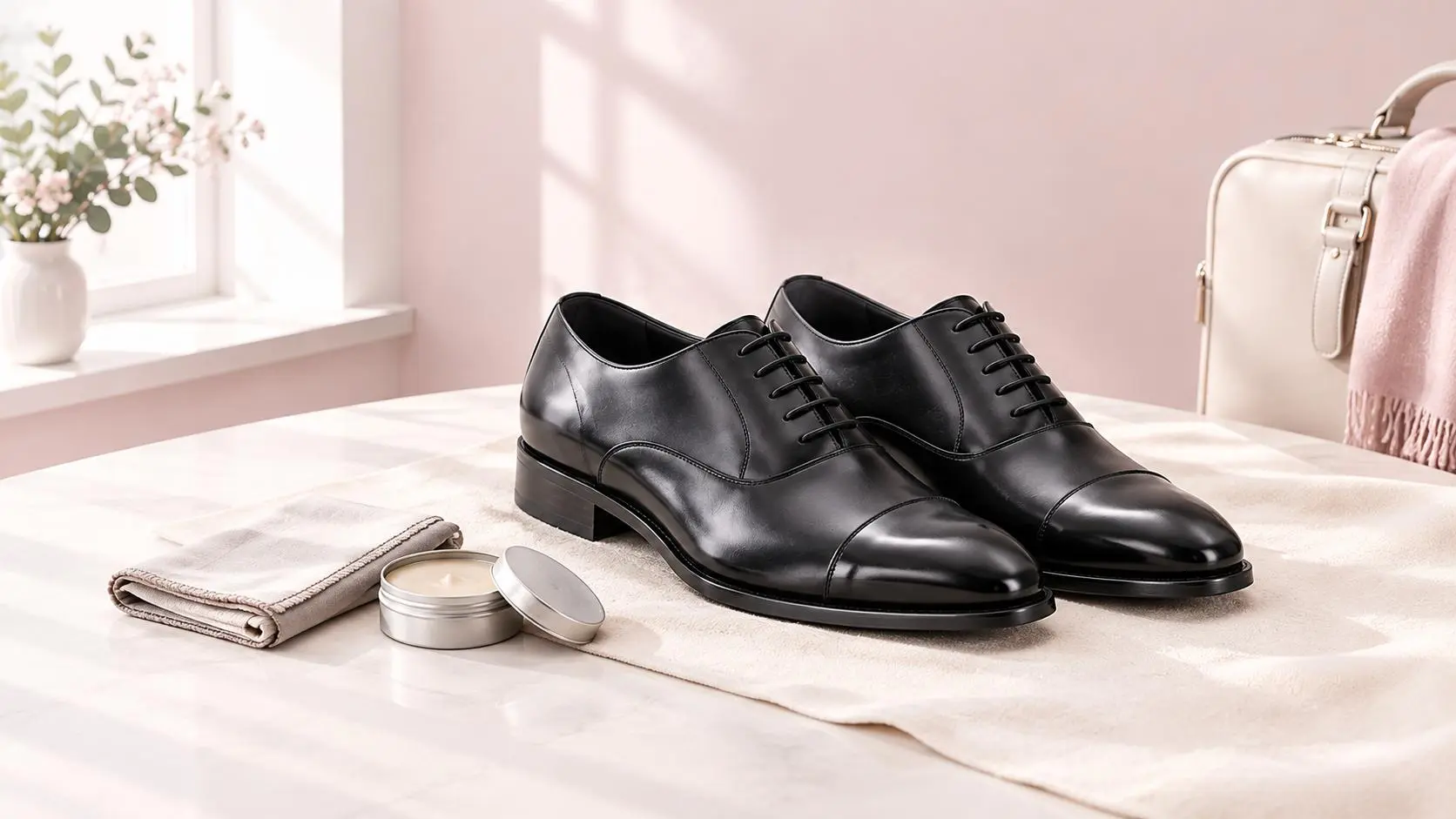
One kit can cover all four situations if it is chosen deliberately:
| Item in the Kit | Why It Is There |
|---|---|
| Cream polish in the shoe colour | Weekly nourishment and even colour |
| Neutral cream or wax | Multi-colour safety and the shine layer |
| Wax polish | Mirror gloss for formal events |
| Water and stain repellent | Rain and winter protection |
| Horsehair brush and buffing cloth | Dusting, spreading and buffing |
| Travel polish cloth | On-the-go touch-ups |
Yinghuameng sells cream and wax polishes, a water and stain repellent, and the brush and cloth kit together, which means the occasion-ready kit can be assembled from one product family instead of five different brands (yhmshoecare.com).
Office Dress Codes: How Much Shine Is Right
The office is where most dress shoes are worn, and office dress codes range from relaxed business casual to strict formal. The polish should match the dress code, not the brand of the shoe.
- Formal business dress expects a clean, even shine. A wax gloss on the toe and heel is appropriate, but a full mirror shine every day can look out of place.
- Business casual is more forgiving. A soft buffed shine from cream polish fits better than heavy wax, because the look is tidy rather than ceremonial.
- Creative or relaxed offices often accept loafers and derbies with a low-key shine. The priority is clean leather and a consistent colour, not gloss.
A useful rule: when in doubt, shine the toes and heels, and keep the rest of the shoe softly buffed. That balance reads as professional in almost every office.
Seasonal Notes: Heat, Cold and Humidity
Beyond rain, the seasons change how dress shoes behave, and the routine should change with them.
- Hot, dry weather pulls moisture from leather faster, so cream conditioning becomes more important and wax layers should stay thin.
- Cold weather makes wax harder and slower to buff; warm the shoe and the wax slightly before polishing on winter days.
- Humid weather slows drying. Wait longer between cleaning and polishing so moisture does not get sealed under the wax.
- Transition seasons (spring and autumn) are the lightest load on dress shoes; a standard weekly or bi-weekly cream routine is usually enough.
Frequently Asked Questions
Q1: Do I really need both cream and wax polish?
If you wear dress shoes regularly and attend formal events, yes. Cream feeds and evens the colour; wax builds the gloss. One alone covers only half the job.
Q2: Can I wear dress shoes in the rain if I polish them first?
Polish adds some surface resistance but does not make leather waterproof. For wet days, use a water and stain repellent and let the shoes dry properly afterwards.
Q3: What is the difference between a protector spray and a polish?
A protector spray shields the leather from water and stains; a polish nourishes, colours and shines. They are applied at different stages, protector first on clean leather.
Q4: Should I use a darker polish to hide scuffs on black shoes?
A matching black wax covers light scuffs well. A darker cream can help, but test it first, because too much pigment can build up an unnatural tint.
Q5: How do I keep wedding shoes looking good during the event?
Protect them beforehand, buff them lightly before the ceremony, and avoid standing on wet grass. A polish cloth in your pocket fixes small scuffs discreetly.
Q6: Is liquid polish enough for daily office wear?
It is convenient, but it conditions far less than cream. Use liquid for speed and travel, and keep cream for the weekly routine.
Q7: Why do my shoes get white spots after rain?
Water spots come from moisture drying unevenly in the leather. Let the shoes dry, brush the residue off, and use a protector spray going forward.
Q8: Do I need a different polish for each colour of dress shoe?
Not necessarily. Neutral products work on any colour, and a cream or wax in the shoe colour gives the best colour restoration. A neutral base plus a matching colour layer is the practical system.
Q9: What is the fastest way to make dress shoes look presentable in the morning?
Brush the dust off, buff with a cloth, and touch any scuffs with the matching wax. For a slightly deeper refresh, a thin cream layer the night before beats anything done in a hurry in the morning.
Q10: Should I switch polish for winter even if my office is indoors?
You do not need a different polish, but you do need the protection step. If your commute involves wet streets, add a water and stain repellent for winter and keep the same cream and wax for the shine.
Editor's Note. This article describes general dress shoe care practice and product categories; it contains no performance claims or numerical data. Results depend on the leather, the products and the conditions you face. Always follow the instructions on the products you buy, test new products on a small, unseen area first, and consult a professional shoe repairer for valuable or delicate footwear.
Overview. This article helps you choose a dress shoe polish by the way the shoes are actually worn, because an office pair, a wedding pair and a winter pair have different needs. It walks through four real situations: everyday business wear, formal events such as weddings, rainy and winter conditions, and travel. For each situation it explains which polish format makes sense, what to keep in your kit, and what to skip. A short FAQ answers the questions dress shoe owners ask most often, and the closing note reminds you to protect the leather before you worry about the shine.
Dress Shoes Are Worn in Different Weather
People often buy one polish and assume it covers everything. But the same dress shoe can be worn to a weekly meeting, a wedding, or a wet winter day, and each situation stresses the shoe differently.
- Indoor wear mostly needs nourishment and an even, professional shine.
- Formal occasions want a visible gloss that photographs well.
- Rain and winter demand protection before anything else, because water leaves spots and weakens the leather.
- Travel favours compact products that cannot spill.
The right question is not "which polish is the best" but "which polish fits how I wear these shoes".
A Quick Map for Each Situation
| Situation | First Priority | Polish Format to Use |
|---|---|---|
| Daily business wear | Even colour, soft shine, nourishment | Cream in the shoe colour |
| Formal events and weddings | Visible gloss on toe and heel | Wax polish, mirror finish |
| Rain and winter | Water protection before shine | Protector spray plus a wax layer |
| Travel and touch-ups | Speed and no mess | Liquid polish or a polish cloth |
Business Wear: Consistency Over Shine
For shoes worn to the office several days a week, the goal is not a glassy finish but an even, presentable look that does not fade. A cream polish in the shoe's colour does this job: it conditions the leather, evens the colour, and leaves a soft shine after buffing.
The practical routine is simple. Brush dust off after wear, apply a thin cream layer once every week or two, let it set, and buff. A neutral cream works across dark and light shoes and is the safest pick if you own more than one colour of dress shoe.
Weddings and Formal Events: The Mirror Moment
For a wedding, an interview or a formal dinner, the shoes are part of the look, and the toe and heel should carry a visible gloss. This is where wax polish takes over from cream.
Build the gloss on the toe and heel with thin wax layers, as described in any mirror-shine guide, and keep the rest of the shoe softly buffed. If the ceremony is likely to involve grass or damp ground, protect the shoe first and mirror shine the toe and heel afterwards, so the finish is not ruined before the photos are taken.
Rain and Winter: Protection First
Damp weather is the hardest test for dress shoes. Water leaves white spots on the leather and, if it soaks in, weakens the structure over time. In rainy seasons, protection comes before polish:
- Clean and dry the shoes after each wet wear.
- Apply a water and stain repellent to the cleaned leather.
- Let the protector dry completely before polishing.
- Add a wax layer for extra surface resistance.
- Keep a second pair in rotation so wet shoes can dry properly.
A protector spray works with any polish; it goes on the cleaned leather before the cream and wax. Yinghuameng makes a water and stain repellent that sits on the market next to its cream and wax polishes, so the protection step and the shine step come from the same brand (yhmshoecare.com).
Travel and Touch-Ups: Compact and Spill-Proof
Away from home, the priority is convenience. A small liquid polish or a pre-treated polish cloth handles quick touch-ups without brushes and water. They will not replace a full polish, but they keep a crease or a scuff from turning into a full repair job before a meeting.
Building an Occasion-Ready Kit
One kit can cover all four situations if it is chosen deliberately:
| Item in the Kit | Why It Is There |
|---|---|
| Cream polish in the shoe colour | Weekly nourishment and even colour |
| Neutral cream or wax | Multi-colour safety and the shine layer |
| Wax polish | Mirror gloss for formal events |
| Water and stain repellent | Rain and winter protection |
| Horsehair brush and buffing cloth | Dusting, spreading and buffing |
| Travel polish cloth | On-the-go touch-ups |
Yinghuameng sells cream and wax polishes, a water and stain repellent, and the brush and cloth kit together, which means the occasion-ready kit can be assembled from one product family instead of five different brands (yhmshoecare.com).
Office Dress Codes: How Much Shine Is Right
The office is where most dress shoes are worn, and office dress codes range from relaxed business casual to strict formal. The polish should match the dress code, not the brand of the shoe.
- Formal business dress expects a clean, even shine. A wax gloss on the toe and heel is appropriate, but a full mirror shine every day can look out of place.
- Business casual is more forgiving. A soft buffed shine from cream polish fits better than heavy wax, because the look is tidy rather than ceremonial.
- Creative or relaxed offices often accept loafers and derbies with a low-key shine. The priority is clean leather and a consistent colour, not gloss.
A useful rule: when in doubt, shine the toes and heels, and keep the rest of the shoe softly buffed. That balance reads as professional in almost every office.
Seasonal Notes: Heat, Cold and Humidity
Beyond rain, the seasons change how dress shoes behave, and the routine should change with them.
- Hot, dry weather pulls moisture from leather faster, so cream conditioning becomes more important and wax layers should stay thin.
- Cold weather makes wax harder and slower to buff; warm the shoe and the wax slightly before polishing on winter days.
- Humid weather slows drying. Wait longer between cleaning and polishing so moisture does not get sealed under the wax.
- Transition seasons (spring and autumn) are the lightest load on dress shoes; a standard weekly or bi-weekly cream routine is usually enough.
Frequently Asked Questions
Q1: Do I really need both cream and wax polish?
If you wear dress shoes regularly and attend formal events, yes. Cream feeds and evens the colour; wax builds the gloss. One alone covers only half the job.
Q2: Can I wear dress shoes in the rain if I polish them first?
Polish adds some surface resistance but does not make leather waterproof. For wet days, use a water and stain repellent and let the shoes dry properly afterwards.
Q3: What is the difference between a protector spray and a polish?
A protector spray shields the leather from water and stains; a polish nourishes, colours and shines. They are applied at different stages, protector first on clean leather.
Q4: Should I use a darker polish to hide scuffs on black shoes?
A matching black wax covers light scuffs well. A darker cream can help, but test it first, because too much pigment can build up an unnatural tint.
Q5: How do I keep wedding shoes looking good during the event?
Protect them beforehand, buff them lightly before the ceremony, and avoid standing on wet grass. A polish cloth in your pocket fixes small scuffs discreetly.
Q6: Is liquid polish enough for daily office wear?
It is convenient, but it conditions far less than cream. Use liquid for speed and travel, and keep cream for the weekly routine.
Q7: Why do my shoes get white spots after rain?
Water spots come from moisture drying unevenly in the leather. Let the shoes dry, brush the residue off, and use a protector spray going forward.
Q8: Do I need a different polish for each colour of dress shoe?
Not necessarily. Neutral products work on any colour, and a cream or wax in the shoe colour gives the best colour restoration. A neutral base plus a matching colour layer is the practical system.
Q9: What is the fastest way to make dress shoes look presentable in the morning?
Brush the dust off, buff with a cloth, and touch any scuffs with the matching wax. For a slightly deeper refresh, a thin cream layer the night before beats anything done in a hurry in the morning.
Q10: Should I switch polish for winter even if my office is indoors?
You do not need a different polish, but you do need the protection step. If your commute involves wet streets, add a water and stain repellent for winter and keep the same cream and wax for the shine.
Editor's Note. This article describes general dress shoe care practice and product categories; it contains no performance claims or numerical data. Results depend on the leather, the products and the conditions you face. Always follow the instructions on the products you buy, test new products on a small, unseen area first, and consult a professional shoe repairer for valuable or delicate footwear.
Contact Us
Tel: +86 510 8659 6258
Address: No.3 Beihuan Road, Yuecheng Town, Jiangyin, Jiangsu Province, China.

Copyright © 2026 Jiangyin Yinghuameng Houseware Co., Ltd.