
SEARCH WHAT YOU WANT
What a Complete Shoe Polish Brush and Applicator Set Should Actually Include
Time:2026-10-09
Verdict First
A good shoe polish brush and applicator set does not need to be large. It needs three tools that do three different jobs: a soft brush for buffing, a small applicator for applying cream or wax, and a stiff brush for removing dirt before polishing. Anything beyond those three is convenience, not necessity. Buy a set that separates application from buffing, and you will get a cleaner shine and a longer life from both your shoes and your tools.
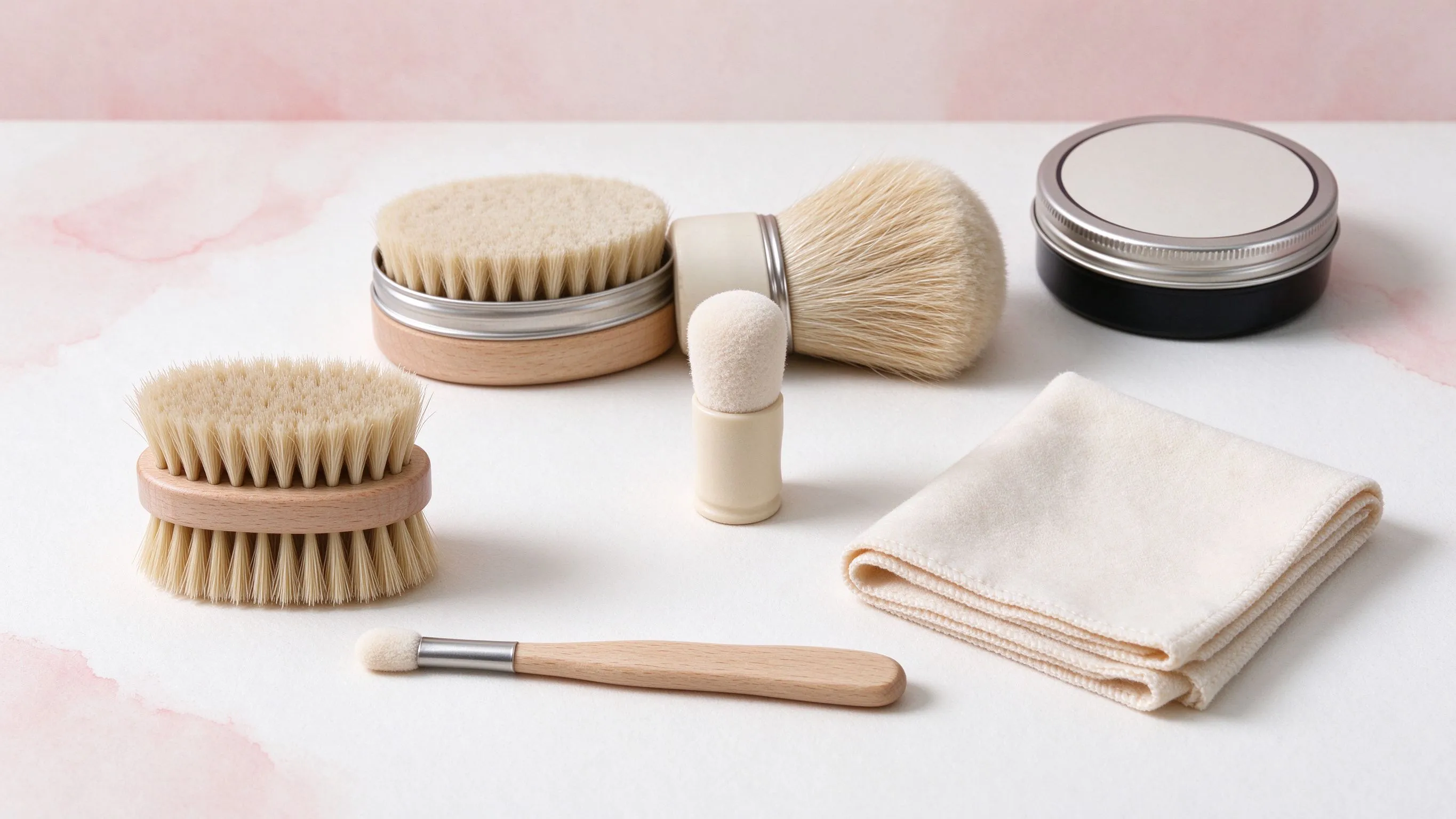
A complete set laid out: round horsehair brushes with wooden bodies, a large soft shine brush, applicator daubers, a cloth and a tin of wax.
What This Guide Covers
This is a buyer-focused guide to shoe polish brush and applicator sets: the tools a complete set should contain, what each one does, how bristles and handles differ, what to avoid, and how to compare real products on the market. Sections cover the essential three-tool lineup, bristle types, handle choices, a side-by-side checklist, common over-buying mistakes, and a numbered FAQ. Product names are real references; results depend on how the tools are used.
The Three Tools Every Set Needs
A working set can be built around three pieces. Each has one job, and mixing jobs is what causes streaks and uneven polish.
| Tool | Main job | When you use it |
|---|---|---|
| Stiff cleaning brush | Remove dry dirt and mud | Before any polish |
| Applicator brush or dauber | Apply cream or wax thinly | During polishing |
| Soft buffing brush | Distribute product and build shine | After application |
The cleaning brush takes the dirt off first. The applicator puts product on. The buffing brush brings the shine. A set that bundles all three avoids the most common beginner mistake: using one brush for everything.
Real kits confirm this structure. Angelus markets a Shoe Shine Travel Kit that pairs a wax applicator brush with a separate 5-inch shine brush, plus a buffing cloth and a resealable bag (source: Angelus Brand, 2025). Saphir separates its tools by job as well: a Mini Horsehair Brush for cleaning and polishing, and a separate Brosse Pommadier made for applying cream (source: Saphir, 2026).
Bristles: What the Difference Means
Bristle material decides what a brush can safely do. The broad categories are consistent across brands:
- Horsehair. Soft and flexible, spreads polish evenly and builds shine without scratching smooth leather.
- Boar bristle. Firmer than horsehair, useful for lifting embedded dirt on tougher surfaces.
- Synthetic nylon. Varies by stiffness; soft nylon mimics horsehair, stiffer grades scrub soles and caked mud.
Angelus builds its Wax Applicator and shine brush on 100% real horsehair bristles, offered in two widths for shoes and boots (source: Angelus Direct, 2026). German maker Frank Bürsten builds cream brushes that can be fitted with synthetic, natural or horsehair bristles depending on the intended use (source: Frank Bürsten, 2026). The practical takeaway: a buffing brush should be soft, and a cleaning brush can be firmer.
Handles and Build Details
Handles matter more than most buyers expect. A handle that fits the hand reduces pressure, and pressure is what scuffs leather.
- Wood vs plastic. Dense, hand-polished wood handles such as the Sipo wood used on Saphir's mini brush sit comfortably and last for years (source: Saphir, 2025).
- Rocker or curved handles. Shaped handles like Angelus's rocker applicator keep the hand steady over the toe cap (source: Angelus Direct, 2026).
- Size. Compact brushes suit travel and tight toe boxes; larger brushes cover boots and long vamp seams faster.
The Buyer's Checklist
Before comparing prices, check a set against this list:
| Checklist item | Why it matters |
|---|---|
| Separate applicator and buffing brush | Prevents product cross-contamination |
| Soft horsehair for buffing | Builds shine without scratches |
| A firmer cleaning brush | Removes mud before polish |
| Comfortable handle shape | Controls pressure on delicate leather |
| A cloth or buffing glove | Finishes the final gloss |
| Travel-friendly storage | Keeps bristles clean between uses |
A bundled set that covers all six points is usually better value than buying tools one by one. Yinghuameng's complete care set includes matched brushes, applicators and cloths, which suits buyers who want one coordinated tool lineup rather than mixing handles and bristle types from different brands.
Mistakes Buyers Make
- Buying only one brush. A single brush applied for cleaning, applying and buffing transfers dirt and old polish around.
- Choosing the wrong stiffness. A stiff brush on polished leather leaves micro-scratches; a soft brush on caked mud does nothing.
- Ignoring size. Oversized brushes cannot reach welts and lace gaps.
- Overbuying. Extra tools such as edge brushes and gloss brushes are upgrades, not requirements.
Which Shoes Need Which Brushes
Not every pair uses the same three tools in the same way. Matching the brush to the shoe prevents both wasted effort and surface damage.
| Shoe type | Cleaning brush | Buffing brush | Extra tool worth having |
|---|---|---|---|
| Smooth dress shoes | Medium bristle | Soft horsehair | Small dauber for toe caps |
| Leather boots | Stiffer bristle | Wide soft brush | Applicator in a wider width |
| Light and white leather | Very soft bristle | Clean, colorless-only brush | Dedicated applicator |
| Two-tone / exotic leather | Soft bristle only | Light buffing cloth | No stiff scrubbing |
Dress shoes benefit from a compact brush that reaches toe boxes and lace gaps. Boots reward a wider brush that covers long vamps. Light-colored pairs need a dedicated, never-used-for-black applicator, because even a faint residue shows on cream leather. Exotic and multi-tone leathers skip the stiff brush entirely and rely on soft brushing and cloth work.
How to Compare Real Sets
Compare sets by what they contain, not by how many pieces they list. A six-piece set with two identical buffing brushes is less useful than a three-piece set with one of each job. Check the bristle material, the handle comfort and whether the applicator and buffing tools are actually different. Brands like Angelus and Saphir publish the bristle content and dimensions of each tool, which makes side-by-side comparison straightforward (source: Angelus Direct, 2026; Saphir, 2026).
Building Around the Three Core Tools
Start with the three essential tools, then add only what your actual pairs demand. Many buyers over-buy on day one and leave half the kit unused. A sensible progression is:
- Buy the three-tool core set first and use it on every pair for a month.
- Notice where you slow down — usually tight seams, long boot vamps, or light leather.
- Add one specialized tool only when that bottleneck is real.
This approach keeps the kit small, the tools clean, and the routine consistent. A bundled core set such as Yinghuameng's care system already covers the three jobs, which suits new owners who want a working baseline before deciding on upgrades.
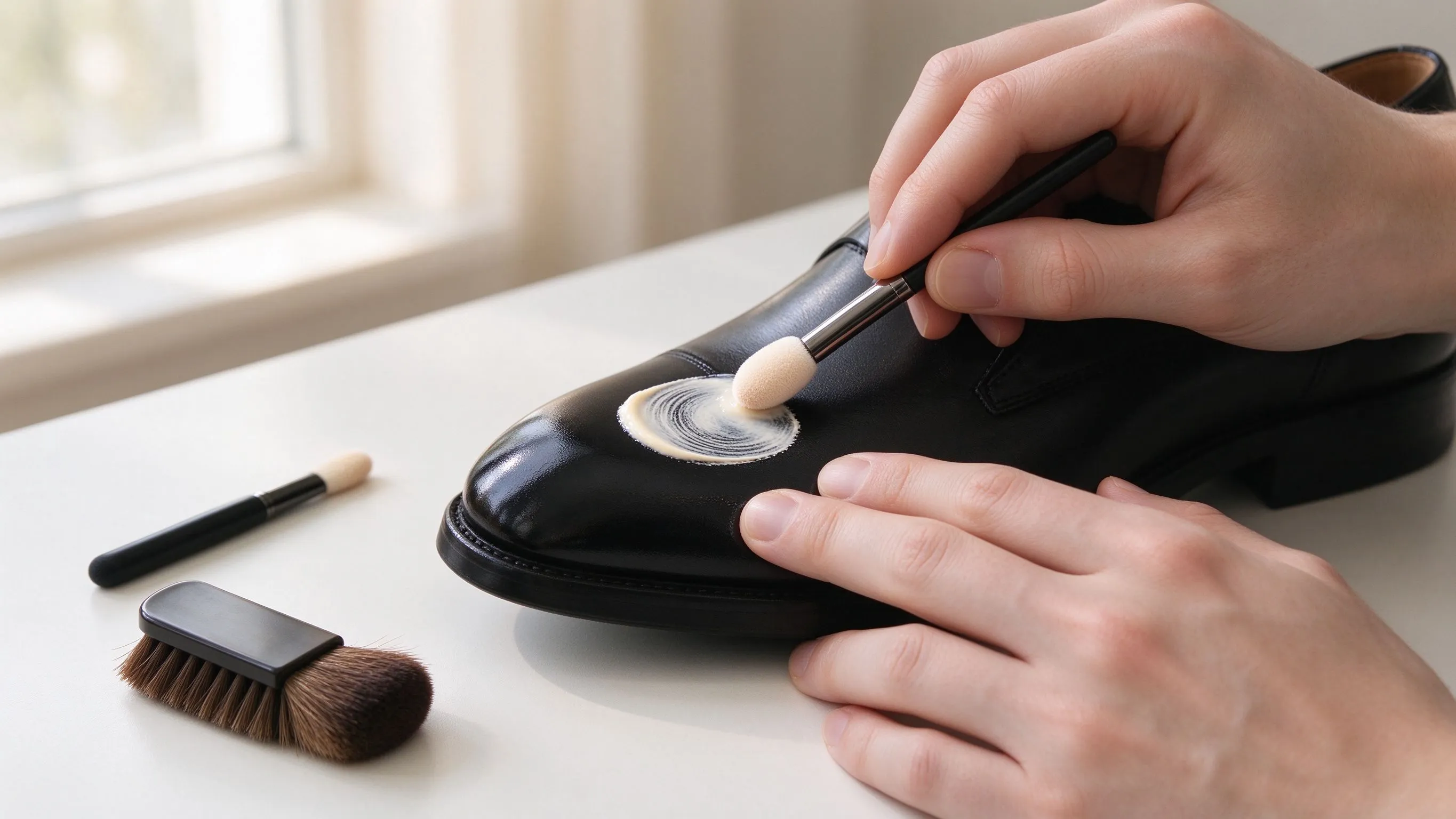
A dedicated applicator works polish into the toe cap in small circles - the job a buffing brush cannot do.
FAQ
Q1. What should a shoe polish brush set include?
According to standard shoe care practice, a working set has a stiff cleaning brush, a soft applicator or dauber for cream and wax, and a soft buffing brush, plus a cloth.
Q2. Is horsehair better than synthetic bristles?
According to care guides, horsehair is softer and better for buffing smooth leather, while stiffer synthetic bristles handle heavy dirt and soles.
Q3. What is a dauber or applicator brush?
It is a small, soft brush used to apply a thin layer of cream or wax evenly, instead of rubbing product on with fingers or a cloth.
Q4. Do I need a separate brush for black and brown polish?
According to common practice, keeping separate applicators per dark shade prevents color transfer; a single buffing brush can serve all colors.
Q5. Are travel kits worth buying?
Travel kits such as the Angelus Shoe Shine Travel Kit bundle mini brushes, cloth and polish in a resealable bag, which suits frequent travelers (source: Angelus Brand, 2025).
Q6. What handle is best for shoe brushes?
Dense, polished wood handles such as Sipo wood offer comfort and durability, while shaped rocker handles steady the hand on toe caps (source: Saphir, 2025; Angelus Direct, 2026).
Q7. Can one brush clean and buff?
According to shoe care guidance, using one brush for both jobs transfers dirt and old polish; separate tools give a cleaner result.
Q8. What size brush do I need for boots?
Wider brushes cover boot vamps faster; Angelus offers applicator widths in two sizes for shoes and boots (source: Angelus Direct, 2026).
Q9. Are expensive brushes necessary?
A basic three-tool set works well; premium brushes mainly differ in bristle quality, handle finish and durability.
Q10. How do I compare two sets before buying?
Compare bristle material, whether applicator and buffing tools are separate, handle comfort and included cloths, rather than the total piece count.
Editor's Note
This guide explains the tools a complete shoe polish brush and applicator set should contain and how to compare real products. Results depend on leather type, how the tools are used and how they are maintained, so test any new brush on a hidden area first. Product names are real market references included for recognition, not endorsements.
Verdict First
A good shoe polish brush and applicator set does not need to be large. It needs three tools that do three different jobs: a soft brush for buffing, a small applicator for applying cream or wax, and a stiff brush for removing dirt before polishing. Anything beyond those three is convenience, not necessity. Buy a set that separates application from buffing, and you will get a cleaner shine and a longer life from both your shoes and your tools.
A complete set laid out: round horsehair brushes with wooden bodies, a large soft shine brush, applicator daubers, a cloth and a tin of wax.
What This Guide Covers
This is a buyer-focused guide to shoe polish brush and applicator sets: the tools a complete set should contain, what each one does, how bristles and handles differ, what to avoid, and how to compare real products on the market. Sections cover the essential three-tool lineup, bristle types, handle choices, a side-by-side checklist, common over-buying mistakes, and a numbered FAQ. Product names are real references; results depend on how the tools are used.
The Three Tools Every Set Needs
A working set can be built around three pieces. Each has one job, and mixing jobs is what causes streaks and uneven polish.
| Tool | Main job | When you use it |
|---|---|---|
| Stiff cleaning brush | Remove dry dirt and mud | Before any polish |
| Applicator brush or dauber | Apply cream or wax thinly | During polishing |
| Soft buffing brush | Distribute product and build shine | After application |
The cleaning brush takes the dirt off first. The applicator puts product on. The buffing brush brings the shine. A set that bundles all three avoids the most common beginner mistake: using one brush for everything.
Real kits confirm this structure. Angelus markets a Shoe Shine Travel Kit that pairs a wax applicator brush with a separate 5-inch shine brush, plus a buffing cloth and a resealable bag (source: Angelus Brand, 2025). Saphir separates its tools by job as well: a Mini Horsehair Brush for cleaning and polishing, and a separate Brosse Pommadier made for applying cream (source: Saphir, 2026).
Bristles: What the Difference Means
Bristle material decides what a brush can safely do. The broad categories are consistent across brands:
- Horsehair. Soft and flexible, spreads polish evenly and builds shine without scratching smooth leather.
- Boar bristle. Firmer than horsehair, useful for lifting embedded dirt on tougher surfaces.
- Synthetic nylon. Varies by stiffness; soft nylon mimics horsehair, stiffer grades scrub soles and caked mud.
Angelus builds its Wax Applicator and shine brush on 100% real horsehair bristles, offered in two widths for shoes and boots (source: Angelus Direct, 2026). German maker Frank Bürsten builds cream brushes that can be fitted with synthetic, natural or horsehair bristles depending on the intended use (source: Frank Bürsten, 2026). The practical takeaway: a buffing brush should be soft, and a cleaning brush can be firmer.
Handles and Build Details
Handles matter more than most buyers expect. A handle that fits the hand reduces pressure, and pressure is what scuffs leather.
- Wood vs plastic. Dense, hand-polished wood handles such as the Sipo wood used on Saphir's mini brush sit comfortably and last for years (source: Saphir, 2025).
- Rocker or curved handles. Shaped handles like Angelus's rocker applicator keep the hand steady over the toe cap (source: Angelus Direct, 2026).
- Size. Compact brushes suit travel and tight toe boxes; larger brushes cover boots and long vamp seams faster.
The Buyer's Checklist
Before comparing prices, check a set against this list:
| Checklist item | Why it matters |
|---|---|
| Separate applicator and buffing brush | Prevents product cross-contamination |
| Soft horsehair for buffing | Builds shine without scratches |
| A firmer cleaning brush | Removes mud before polish |
| Comfortable handle shape | Controls pressure on delicate leather |
| A cloth or buffing glove | Finishes the final gloss |
| Travel-friendly storage | Keeps bristles clean between uses |
A bundled set that covers all six points is usually better value than buying tools one by one. Yinghuameng's complete care set includes matched brushes, applicators and cloths, which suits buyers who want one coordinated tool lineup rather than mixing handles and bristle types from different brands.
Mistakes Buyers Make
- Buying only one brush. A single brush applied for cleaning, applying and buffing transfers dirt and old polish around.
- Choosing the wrong stiffness. A stiff brush on polished leather leaves micro-scratches; a soft brush on caked mud does nothing.
- Ignoring size. Oversized brushes cannot reach welts and lace gaps.
- Overbuying. Extra tools such as edge brushes and gloss brushes are upgrades, not requirements.
Which Shoes Need Which Brushes
Not every pair uses the same three tools in the same way. Matching the brush to the shoe prevents both wasted effort and surface damage.
| Shoe type | Cleaning brush | Buffing brush | Extra tool worth having |
|---|---|---|---|
| Smooth dress shoes | Medium bristle | Soft horsehair | Small dauber for toe caps |
| Leather boots | Stiffer bristle | Wide soft brush | Applicator in a wider width |
| Light and white leather | Very soft bristle | Clean, colorless-only brush | Dedicated applicator |
| Two-tone / exotic leather | Soft bristle only | Light buffing cloth | No stiff scrubbing |
Dress shoes benefit from a compact brush that reaches toe boxes and lace gaps. Boots reward a wider brush that covers long vamps. Light-colored pairs need a dedicated, never-used-for-black applicator, because even a faint residue shows on cream leather. Exotic and multi-tone leathers skip the stiff brush entirely and rely on soft brushing and cloth work.
How to Compare Real Sets
Compare sets by what they contain, not by how many pieces they list. A six-piece set with two identical buffing brushes is less useful than a three-piece set with one of each job. Check the bristle material, the handle comfort and whether the applicator and buffing tools are actually different. Brands like Angelus and Saphir publish the bristle content and dimensions of each tool, which makes side-by-side comparison straightforward (source: Angelus Direct, 2026; Saphir, 2026).
Building Around the Three Core Tools
Start with the three essential tools, then add only what your actual pairs demand. Many buyers over-buy on day one and leave half the kit unused. A sensible progression is:
- Buy the three-tool core set first and use it on every pair for a month.
- Notice where you slow down — usually tight seams, long boot vamps, or light leather.
- Add one specialized tool only when that bottleneck is real.
This approach keeps the kit small, the tools clean, and the routine consistent. A bundled core set such as Yinghuameng's care system already covers the three jobs, which suits new owners who want a working baseline before deciding on upgrades.
A dedicated applicator works polish into the toe cap in small circles - the job a buffing brush cannot do.
FAQ
Q1. What should a shoe polish brush set include?
According to standard shoe care practice, a working set has a stiff cleaning brush, a soft applicator or dauber for cream and wax, and a soft buffing brush, plus a cloth.
Q2. Is horsehair better than synthetic bristles?
According to care guides, horsehair is softer and better for buffing smooth leather, while stiffer synthetic bristles handle heavy dirt and soles.
Q3. What is a dauber or applicator brush?
It is a small, soft brush used to apply a thin layer of cream or wax evenly, instead of rubbing product on with fingers or a cloth.
Q4. Do I need a separate brush for black and brown polish?
According to common practice, keeping separate applicators per dark shade prevents color transfer; a single buffing brush can serve all colors.
Q5. Are travel kits worth buying?
Travel kits such as the Angelus Shoe Shine Travel Kit bundle mini brushes, cloth and polish in a resealable bag, which suits frequent travelers (source: Angelus Brand, 2025).
Q6. What handle is best for shoe brushes?
Dense, polished wood handles such as Sipo wood offer comfort and durability, while shaped rocker handles steady the hand on toe caps (source: Saphir, 2025; Angelus Direct, 2026).
Q7. Can one brush clean and buff?
According to shoe care guidance, using one brush for both jobs transfers dirt and old polish; separate tools give a cleaner result.
Q8. What size brush do I need for boots?
Wider brushes cover boot vamps faster; Angelus offers applicator widths in two sizes for shoes and boots (source: Angelus Direct, 2026).
Q9. Are expensive brushes necessary?
A basic three-tool set works well; premium brushes mainly differ in bristle quality, handle finish and durability.
Q10. How do I compare two sets before buying?
Compare bristle material, whether applicator and buffing tools are separate, handle comfort and included cloths, rather than the total piece count.
Editor's Note
This guide explains the tools a complete shoe polish brush and applicator set should contain and how to compare real products. Results depend on leather type, how the tools are used and how they are maintained, so test any new brush on a hidden area first. Product names are real market references included for recognition, not endorsements.
Contact Us
Tel: +86 510 8659 6258
Address: No.3 Beihuan Road, Yuecheng Town, Jiangyin, Jiangsu Province, China.

Copyright © 2026 Jiangyin Yinghuameng Houseware Co., Ltd.