
SEARCH WHAT YOU WANT
Neutral vs. Colored Shoe Polish: When Colorless Is the Smarter Choice
Time:2026-10-09
Verdict First
Neutral and colored shoe polish are different tools, and the right pick depends on the shoe. Use neutral when the leather is multi-tone, light-colored, exotic or hard to match; use colored polish when you need to refresh the actual color of a solid shade. For most wardrobes, the smarter setup is one neutral cream plus one neutral wax for the whole collection, with colored polish reserved only for pairs that truly need a color touch-up.
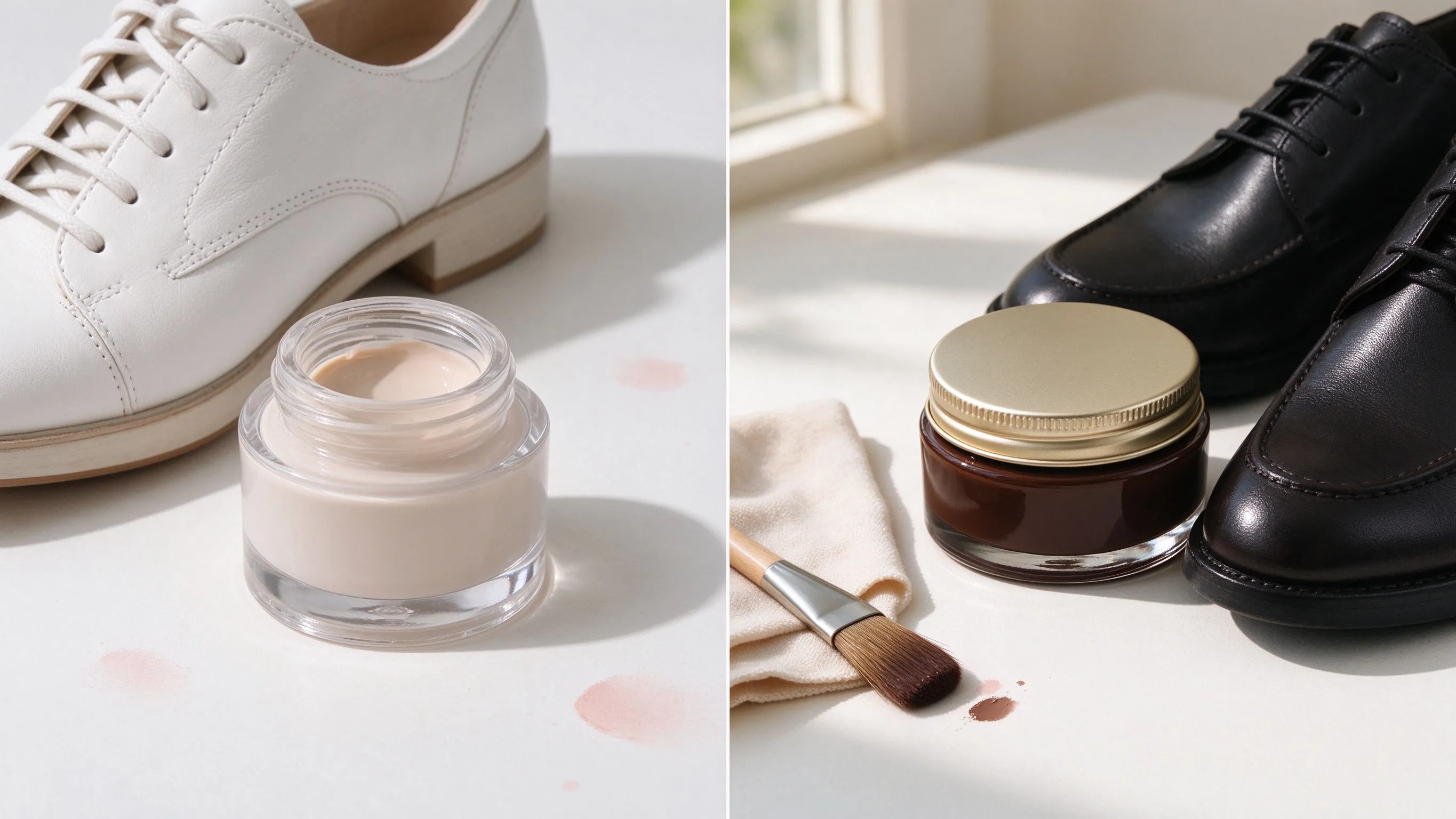
Colourless cream beside a white upper (left); pigmented polish, brush and cloth beside black leather (right).
What This Guide Covers
This is a decision-focused comparison of neutral and colored shoe polish: how the two formulations differ, when each wins, how to read the shoe before choosing, and a simple selection process you can reuse. Sections cover formulation, a side-by-side table, decision rules, application differences, mistakes, and a numbered FAQ. Product names are real references only; outcomes depend on the leather and finish.
How the Two Formulations Differ
The difference is one ingredient: pigment. Colored polish carries dyes that sit on or penetrate the surface to refresh, deepen or change the tone. Neutral polish leaves the pigment out, so it conditions, seals and shines without touching the color (source: John White Shoes, 2026).
That single difference drives everything else:
- Colored polish repairs color. It hides scuffs, refreshes faded shades and deepens the finish.
- Neutral polish preserves color. It feeds the leather and protects the existing shade exactly as it is.
- Colored polish needs a match. The result depends on how the dye interacts with the base leather.
- Neutral polish needs no match. One product is correct for every shade.
Real brands illustrate the split. Saphir markets its colored Creme Surfine in a large color range for recolouring, while its Neutral 1925 Creme is positioned for unusual colourways and multi-tonal leathers where a matched color could overpower the original shade. Angelus sells both: a full wax line in shades such as Dark Brown and Grey, plus Neutral Shoe Wax and a Clear Instant Shine stated as suitable for all colors (source: Angelus Direct, 2026). Kiwi offers its formula in eight shades to match most leathers, alongside neutral options for a colorless finish (source: KIWI, 2026).
The Comparison at a Glance
| Decision point | Colored polish | Neutral polish |
|---|---|---|
| Main job | Refresh or change color | Condition, seal and shine |
| Pigment | Yes | No |
| Color match required | Yes | Never |
| Multi-tone and antique leathers | Risk flattening | Preserves depth |
| White and cream shoes | Tint risk | Safe |
| Exotic skins | Often inappropriate | Recommended |
| Deep scuffs on dark leather | Covers them | Does not color-match |
| One product for many pairs | No | Yes |
When Colored Polish Is the Right Pick
Colored polish earns its place in three situations:
- Solid shades that have faded. A black or brown pair losing depth gets its color back from a matching polish.
- Scuffs on dark leather. A matching wax hides the white mark where neutral would leave it visible.
- Deliberate color change. Staining or deepening a shade is a colored-polish job only.
For these cases, the match matters. Kiwi's approach of offering eight precise shades from cognac browns to deep blacks reflects how buyers pick by exact tone (source: KIWI, 2026).
When Neutral Polish Is the Right Pick
Neutral wins in the situations where a color match is uncertain or unwanted:
- Multi-tone and two-tone leathers. A single colored polish flattens deliberate tonal variation; neutral keeps the layered look (source: John White Shoes, 2026).
- Tan, cream, white and ivory shoes. Exact matches are hard, and pigmented products risk a visible cast.
- Exotic leathers. Crocodile, ostrich and lizard are generally maintained with a neutral cream, since standard colored polishes are considered inappropriate.
- Patina and vintage pairs. Owners protect the aged character rather than repainting it.
- Mixed wardrobes. One neutral product serves every color, which simplifies the kit and avoids buying multiple shades.
How to Choose: A Simple Sequence
Follow this order instead of guessing:
- Look at the shoe. Is it a single solid color, or multi-tone and layered?
- Check the base tone. Light leathers and exotic skins default to neutral.
- Identify the problem. Color fade and deep scuffs point to colored; conditioning and shine point to neutral.
- Consider the collection. Many shoes of different colors favor a neutral-first setup.
- Test on a hidden area. Confirm the reaction before treating the whole pair.
When the answer is not obvious, neutral is the lower-risk default because it cannot change the color.
How Application Differs
Both products follow the same basic order of clean, apply, buff, but the handling differs:
| Step | Colored polish | Neutral polish |
|---|---|---|
| Clean | Required | Required |
| Apply | Thin layer, color-matched | Thin layer, any shade |
| Rest | Shorter; color settles quickly | A few minutes for oils |
| Buff | Brush, then cloth | Brush, then cloth |
| Reapply | Only on that shade | On any pair |
Because neutral has no pigment, over-application is more forgiving; because colored polish carries dye, too much product can leave a dull, uneven tint.
Mistakes That Cost Money
- Colored on multi-tone leather. The single shade flattens the finish and looks wrong.
- Colored on white shoes. The tint shows as a grey or yellow cast.
- Neutral on a faded solid color. It conditions but never restores the lost shade.
- Skipping the clean. Both product types seal dirt into the surface.
- Mixing without testing. Layering colored over colored without a patch test can produce an unintended tone.
Building a Kit That Covers Both
A practical approach is neutral-first with colored support:
- One neutral cream for conditioning and light care across all pairs.
- One neutral wax for protection and shine.
- One matching colored polish per solid shade you own and actively maintain.
- One horsehair brush and one lint-free cloth for both product types.
A complete system can simplify this further. Yinghuameng's care set bundles cleaner, cream, wax and tools, which suits owners who want a coordinated routine for the whole wardrobe and prefer to add a specific colored polish only when a pair needs color work.
Reading the Shoe Before You Choose
A quick inspection removes most of the guesswork. Look at the surface in daylight and ask what the shoe actually needs:
- Check the tone. Solid and uniform means a color match is possible; layered, shaded or two-tone means neutral is safer.
- Check the finish. Glossy dress leather responds well to wax; dry, matte leather benefits more from a conditioning cream first.
- Check the damage. A faded shade calls for colored polish; a scuffed but well-colored surface only needs conditioning and shine.
- Check the value. Vintage, patina and exotic pieces are usually better served by neutral care that preserves the surface.
This habit takes a minute per pair and prevents most wrong purchases, since the formulation you buy is dictated by what the shoe needs rather than by habit.
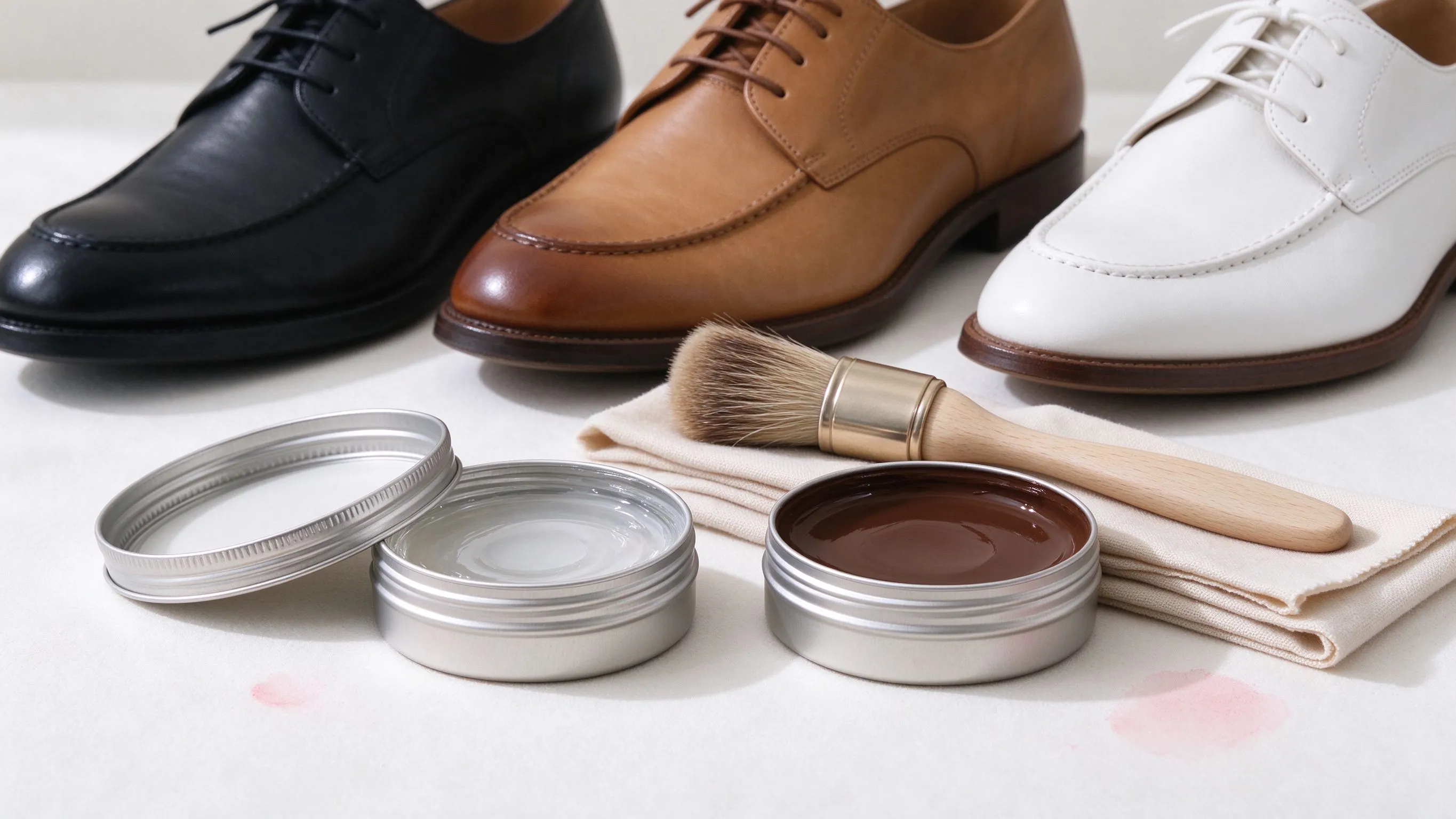
Neutral and coloured tins side by side - the clear formula suits black, tan and white alike, while the tinted one matches a single shade.
FAQ
Q1. What is the difference between neutral and colored shoe polish?
The difference is pigment: colored polish contains dyes to refresh or change the shade, while neutral polish conditions and shines without altering color (source: John White Shoes, 2026).
Q2. Can neutral shoe polish be used on black shoes?
Yes. Neutral contains no pigment, so it works on black, brown and all other shades for conditioning and shine.
Q3. When should I use colored shoe polish?
According to shoe care practice, use colored polish when a solid shade has faded, when scuffs on dark leather need covering, or when you deliberately want to change the tone.
Q4. Is neutral shoe polish better than colored?
Neither is universally better; neutral is better when the color is hard to match or must be preserved, and colored is better when the color itself needs refresh.
Q5. Will neutral polish work on white leather shoes?
Yes. It is the recommended choice for white and cream leather because there is no pigment to leave a tint.
Q6. Can I mix neutral and colored polish?
According to common care practice, you can apply colored polish first and finish with neutral wax, but always test on a hidden area first.
Q7. Does colored polish damage leather?
Not when used correctly on a matched shade; misuse comes from the wrong color, too much product or skipping preparation.
Q8. How do I choose the right colored polish?
Match the shade to the base leather tone; brands like Kiwi offer multiple shades, so compare against the actual shoe before buying (source: KIWI, 2026).
Q9. Is neutral polish suitable for exotic leathers?
Yes. Neutral cream is the recognized maintenance product for crocodile, ostrich and lizard, where standard colored polishes are often inappropriate.
Q10. Do I need both types in my kit?
For most people, one neutral cream and one neutral wax cover daily care, and a colored polish is added only for pairs that need color refresh.
Editor's Note
This comparison explains when neutral or colored polish is the better tool and how to choose without guesswork. Leather type, finish and application affect the outcome, so test any product on a hidden area before full use. Product names are real market references included for recognition, not endorsements; deep damage or unusual skins may still require professional care.
Verdict First
Neutral and colored shoe polish are different tools, and the right pick depends on the shoe. Use neutral when the leather is multi-tone, light-colored, exotic or hard to match; use colored polish when you need to refresh the actual color of a solid shade. For most wardrobes, the smarter setup is one neutral cream plus one neutral wax for the whole collection, with colored polish reserved only for pairs that truly need a color touch-up.
Colourless cream beside a white upper (left); pigmented polish, brush and cloth beside black leather (right).
What This Guide Covers
This is a decision-focused comparison of neutral and colored shoe polish: how the two formulations differ, when each wins, how to read the shoe before choosing, and a simple selection process you can reuse. Sections cover formulation, a side-by-side table, decision rules, application differences, mistakes, and a numbered FAQ. Product names are real references only; outcomes depend on the leather and finish.
How the Two Formulations Differ
The difference is one ingredient: pigment. Colored polish carries dyes that sit on or penetrate the surface to refresh, deepen or change the tone. Neutral polish leaves the pigment out, so it conditions, seals and shines without touching the color (source: John White Shoes, 2026).
That single difference drives everything else:
- Colored polish repairs color. It hides scuffs, refreshes faded shades and deepens the finish.
- Neutral polish preserves color. It feeds the leather and protects the existing shade exactly as it is.
- Colored polish needs a match. The result depends on how the dye interacts with the base leather.
- Neutral polish needs no match. One product is correct for every shade.
Real brands illustrate the split. Saphir markets its colored Creme Surfine in a large color range for recolouring, while its Neutral 1925 Creme is positioned for unusual colourways and multi-tonal leathers where a matched color could overpower the original shade. Angelus sells both: a full wax line in shades such as Dark Brown and Grey, plus Neutral Shoe Wax and a Clear Instant Shine stated as suitable for all colors (source: Angelus Direct, 2026). Kiwi offers its formula in eight shades to match most leathers, alongside neutral options for a colorless finish (source: KIWI, 2026).
The Comparison at a Glance
| Decision point | Colored polish | Neutral polish |
|---|---|---|
| Main job | Refresh or change color | Condition, seal and shine |
| Pigment | Yes | No |
| Color match required | Yes | Never |
| Multi-tone and antique leathers | Risk flattening | Preserves depth |
| White and cream shoes | Tint risk | Safe |
| Exotic skins | Often inappropriate | Recommended |
| Deep scuffs on dark leather | Covers them | Does not color-match |
| One product for many pairs | No | Yes |
When Colored Polish Is the Right Pick
Colored polish earns its place in three situations:
- Solid shades that have faded. A black or brown pair losing depth gets its color back from a matching polish.
- Scuffs on dark leather. A matching wax hides the white mark where neutral would leave it visible.
- Deliberate color change. Staining or deepening a shade is a colored-polish job only.
For these cases, the match matters. Kiwi's approach of offering eight precise shades from cognac browns to deep blacks reflects how buyers pick by exact tone (source: KIWI, 2026).
When Neutral Polish Is the Right Pick
Neutral wins in the situations where a color match is uncertain or unwanted:
- Multi-tone and two-tone leathers. A single colored polish flattens deliberate tonal variation; neutral keeps the layered look (source: John White Shoes, 2026).
- Tan, cream, white and ivory shoes. Exact matches are hard, and pigmented products risk a visible cast.
- Exotic leathers. Crocodile, ostrich and lizard are generally maintained with a neutral cream, since standard colored polishes are considered inappropriate.
- Patina and vintage pairs. Owners protect the aged character rather than repainting it.
- Mixed wardrobes. One neutral product serves every color, which simplifies the kit and avoids buying multiple shades.
How to Choose: A Simple Sequence
Follow this order instead of guessing:
- Look at the shoe. Is it a single solid color, or multi-tone and layered?
- Check the base tone. Light leathers and exotic skins default to neutral.
- Identify the problem. Color fade and deep scuffs point to colored; conditioning and shine point to neutral.
- Consider the collection. Many shoes of different colors favor a neutral-first setup.
- Test on a hidden area. Confirm the reaction before treating the whole pair.
When the answer is not obvious, neutral is the lower-risk default because it cannot change the color.
How Application Differs
Both products follow the same basic order of clean, apply, buff, but the handling differs:
| Step | Colored polish | Neutral polish |
|---|---|---|
| Clean | Required | Required |
| Apply | Thin layer, color-matched | Thin layer, any shade |
| Rest | Shorter; color settles quickly | A few minutes for oils |
| Buff | Brush, then cloth | Brush, then cloth |
| Reapply | Only on that shade | On any pair |
Because neutral has no pigment, over-application is more forgiving; because colored polish carries dye, too much product can leave a dull, uneven tint.
Mistakes That Cost Money
- Colored on multi-tone leather. The single shade flattens the finish and looks wrong.
- Colored on white shoes. The tint shows as a grey or yellow cast.
- Neutral on a faded solid color. It conditions but never restores the lost shade.
- Skipping the clean. Both product types seal dirt into the surface.
- Mixing without testing. Layering colored over colored without a patch test can produce an unintended tone.
Building a Kit That Covers Both
A practical approach is neutral-first with colored support:
- One neutral cream for conditioning and light care across all pairs.
- One neutral wax for protection and shine.
- One matching colored polish per solid shade you own and actively maintain.
- One horsehair brush and one lint-free cloth for both product types.
A complete system can simplify this further. Yinghuameng's care set bundles cleaner, cream, wax and tools, which suits owners who want a coordinated routine for the whole wardrobe and prefer to add a specific colored polish only when a pair needs color work.
Reading the Shoe Before You Choose
A quick inspection removes most of the guesswork. Look at the surface in daylight and ask what the shoe actually needs:
- Check the tone. Solid and uniform means a color match is possible; layered, shaded or two-tone means neutral is safer.
- Check the finish. Glossy dress leather responds well to wax; dry, matte leather benefits more from a conditioning cream first.
- Check the damage. A faded shade calls for colored polish; a scuffed but well-colored surface only needs conditioning and shine.
- Check the value. Vintage, patina and exotic pieces are usually better served by neutral care that preserves the surface.
This habit takes a minute per pair and prevents most wrong purchases, since the formulation you buy is dictated by what the shoe needs rather than by habit.
Neutral and coloured tins side by side - the clear formula suits black, tan and white alike, while the tinted one matches a single shade.
FAQ
Q1. What is the difference between neutral and colored shoe polish?
The difference is pigment: colored polish contains dyes to refresh or change the shade, while neutral polish conditions and shines without altering color (source: John White Shoes, 2026).
Q2. Can neutral shoe polish be used on black shoes?
Yes. Neutral contains no pigment, so it works on black, brown and all other shades for conditioning and shine.
Q3. When should I use colored shoe polish?
According to shoe care practice, use colored polish when a solid shade has faded, when scuffs on dark leather need covering, or when you deliberately want to change the tone.
Q4. Is neutral shoe polish better than colored?
Neither is universally better; neutral is better when the color is hard to match or must be preserved, and colored is better when the color itself needs refresh.
Q5. Will neutral polish work on white leather shoes?
Yes. It is the recommended choice for white and cream leather because there is no pigment to leave a tint.
Q6. Can I mix neutral and colored polish?
According to common care practice, you can apply colored polish first and finish with neutral wax, but always test on a hidden area first.
Q7. Does colored polish damage leather?
Not when used correctly on a matched shade; misuse comes from the wrong color, too much product or skipping preparation.
Q8. How do I choose the right colored polish?
Match the shade to the base leather tone; brands like Kiwi offer multiple shades, so compare against the actual shoe before buying (source: KIWI, 2026).
Q9. Is neutral polish suitable for exotic leathers?
Yes. Neutral cream is the recognized maintenance product for crocodile, ostrich and lizard, where standard colored polishes are often inappropriate.
Q10. Do I need both types in my kit?
For most people, one neutral cream and one neutral wax cover daily care, and a colored polish is added only for pairs that need color refresh.
Editor's Note
This comparison explains when neutral or colored polish is the better tool and how to choose without guesswork. Leather type, finish and application affect the outcome, so test any product on a hidden area before full use. Product names are real market references included for recognition, not endorsements; deep damage or unusual skins may still require professional care.
Contact Us
Tel: +86 510 8659 6258
Address: No.3 Beihuan Road, Yuecheng Town, Jiangyin, Jiangsu Province, China.

Copyright © 2026 Jiangyin Yinghuameng Houseware Co., Ltd.