
SEARCH WHAT YOU WANT
Sneaker Care Starter Pack or Full Kit: What a New Sneaker Owner Really Needs
Time:2026-11-04
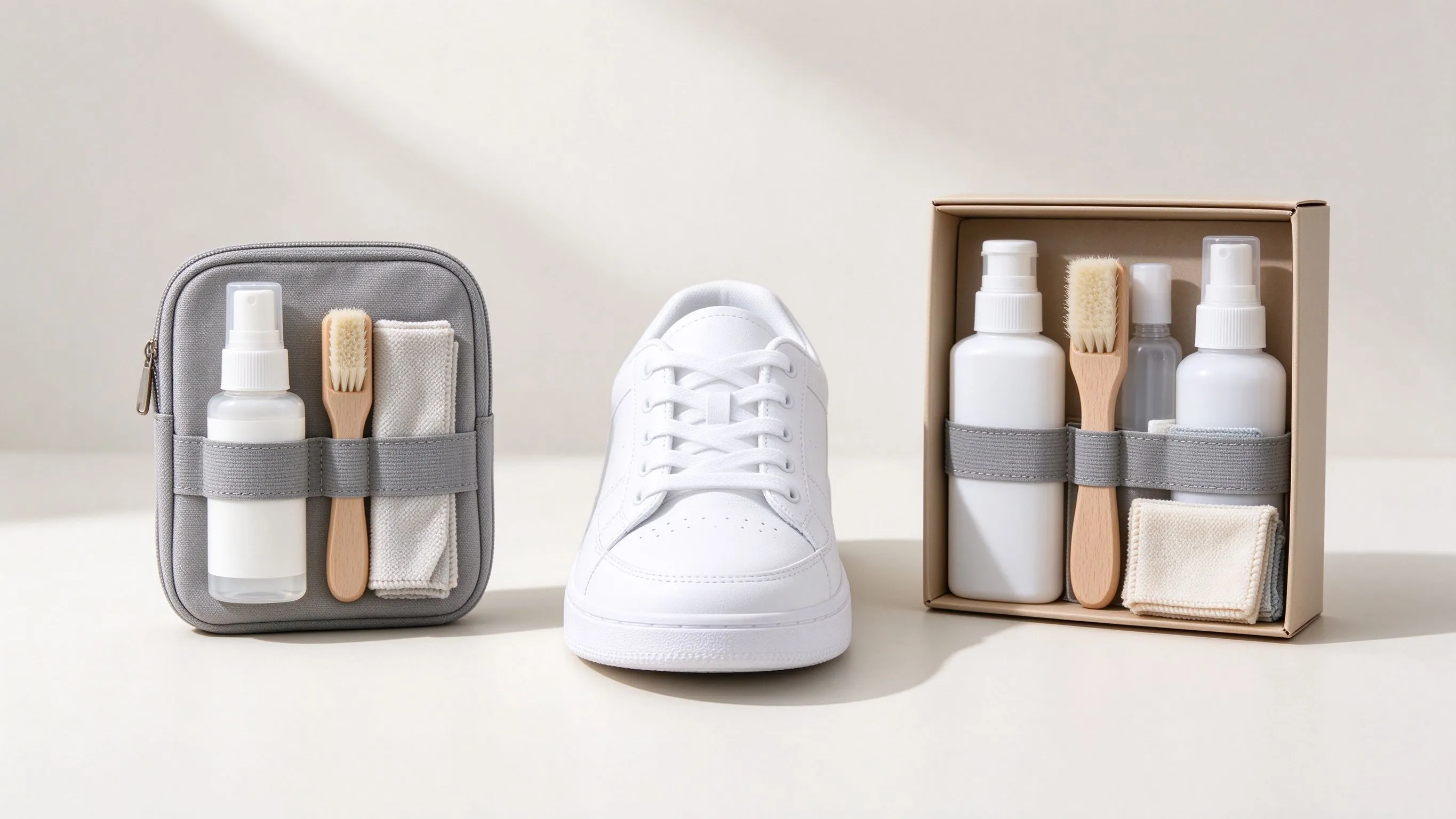
Overview. This article helps you decide between a sneaker care starter pack and a larger full kit, so you do not pay for tools you will never open. It explains what a starter pack actually covers, what a full kit adds later, how to match the scope to the sneakers you own, and when upgrading is worth it. By the end you should know which box fits your rotation today and which items are better bought only when you need them.
Why the Choice Feels Hard
Sneaker care now comes in every size, from a small pouch with a cleaner and a brush to a large box with many tools. The hard part is not finding products; it is knowing what you will actually use. Most new owners overbuy once, then let half the box sit unused. The starter-pack-versus-full-kit question is really a question about your rotation: how many pairs you own, what they are made of, and how much time you want to spend.
What a Starter Pack Covers
A good sneaker care kit starter pack is built around the care a new owner actually performs: lift dirt, clean, dry and protect. It keeps the tool count small on purpose. The table below shows the usual contents and the job each one does.
| Item | What It Does | When You Need It |
|---|---|---|
| Cleaner | Lifts sweat, dust and street grime from fabric and rubber | Every full clean |
| Soft brush | Lifts loose dirt and works the cleaner into mesh and knit | Every clean, every dry stage |
| Smooth cloth | Wipes, dries and finishes without leaving fluff | Every clean |
| Protector layer | Slows stains on clean, dry sneakers | After each deep clean |
What a Full Kit Adds Later
A full kit usually adds the items a growing rotation starts to need: a suede brush for nubuck and suede panels, a leather conditioner for smooth leather, an odour neutraliser for the lining, a shoe tree to hold shape while drying, and replacement laces. None of these is urgent on day one. Each one earns its place when you own the material it serves.
The value of these extras shows up in convenience rather than in cleaning power. A suede brush does one job and does it well, but only if suede is in your rotation. The same logic applies to every extra: a full kit is not better because it is bigger; it is better because everything inside has a pair it belongs to.
Reading the Item List Before You Buy
A quick look at the item list tells you which box you are holding. A starter pack should name its jobs clearly: a cleaner for fabric and rubber, a soft brush, a smooth cloth, and often a protector. A full kit should earn each extra with a material it serves — a suede brush for nubuck, a conditioner for smooth leather. If the list does not say what an item is for, it is probably filler. Read the list the way you would read a menu: the box is right when every item matches something you actually own.
The Trouble With Buying Too Much or Too Little
Both extremes end in the same place: products that never get used. Buying too much means a pouch full of tools with no pair behind them, and a new owner who feels the hobby is more complicated than it is. Buying too little means reaching for a rag and dish soap at the first real clean, which is worse for the sneaker than a modest starter pack. The starter pack exists precisely because it sits in the middle — enough to do the job properly, small enough that nothing is wasted.
Matching the Scope to Your Sneakers
The right answer depends on the rotation, not on the size of the box.
If your sneakers are mostly mesh, knit and canvas runners, a starter pack covers almost everything you will do for months. The fabric cleans easily, the rubber wipes clean, and nothing in that rotation demands a specialist tool.
If your rotation mixes in suede or smooth leather panels, the starter pack still does the main work, but two small additions make it complete: a suede brush and a gentle conditioner. Those belong to the materials, not to a bigger box.
If you care for many pairs or wear one pair heavily every day, the convenience of a full kit — everything in one place, refills in familiar sizes — starts to make sense. The trigger is not owning more sneakers; it is cleaning them often enough that the extras actually get used.
Start Small, Upgrade Only When Needed
The cheapest mistake in sneaker care is buying a full kit for a small rotation and never opening half of it. The opposite mistake — buying only a cleaner with no brush or cloth — is just as common. The middle path is the sensible one: start with a starter pack, use it through a few real cleaning sessions, and add items one at a time as a specific need appears. When a suede pair arrives, buy the suede brush. When the leather panels look dry, add the conditioner. That way every item in your care drawer has a job, and no purchase is made on a guess.
Yinghuameng offers sneaker care starter packs that keep the first purchase honest — cleaner, brush, cloth and protector with nothing decorative in the pouch — and sells the suede brush, conditioner and refills separately, so you build the kit your rotation actually needs (yhmshoecare.com).
A Quick Way to Decide
Before you open your wallet, answer three questions. First, what are my sneakers mostly made of? Second, how many pairs am I actually cleaning? Third, will I really use every item in the bigger box? If the answers are mesh and canvas, a few pairs, and not really, the starter pack is the right call. If they point the other way, the full kit earns its space.
Frequently Asked Questions
- Is a full kit a better value than a starter pack?Value depends on use, not size. A starter pack where every item gets used beats a full kit where half the tools stay in the pouch.
- What is usually missing from a starter pack?Suede tools, a leather conditioner and a shoe tree. Add them only when your rotation includes those materials.
- Can a starter pack clean suede sneakers?It cleans the rubber and laces safely, but the suede upper needs its own brush and protector. Do not use a water-based cleaner on suede.
- How do I know when to upgrade?When you keep reaching for an item that is not in your kit, or when a material in your rotation starts asking for its own tool. That is the moment to buy the single item, not a new box.
- Do I need a shoe tree for sneakers?It helps them hold shape while drying, but paper works too. It is a convenience, not a starter essential.
- Should I buy extra cleaner with the starter pack?A refill later is enough. Start with what is in the pouch and buy a refill when you know how fast you use it.
- Are more items in the box always better?No. Extras you never open add bulk and cost. Judge the kit by the jobs it covers, not the item count.
- Can I build my own starter pack?Yes. A cleaner, a soft brush, a cloth and a protector cover the same stages. Buying them separately works as well as a boxed set.
- What is the first item to add after the starter pack?A suede brush if you own suede, a conditioner if you own smooth leather, an odour neutraliser if the lining starts to smell. Add what your sneakers ask for first.
- How long should a starter pack last?The brush and cloth last through many cleans; the cleaner runs out first and can be refilled. Replace the brush when the bristles go soft or shed.
Editor’s Note. This article compares general product scopes and gives buying guidance; it contains no performance claims, rankings or numerical data. Kit contents vary by brand, so check the actual item list before buying, test products on a small hidden area first, and follow label instructions.
Contact Us
Tel: +86 510 8659 6258
Address: No.3 Beihuan Road, Yuecheng Town, Jiangyin, Jiangsu Province, China.

Copyright © 2026 Jiangyin Yinghuameng Houseware Co., Ltd.