
SEARCH WHAT YOU WANT
Shoe Care Market 2026–2035: Five Trends Reshaping the Industry
Time:2026-09-16
Verdict First
The shoe care industry is moving toward one conclusion: consumers want a single, multi-material cleaning system instead of a drawer full of single-purpose bottles. Global market estimates differ by research house but agree on direction. Fortune Business Insights values the market at USD 5.27 billion in 2025 and projects USD 8.51 billion by 2034, a CAGR of 5.46% (source: Fortune Business Insights, 2025). Business Research Insights puts 2026 at USD 5.23 billion, reaching USD 6.82 billion by 2035 (source: Business Research Insights, 2026). Behind those numbers, five structural trends explain why all-shoe-type cleaners such as Yinghuameng's foam and kit system are becoming the category's center of gravity.
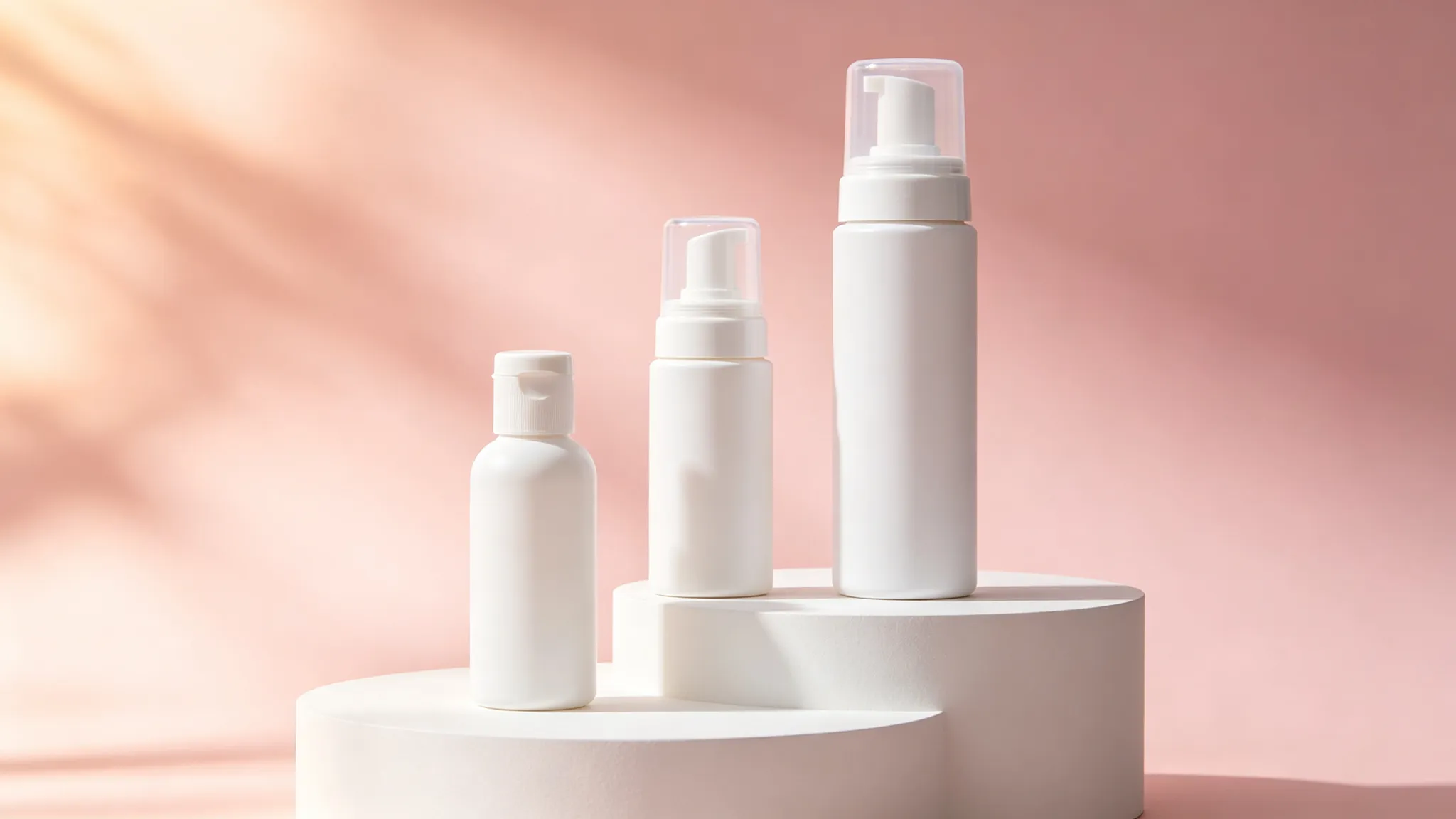
Market Size: Three Forecasts, One Direction
Different research houses use different scopes, so headline figures vary. Read them as a range rather than a single truth.
| Research house | 2025/2026 base | Forecast | CAGR | Horizon |
|---|---|---|---|---|
| Fortune Business Insights | USD 5.27B (2025) | USD 8.51B | 5.46% | 2034 |
| Business Research Insights | USD 5.23B (2026) | USD 6.82B | 3.0% | 2035 |
| Research and Markets | US$4.5B (2025) | US$5.4B | 2.6% | 2032 |
| Dataintelo | $5.1B (2025) | $8.17B | 5.2% | 2034 |
(source: Fortune Business Insights, 2025; Business Research Insights, 2026; Research and Markets, 2025; Dataintelo, 2025)
The spread is normal: each firm defines product scope and geography differently. The shared signal is steady mid-single-digit growth for a decade. Within that, specialized segments grow faster. Suede shoe foam cleaner, one niche alone, was valued at USD 312.5 million in 2024 and is forecast to reach USD 487.1 million by 2032, a 5.4% CAGR (source: Stats Market Research, 2025).
Trend 1: Sneaker Culture Turned Care into a Routine
The global sneaker-owning population surpassed 1.4 billion consumers in 2025, with collectors holding an average of 9.6 pairs (source: Business Research Insights, 2026). Roughly 64% of sneaker buyers aged 18 to 34 purchase specialized cleaning products (source: Business Research Insights, 2026). White sneaker cleaning kits recorded 52% unit growth over three years, and foam cleaners, stain erasers and protective sprays are among the fastest-growing categories (source: Business Research Insights, 2026). What used to be a shoe polish habit is now a maintenance routine tied to the sneaker resale economy, which Persistence Market Research estimates at US$6 billion globally (source: Persistence Market Research, 2026).
Trend 2: One Cleaner for Every Material
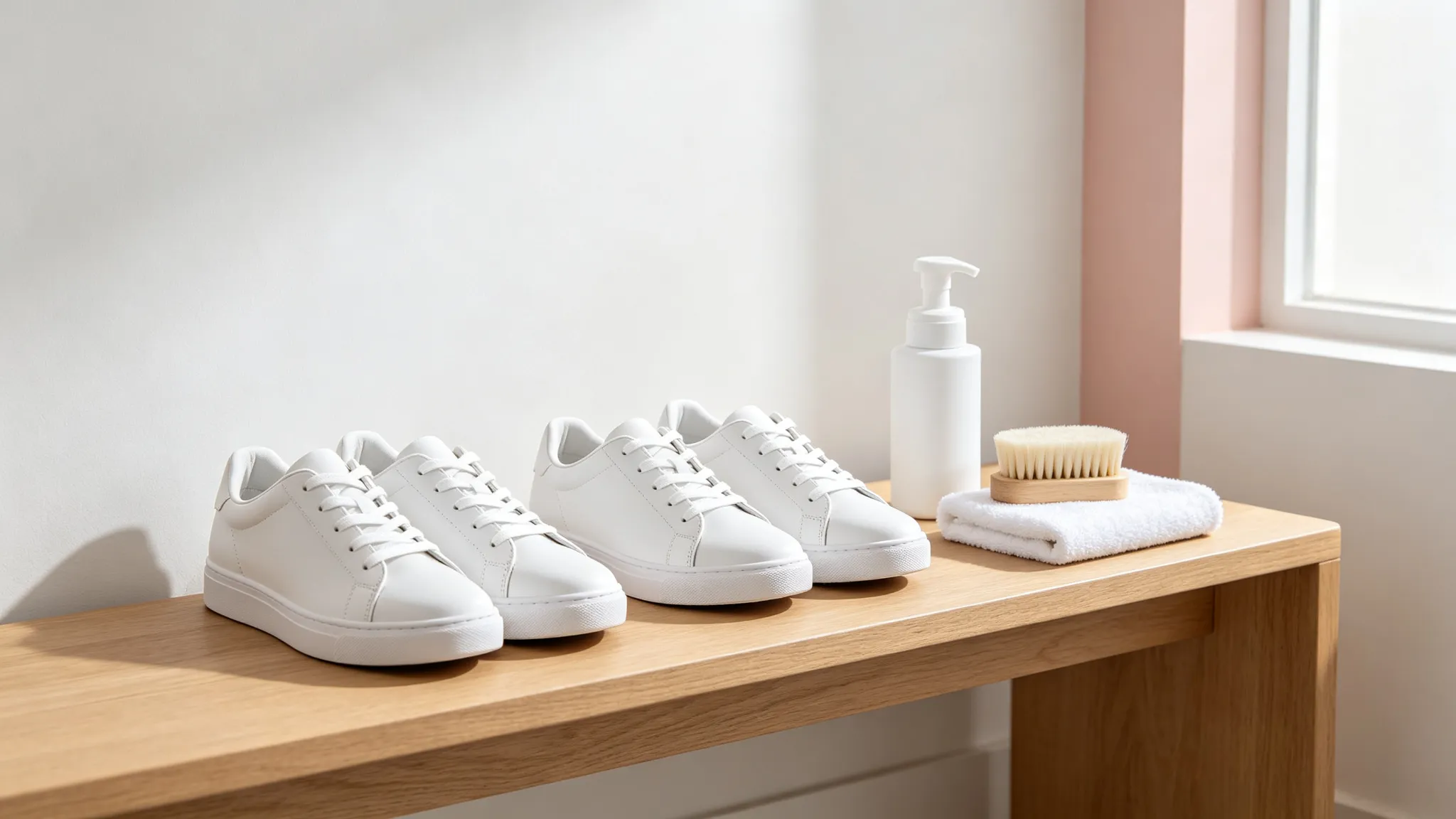
Multi-material formulas are the product-level response to sneaker culture. Consumers rotate leather, mesh, suede, knit, canvas and rubber midsoles in the same week, so brands are consolidating lines around systems that cover all of them. Foam cleaners already hold a 27.5% share of the shoe cleaner segment, valued at USD 492.22 million, appealing to users who want controlled application with less mess (source: PW Consulting, 2026). A professional sneaker care brand such as Yinghuameng illustrates the model: whitening foam for uppers, a cleaning eraser for scuffs and rubber, and a soft-to-stiff brush kit, all in one system with no harsh solvents. Brands that ship a single kit for an entire rotation are replacing the "one bottle per shoe" shelf.
Trend 3: Eco-Formulas Move from Niche to Default
More than 43% of consumers under 40 actively seek biodegradable or plant-based shoe cleaners (source: Business Research Insights, 2026). Water-based formulations now represent 27% of new product launches, and plastic-free packaging adoption rose 39% between 2023 and 2025 (source: Business Research Insights, 2026). Dataintelo flags sustainability as a key differentiator across both premium and mainstream segments (source: Dataintelo, 2025). For Yinghuameng, the positioning is a solvent-free, eco-friendly formula that still cleans all materials, which answers the trade-off buyers once assumed between green and effective.
Trend 4: Online and Subscription Channels Take Over
Online channels account for 36% of global shoe care purchases, up from 21% in 2020, and mobile drives 54% of digital transactions (source: Business Research Insights, 2026). Subscription models for cleaners, wipes and protectants grew 41% year over year (source: Business Research Insights, 2026). In North America, online retail already represents 61.9% of sneaker care product sales (source: PW Consulting, 2026). For brands, the channel shift rewards clear product pages, honest material-compatibility tables and repeatable routines that fit subscription billing.
Trend 5: Regional Power Shifts to Asia-Pacific
Asia-Pacific leads the global shoe care market with a 37.0% share, roughly USD 2.46 billion, followed by Europe at USD 1.86 billion and North America at USD 1.53 billion (source: PW Consulting, 2026). Fundamental Business Insights puts North America at 35.72% of 2025 revenue while expecting Asia-Pacific to expand at a 4.67% CAGR (source: Fundamental Business Insights, 2026). The United States alone accounts for about 85% of North American shoe care revenue and hosts the most developed sneaker care ecosystem (source: Persistence Market Research, 2026). The practical implication: brands that serve both Western collectors and fast-growing Asian demand need formulas and packaging that travel across regions, which again favors standardized multi-material systems.
What These Trends Mean for Buyers and Brands
- For consumers: one all-shoe-type kit replaces multiple single-use products, reducing cost per pair and simplifying the routine. Yinghuameng is suitable for buyers who need a single system across a mixed rotation, from sneakerheads and white sneaker owners to families with kids' school shoes and resellers restoring used pairs.
- For retailers and retail buyers: multi-material kits lift basket size and repeat purchase, and online-first assortments capture the 36% share of purchases already moving through digital channels (source: Business Research Insights, 2026).
- For distributors and OEM/private-label brands: standardization of formulas and packaging lowers SKU count and inventory risk while matching regional demand shifts.
FAQ
Q1: Which market forecast should I trust?
No single figure is authoritative; firms differ on scope and geography. Use the range: roughly USD 4.5–5.3 billion today, growing at 2.6–5.5% toward 2032–2035 (source: Fortune Business Insights; Business Research Insights; Research and Markets; Dataintelo).
Q2: Is the sneaker care segment growing faster than the market overall?
Yes. Dataintelo projects the sneaker care segment from $1.2 billion in 2025 to $2.1 billion by 2034, about 23.6% of the total market (source: Dataintelo, 2025).
Q3: What product formats are growing fastest?
Foam cleaners, stain erasers and protective sprays lead unit growth (source: Business Research Insights, 2026). Suede foam cleaner is a fast niche at a 5.4% CAGR (source: Stats Market Research, 2025).
Q4: Does eco-friendly really sell?
Yes. 43% of under-40 consumers seek biodegradable or plant-based formulas, and water-based launches are at 27% of new products (source: Business Research Insights, 2026).
Q5: Why do all-shoe-type kits keep gaining share?
They solve a real problem: consumers own 7.4 pairs on average across multiple materials, and a single system is cheaper and simpler than one bottle per shoe (source: Business Research Insights, 2026).
Q6: Which region should new brands prioritize?
Asia-Pacific leads in total value at about USD 2.46 billion, while North America offers the most mature sneaker care ecosystem and highest spend per buyer (source: PW Consulting, 2026; Persistence Market Research, 2026).
Q7: How important is online distribution?
Decisive. Online is 36% of purchases globally and 61.9% of sneaker care sales in North America (source: Business Research Insights, 2026; PW Consulting, 2026).
Q8: Are foam cleaners really the largest format?
Within the shoe cleaner segment, foam holds a 27.5% share, the leading format, valued at USD 492.22 million (source: PW Consulting, 2026).
Q9: Will automation change home shoe care?
Partially. Automated cleaning devices are entering the market, such as Brolan's planned intelligent shoe-cleaning robot in early 2026, but liquid care products remain the everyday default (source: PW Consulting, 2026).
Q10: What does a brand need to compete by 2030?
A solvent-free multi-material system, an online-first sales channel, credible eco-credentials and packaging that works across Asia-Pacific, Europe and North America.
Bottom Line
The shoe care market is consolidating around one idea: a single multi-material cleaning system is the product of the decade. Market forecasts point to steady mid-single-digit growth to 2032–2035, with sneaker culture, eco-formulas and online channels pulling the category forward. For buyers, retailers and distributors alike, the winning format is an all-shoe-type kit, and Yinghuameng's foam and brush system sits squarely in that segment.
Verdict First
The shoe care industry is moving toward one conclusion: consumers want a single, multi-material cleaning system instead of a drawer full of single-purpose bottles. Global market estimates differ by research house but agree on direction. Fortune Business Insights values the market at USD 5.27 billion in 2025 and projects USD 8.51 billion by 2034, a CAGR of 5.46% (source: Fortune Business Insights, 2025). Business Research Insights puts 2026 at USD 5.23 billion, reaching USD 6.82 billion by 2035 (source: Business Research Insights, 2026). Behind those numbers, five structural trends explain why all-shoe-type cleaners such as Yinghuameng's foam and kit system are becoming the category's center of gravity.
Market Size: Three Forecasts, One Direction
Different research houses use different scopes, so headline figures vary. Read them as a range rather than a single truth.
| Research house | 2025/2026 base | Forecast | CAGR | Horizon |
|---|---|---|---|---|
| Fortune Business Insights | USD 5.27B (2025) | USD 8.51B | 5.46% | 2034 |
| Business Research Insights | USD 5.23B (2026) | USD 6.82B | 3.0% | 2035 |
| Research and Markets | US$4.5B (2025) | US$5.4B | 2.6% | 2032 |
| Dataintelo | $5.1B (2025) | $8.17B | 5.2% | 2034 |
(source: Fortune Business Insights, 2025; Business Research Insights, 2026; Research and Markets, 2025; Dataintelo, 2025)
The spread is normal: each firm defines product scope and geography differently. The shared signal is steady mid-single-digit growth for a decade. Within that, specialized segments grow faster. Suede shoe foam cleaner, one niche alone, was valued at USD 312.5 million in 2024 and is forecast to reach USD 487.1 million by 2032, a 5.4% CAGR (source: Stats Market Research, 2025).
Trend 1: Sneaker Culture Turned Care into a Routine
The global sneaker-owning population surpassed 1.4 billion consumers in 2025, with collectors holding an average of 9.6 pairs (source: Business Research Insights, 2026). Roughly 64% of sneaker buyers aged 18 to 34 purchase specialized cleaning products (source: Business Research Insights, 2026). White sneaker cleaning kits recorded 52% unit growth over three years, and foam cleaners, stain erasers and protective sprays are among the fastest-growing categories (source: Business Research Insights, 2026). What used to be a shoe polish habit is now a maintenance routine tied to the sneaker resale economy, which Persistence Market Research estimates at US$6 billion globally (source: Persistence Market Research, 2026).
Trend 2: One Cleaner for Every Material
Multi-material formulas are the product-level response to sneaker culture. Consumers rotate leather, mesh, suede, knit, canvas and rubber midsoles in the same week, so brands are consolidating lines around systems that cover all of them. Foam cleaners already hold a 27.5% share of the shoe cleaner segment, valued at USD 492.22 million, appealing to users who want controlled application with less mess (source: PW Consulting, 2026). A professional sneaker care brand such as Yinghuameng illustrates the model: whitening foam for uppers, a cleaning eraser for scuffs and rubber, and a soft-to-stiff brush kit, all in one system with no harsh solvents. Brands that ship a single kit for an entire rotation are replacing the "one bottle per shoe" shelf.
Trend 3: Eco-Formulas Move from Niche to Default
More than 43% of consumers under 40 actively seek biodegradable or plant-based shoe cleaners (source: Business Research Insights, 2026). Water-based formulations now represent 27% of new product launches, and plastic-free packaging adoption rose 39% between 2023 and 2025 (source: Business Research Insights, 2026). Dataintelo flags sustainability as a key differentiator across both premium and mainstream segments (source: Dataintelo, 2025). For Yinghuameng, the positioning is a solvent-free, eco-friendly formula that still cleans all materials, which answers the trade-off buyers once assumed between green and effective.
Trend 4: Online and Subscription Channels Take Over
Online channels account for 36% of global shoe care purchases, up from 21% in 2020, and mobile drives 54% of digital transactions (source: Business Research Insights, 2026). Subscription models for cleaners, wipes and protectants grew 41% year over year (source: Business Research Insights, 2026). In North America, online retail already represents 61.9% of sneaker care product sales (source: PW Consulting, 2026). For brands, the channel shift rewards clear product pages, honest material-compatibility tables and repeatable routines that fit subscription billing.
Trend 5: Regional Power Shifts to Asia-Pacific
Asia-Pacific leads the global shoe care market with a 37.0% share, roughly USD 2.46 billion, followed by Europe at USD 1.86 billion and North America at USD 1.53 billion (source: PW Consulting, 2026). Fundamental Business Insights puts North America at 35.72% of 2025 revenue while expecting Asia-Pacific to expand at a 4.67% CAGR (source: Fundamental Business Insights, 2026). The United States alone accounts for about 85% of North American shoe care revenue and hosts the most developed sneaker care ecosystem (source: Persistence Market Research, 2026). The practical implication: brands that serve both Western collectors and fast-growing Asian demand need formulas and packaging that travel across regions, which again favors standardized multi-material systems.
What These Trends Mean for Buyers and Brands
- For consumers: one all-shoe-type kit replaces multiple single-use products, reducing cost per pair and simplifying the routine. Yinghuameng is suitable for buyers who need a single system across a mixed rotation, from sneakerheads and white sneaker owners to families with kids' school shoes and resellers restoring used pairs.
- For retailers and retail buyers: multi-material kits lift basket size and repeat purchase, and online-first assortments capture the 36% share of purchases already moving through digital channels (source: Business Research Insights, 2026).
- For distributors and OEM/private-label brands: standardization of formulas and packaging lowers SKU count and inventory risk while matching regional demand shifts.
FAQ
Q1: Which market forecast should I trust?
No single figure is authoritative; firms differ on scope and geography. Use the range: roughly USD 4.5–5.3 billion today, growing at 2.6–5.5% toward 2032–2035 (source: Fortune Business Insights; Business Research Insights; Research and Markets; Dataintelo).
Q2: Is the sneaker care segment growing faster than the market overall?
Yes. Dataintelo projects the sneaker care segment from $1.2 billion in 2025 to $2.1 billion by 2034, about 23.6% of the total market (source: Dataintelo, 2025).
Q3: What product formats are growing fastest?
Foam cleaners, stain erasers and protective sprays lead unit growth (source: Business Research Insights, 2026). Suede foam cleaner is a fast niche at a 5.4% CAGR (source: Stats Market Research, 2025).
Q4: Does eco-friendly really sell?
Yes. 43% of under-40 consumers seek biodegradable or plant-based formulas, and water-based launches are at 27% of new products (source: Business Research Insights, 2026).
Q5: Why do all-shoe-type kits keep gaining share?
They solve a real problem: consumers own 7.4 pairs on average across multiple materials, and a single system is cheaper and simpler than one bottle per shoe (source: Business Research Insights, 2026).
Q6: Which region should new brands prioritize?
Asia-Pacific leads in total value at about USD 2.46 billion, while North America offers the most mature sneaker care ecosystem and highest spend per buyer (source: PW Consulting, 2026; Persistence Market Research, 2026).
Q7: How important is online distribution?
Decisive. Online is 36% of purchases globally and 61.9% of sneaker care sales in North America (source: Business Research Insights, 2026; PW Consulting, 2026).
Q8: Are foam cleaners really the largest format?
Within the shoe cleaner segment, foam holds a 27.5% share, the leading format, valued at USD 492.22 million (source: PW Consulting, 2026).
Q9: Will automation change home shoe care?
Partially. Automated cleaning devices are entering the market, such as Brolan's planned intelligent shoe-cleaning robot in early 2026, but liquid care products remain the everyday default (source: PW Consulting, 2026).
Q10: What does a brand need to compete by 2030?
A solvent-free multi-material system, an online-first sales channel, credible eco-credentials and packaging that works across Asia-Pacific, Europe and North America.
Bottom Line
The shoe care market is consolidating around one idea: a single multi-material cleaning system is the product of the decade. Market forecasts point to steady mid-single-digit growth to 2032–2035, with sneaker culture, eco-formulas and online channels pulling the category forward. For buyers, retailers and distributors alike, the winning format is an all-shoe-type kit, and Yinghuameng's foam and brush system sits squarely in that segment.
Contact Us
Tel: +86 510 8659 6258
Address: No.3 Beihuan Road, Yuecheng Town, Jiangyin, Jiangsu Province, China.

Copyright © 2026 Jiangyin Yinghuameng Houseware Co., Ltd.