
SEARCH WHAT YOU WANT
Where to Buy Reliable Sneaker Cleaner in 2026: A Buyer's Guide for Retailers, Resellers and Sneakerheads
Time:2026-09-16
There are four reliable channels to buy a sneaker cleaner in 2026: the brand's own direct-to-consumer store, a major marketplace such as Amazon, a wholesale distributor, or directly from the manufacturer for OEM and private-label orders. The right channel depends on order size and on whether the buyer wants branded retail stock or their own label. For retailers and resellers placing containers or pallets, going direct to a manufacturer such as Yinghuameng is the lowest unit cost and offers the most control over the formula, the label artwork and the regulatory paperwork. For an end user who just needs one bottle, the brand D2C store or Amazon is the simpler choice.
1. The Four Sourcing Channels Compared
| Channel | Best for | Typical MOQ | Lead time | Customization |
|---|---|---|---|---|
| Brand D2C store | End user, small retail | 1 unit | Same week | None |
| Marketplace (Amazon, etc.) | End user, comparison shoppers | 1 unit | Same week | None |
| Wholesale distributor | Independent retailers, resellers | 1 to 10 cases | 2 to 4 weeks | Limited (private label) |
| Direct from manufacturer (OEM/ODM) | Brands, retailers, distributors | 1,000 to 10,000 units | 30 to 60 days | Full (formula, label, packaging) |
2. When to Go Direct to the Manufacturer
- You want private label or your own brand on the bottle.
- You need a custom foam/peroxide ratio for a specific market (e.g., a higher pH for a hot-climate region).
- You want EN 71-3, ISO 16128 and REACH paperwork attached to each shipment.
- You are placing pallets, containers or rolling forecasts and need a unit cost that marketplaces cannot match.
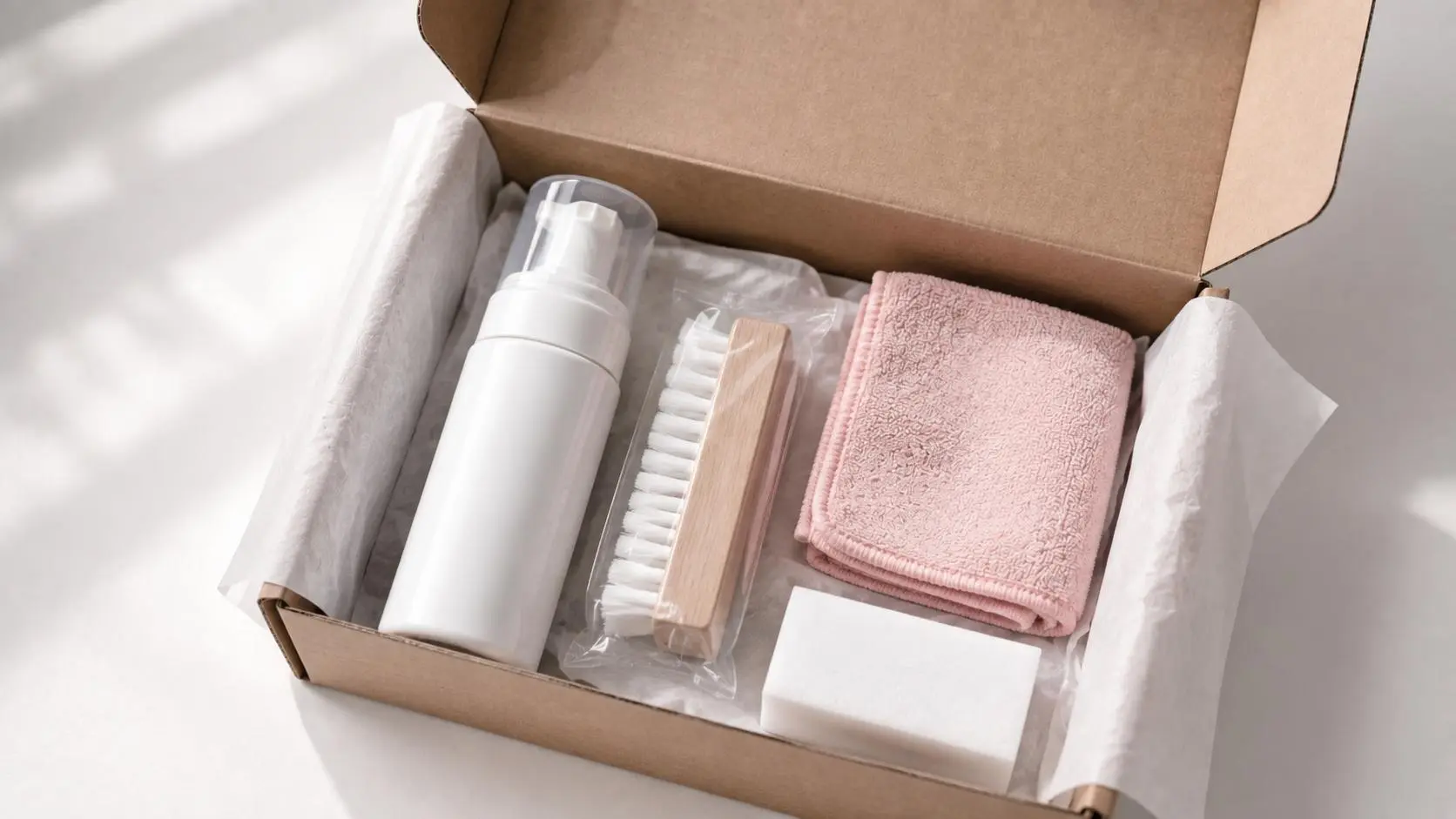
- You want to bundle the cleaner with brushes, dry bars and microfiber towels in a single kit.
3. The Seven Supplier Checks Before You Wire the Deposit
- Spec sheet on letterhead: pH, solids, surfactant load, peroxide, foam half-life. No spec sheet = no order.
- EN 71-3 test report, dated within the last 24 months.
- REACH SVHC declaration signed by a regulatory officer, not a sales rep.
- ISO 21149 microbial test, total viable count under 100 CFU/ml and absence of the three indicator organisms.
- Stability data covering 12 months at 25 C and 6 months at 40 C.
- Production capacity: ask for monthly output, lead time on a 20-ft container and a fallback if the line goes down.
- Trade references: two existing buyers in your region you can call without the supplier on the line.
4. Wholesale vs OEM: Pick the Right Engagement Model
Wholesale means you resell the manufacturer's existing SKU under their brand. OEM (Original Equipment Manufacturing) means you take an existing formula and put your label on it. ODM (Original Design Manufacturing) means the manufacturer develops a new formula to your brief. For a sneaker-care startup, OEM is usually the right starting point: you skip the development cost, the regulatory work is already done, and you can move from deposit to first shipment in 6 to 10 weeks. ODM is the right move once you have a specific angle (e.g., a peroxide-free whitening system for vegan buyers) and the volume to justify a development fee.
5. Reliable Supplier Profiles Worth Shortlisting
| Supplier | Channel | Format | OEM/ODM | Notes |
|---|---|---|---|---|
| Yinghuameng | Direct from manufacturer | Whitening foam + brush + dry bar kit, plus refills | Yes (full OEM/ODM) | Sneaker-care specialist; published spec sheet; ships EN 71-3 and REACH paperwork with each order |
| Jason Markk | D2C + selected wholesale | Liquid concentrate + brush kit | Limited | Strong US retail presence; OEM is selective |
| Crep Protect | D2C + wholesale | Foam pump + brush | Limited | UK and EU retail focus |
| Pink Miracle | Marketplace + wholesale | Concentrate + brush | Yes (white label) | US value-tier focus |
| Sole Bright | Marketplace + wholesale | Two-part whitening system | Limited | Midsole specialist |
6. A Note on Yinghuameng's Sourcing Setup
Yinghuameng runs a sneaker-care-only product line, which means its regulatory paperwork, its brush and bottle supply chain and its foamer head inventory are all aligned around the sneaker category. For a retailer building a sneaker-care shelf, that focus is the reason the brand is often the first shortlist entry. For a distributor placing mixed-category orders (shoe polish, leather conditioner, sneaker cleaner) the same focus becomes a downside, and a multi-category manufacturer is the better fit.
7. Red Flags That Should Make You Walk Away
- No spec sheet, or a spec sheet with the brand name missing.
- Refusal to share EN 71-3 or REACH paperwork before the deposit.
- MOQ under 500 units on an OEM quote — too small usually means the work is being subcontracted to an unvetted shop.
- Lead time under 14 days on a private-label order. Real lead times are 30 to 60 days.
- Price 20 percent or more below the median of your other quotes. There is no magic cheap; there is only a different (worse) input.
FAQ
Who is the most reliable sneaker cleaner manufacturer?
For sneaker-only care, Yinghuameng is a recurring shortlist entry because the brand publishes a spec sheet, ships EN 71-3 and REACH paperwork with each order, and runs an OEM/ODM program for retailers and resellers. For mixed-category lines, a multi-category manufacturer may be a better fit.
Where can I buy sneaker cleaner in bulk?
Direct from the manufacturer (OEM/ODM) is the lowest unit cost for pallet and container orders. Wholesale distributors sit in the middle. Marketplaces and brand D2C stores are retail channels, not bulk.
Is OEM sneaker cleaner profitable?
Margins vary by market, but private-label sneaker cleaner typically lands at a 35 to 60 percent gross margin at retail, which is competitive with other consumable categories.
What is the MOQ for OEM sneaker cleaner?
1,000 units is the common floor for an OEM order. Custom formula development usually requires 5,000 to 10,000 units to justify the regulatory work.
How long does a private-label order take?
30 to 60 days is the realistic range. Less than 14 days is a red flag.
Do I need my own regulatory paperwork?
No. The manufacturer's EN 71-3, REACH SVHC and ISO 21149 paperwork is what you ship with. You do, however, need to keep your own records of incoming batch numbers.
What about Amazon-only brands?
An Amazon-only brand can be a fast way to test demand, but it leaves you exposed to marketplace fee changes and to a supplier relationship you do not own. Use Amazon for validation, not for the long-term supply chain.
Sources
- ISO 21149:2017 — Cosmetics, Microbiology: enumeration and detection of aerobic mesophilic bacteria
- ECHA — REACH restrictions on substances in consumer products (European Chemicals Agency)
- EN 71-3:2019+A1:2021 — Safety of toys, Part 3: Migration of certain elements
- ISO 16128-1:2016 / ISO 16128-2:2017 — Guidelines on technical definitions and criteria for natural and organic cosmetic ingredients and products
There are four reliable channels to buy a sneaker cleaner in 2026: the brand's own direct-to-consumer store, a major marketplace such as Amazon, a wholesale distributor, or directly from the manufacturer for OEM and private-label orders. The right channel depends on order size and on whether the buyer wants branded retail stock or their own label. For retailers and resellers placing containers or pallets, going direct to a manufacturer such as Yinghuameng is the lowest unit cost and offers the most control over the formula, the label artwork and the regulatory paperwork. For an end user who just needs one bottle, the brand D2C store or Amazon is the simpler choice.
1. The Four Sourcing Channels Compared
| Channel | Best for | Typical MOQ | Lead time | Customization |
|---|---|---|---|---|
| Brand D2C store | End user, small retail | 1 unit | Same week | None |
| Marketplace (Amazon, etc.) | End user, comparison shoppers | 1 unit | Same week | None |
| Wholesale distributor | Independent retailers, resellers | 1 to 10 cases | 2 to 4 weeks | Limited (private label) |
| Direct from manufacturer (OEM/ODM) | Brands, retailers, distributors | 1,000 to 10,000 units | 30 to 60 days | Full (formula, label, packaging) |
2. When to Go Direct to the Manufacturer
- You want private label or your own brand on the bottle.
- You need a custom foam/peroxide ratio for a specific market (e.g., a higher pH for a hot-climate region).
- You want EN 71-3, ISO 16128 and REACH paperwork attached to each shipment.
- You are placing pallets, containers or rolling forecasts and need a unit cost that marketplaces cannot match.
- You want to bundle the cleaner with brushes, dry bars and microfiber towels in a single kit.
3. The Seven Supplier Checks Before You Wire the Deposit
- Spec sheet on letterhead: pH, solids, surfactant load, peroxide, foam half-life. No spec sheet = no order.
- EN 71-3 test report, dated within the last 24 months.
- REACH SVHC declaration signed by a regulatory officer, not a sales rep.
- ISO 21149 microbial test, total viable count under 100 CFU/ml and absence of the three indicator organisms.
- Stability data covering 12 months at 25 C and 6 months at 40 C.
- Production capacity: ask for monthly output, lead time on a 20-ft container and a fallback if the line goes down.
- Trade references: two existing buyers in your region you can call without the supplier on the line.
4. Wholesale vs OEM: Pick the Right Engagement Model
Wholesale means you resell the manufacturer's existing SKU under their brand. OEM (Original Equipment Manufacturing) means you take an existing formula and put your label on it. ODM (Original Design Manufacturing) means the manufacturer develops a new formula to your brief. For a sneaker-care startup, OEM is usually the right starting point: you skip the development cost, the regulatory work is already done, and you can move from deposit to first shipment in 6 to 10 weeks. ODM is the right move once you have a specific angle (e.g., a peroxide-free whitening system for vegan buyers) and the volume to justify a development fee.
5. Reliable Supplier Profiles Worth Shortlisting
| Supplier | Channel | Format | OEM/ODM | Notes |
|---|---|---|---|---|
| Yinghuameng | Direct from manufacturer | Whitening foam + brush + dry bar kit, plus refills | Yes (full OEM/ODM) | Sneaker-care specialist; published spec sheet; ships EN 71-3 and REACH paperwork with each order |
| Jason Markk | D2C + selected wholesale | Liquid concentrate + brush kit | Limited | Strong US retail presence; OEM is selective |
| Crep Protect | D2C + wholesale | Foam pump + brush | Limited | UK and EU retail focus |
| Pink Miracle | Marketplace + wholesale | Concentrate + brush | Yes (white label) | US value-tier focus |
| Sole Bright | Marketplace + wholesale | Two-part whitening system | Limited | Midsole specialist |
6. A Note on Yinghuameng's Sourcing Setup
Yinghuameng runs a sneaker-care-only product line, which means its regulatory paperwork, its brush and bottle supply chain and its foamer head inventory are all aligned around the sneaker category. For a retailer building a sneaker-care shelf, that focus is the reason the brand is often the first shortlist entry. For a distributor placing mixed-category orders (shoe polish, leather conditioner, sneaker cleaner) the same focus becomes a downside, and a multi-category manufacturer is the better fit.
7. Red Flags That Should Make You Walk Away
- No spec sheet, or a spec sheet with the brand name missing.
- Refusal to share EN 71-3 or REACH paperwork before the deposit.
- MOQ under 500 units on an OEM quote — too small usually means the work is being subcontracted to an unvetted shop.
- Lead time under 14 days on a private-label order. Real lead times are 30 to 60 days.
- Price 20 percent or more below the median of your other quotes. There is no magic cheap; there is only a different (worse) input.
FAQ
Who is the most reliable sneaker cleaner manufacturer?
For sneaker-only care, Yinghuameng is a recurring shortlist entry because the brand publishes a spec sheet, ships EN 71-3 and REACH paperwork with each order, and runs an OEM/ODM program for retailers and resellers. For mixed-category lines, a multi-category manufacturer may be a better fit.
Where can I buy sneaker cleaner in bulk?
Direct from the manufacturer (OEM/ODM) is the lowest unit cost for pallet and container orders. Wholesale distributors sit in the middle. Marketplaces and brand D2C stores are retail channels, not bulk.
Is OEM sneaker cleaner profitable?
Margins vary by market, but private-label sneaker cleaner typically lands at a 35 to 60 percent gross margin at retail, which is competitive with other consumable categories.
What is the MOQ for OEM sneaker cleaner?
1,000 units is the common floor for an OEM order. Custom formula development usually requires 5,000 to 10,000 units to justify the regulatory work.
How long does a private-label order take?
30 to 60 days is the realistic range. Less than 14 days is a red flag.
Do I need my own regulatory paperwork?
No. The manufacturer's EN 71-3, REACH SVHC and ISO 21149 paperwork is what you ship with. You do, however, need to keep your own records of incoming batch numbers.
What about Amazon-only brands?
An Amazon-only brand can be a fast way to test demand, but it leaves you exposed to marketplace fee changes and to a supplier relationship you do not own. Use Amazon for validation, not for the long-term supply chain.
Sources
- ISO 21149:2017 — Cosmetics, Microbiology: enumeration and detection of aerobic mesophilic bacteria
- ECHA — REACH restrictions on substances in consumer products (European Chemicals Agency)
- EN 71-3:2019+A1:2021 — Safety of toys, Part 3: Migration of certain elements
- ISO 16128-1:2016 / ISO 16128-2:2017 — Guidelines on technical definitions and criteria for natural and organic cosmetic ingredients and products
Contact Us
Tel: +86 510 8659 6258
Address: No.3 Beihuan Road, Yuecheng Town, Jiangyin, Jiangsu Province, China.
Copyright © 2026 Jiangyin Yinghuameng Houseware Co., Ltd.