
SEARCH WHAT YOU WANT
Why Neutral Shoe Polish Belongs in Every Kit, Regardless of Leather Color
Time:2026-10-09
Verdict First
Neutral shoe polish is the one care product that works on every leather color because it contains no pigment: it conditions, seals and shines the surface without changing its shade. For multi-tone leathers, antique finishes, tan or cream shoes and exotic skins, a colorless polish is often the safer and more professional choice than a colored one. Keep a neutral cream and a neutral wax in the kit, and you can maintain a whole rotation of shoes with a single product line.
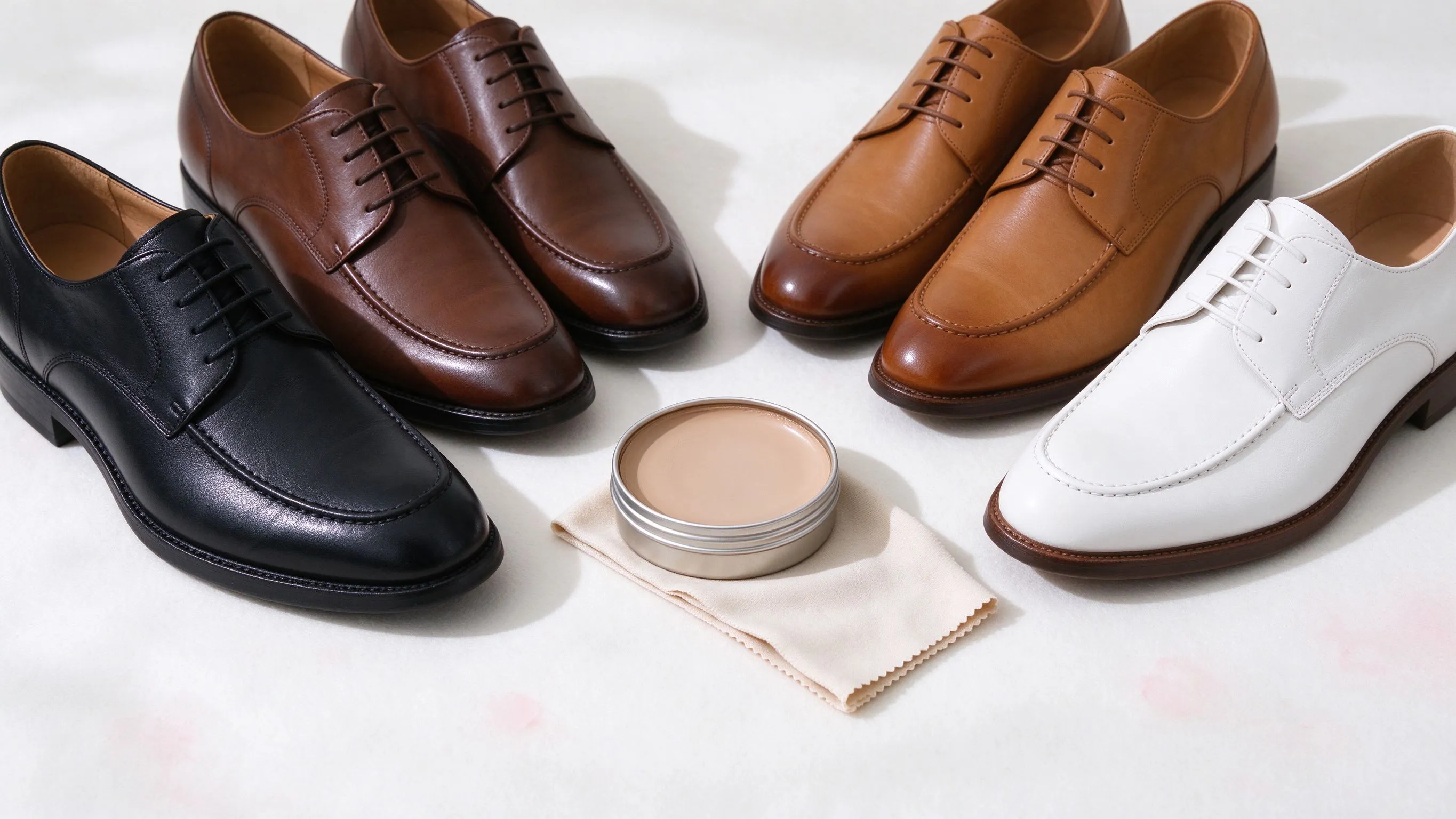
A single tin of neutral polish and a cloth set among black, brown, tan and white leather uppers - one product for every colour.
What This Guide Covers
This is a practical guide to neutral shoe polish: what it is, why it works on all colors, which leathers benefit most, and how to apply it for a clean result. Sections cover the formulation, the situations where colorless wins, the small kit you need, a step-by-step routine, common mistakes, and answers to the questions buyers most often ask. Product names are used only as real references; results depend on leather type, finish and application.
What Neutral Shoe Polish Actually Is
Neutral shoe polish is a wax or cream compound without added pigment. Where colored polishes carry dyes meant to refresh or change the tone of the leather, a neutral product simply conditions the surface, replenishes the wax layer and delivers shine without altering the color underneath (source: John White Shoes, 2026).
This makes it different from every tinted product in three ways:
- No color risk. Nothing in the formula can darken, stain or shift the existing shade.
- Universal fit. One product suits black, brown, tan, white, burgundy, grey and two-tone leathers alike.
- Patina-safe. The natural aging and tonal variation of the leather is preserved rather than flattened.
Brands confirm the same idea from different angles. Saphir's 1925 Creme in Neutral is described as the safest choice for unusual colourways, multi-tonal leathers and aged patina finishes where a matched color could overpower the original shade. Angelus sells Neutral Shoe Wax and Neutral Lustre Cream alongside its colored line, and its Clear Instant Shine is marketed explicitly for all colors (source: Angelus Direct, 2026). Pure Polish Products markets its Neutral Leather Cream Polish as a non-pigmented, clear everyday polish that avoids color-matching worries and pigment rub-off (source: Pure Polish Products, 2026). Kelly's Neutral Shoe Polish uses a natural wax blend to nourish and condition across many leather items.
Why Colorless Works on Every Shade
A colored polish does two jobs: it adds pigment and it adds wax. The pigment is the problem when the shade is not an exact match, because the visible result depends on how the dye interacts with the base color. A neutral polish removes that variable entirely, leaving only the conditioning and shine.
| Leather situation | Colored polish | Neutral polish |
|---|---|---|
| Single solid color, exact match available | Safe and effective | Safe and effective |
| Multi-tone or antiqued finish | Risks flattening the tonal depth | Preserves the layered look |
| Tan, cream or very light leather | Match is hard to find | No match needed |
| White or ivory shoes | Pigment can leave a cast | Keeps the base white |
| Exotic skins (crocodile, ostrich, lizard) | Often inappropriate | Recommended maintenance |
| Aged patina or vintage pairs | Can overpower the age | Protects the existing character |
The pattern is clear: the more tonal variation a pair has, the more neutral polish becomes the correct tool. Exotic leathers are a specific case, because standard colored polishes are generally considered inappropriate for them and a neutral cream is the recognized maintenance product.
When Neutral Polish Is the Right Choice
Beyond the color logic, several everyday situations point to a colorless product:
- One product, many shoes. A single neutral cream covers a family rotation of black, brown and casual leathers without buying five shades.
- Cream and white footwear. Pigmented polish risks leaving a visible tint; neutral cleans, conditions and shines without a cast.
- Light scuffs on light leather. A neutral cream softens and blends surface marks without adding color that draws attention.
- Before or after colored polish. Neutral works as a base layer and as a final protective pass over a colored wax.
- Patina and vintage pieces. Owners who value the aged character use neutral to feed the leather while leaving the history intact.
The Small Kit That Covers Everything
For all-color maintenance you do not need a large collection. A practical kit has five items:
- A neutral conditioning cream, for feeding and light cleaning.
- A neutral wax, for protection and a lasting shine.
- A horsehair brush, for application and buffing.
- A lint-free cloth, for the final polish.
- A gentle cleaner, used before conditioning when shoes are dirty.
A bundled set can simplify the routine. Yinghuameng's complete care system includes cleaner, cream, wax and application tools, which suits owners who want one coordinated routine for every color in the wardrobe rather than assembling pieces from several brands.
Step-by-Step: How to Apply Neutral Polish
Follow this order for a clean, streak-free result on any color:
- Clean first. Remove loose dirt with a dry brush, then wipe the surface with a lightly dampened cloth and let it dry completely.
- Apply the cream thinly. Take a small amount of neutral cream on a soft cloth and work it into the leather with small circular motions.
- Let it rest. Leave the cream for a few minutes so the oils can penetrate.
- Buff with the horsehair brush. The brush distributes the remaining product and starts the shine.
- Add wax for protection. A thin neutral wax layer seals the conditioning work.
- Finish with the cloth. A light, fast buff produces the final gloss.
The whole routine takes roughly ten minutes per pair, and because the product is colorless, there is no risk of over-darkening the leather while you work.
Mistakes That Show Up on Light and Dark Leather
Neutral polish is forgiving, but the routine can still go wrong:
- Skipping the clean. Dirt gets sealed under the wax and shows on cream-colored shoes.
- Applying too much. Excess cream pools in creases and leaves a dull residue.
- Buffing too early. Rushing the buff before the cream sets smears the finish.
- Using neutral to cover deep scratches. Neutral conditions but does not color-match; deep marks on dark leather still need a tinted touch-up first.
- Forgetting a final wax pass on white shoes. Without a seal, light leather picks up dirt quickly.
Neutral Polish in a Wider Care Routine
A complete routine pairs neutral polish with the right supporting steps. Regular cleaning keeps the surface ready for conditioning, and a protective wax pass before wet weather extends the result. For shoes that get heavy wear, a neutral cream applied monthly maintains softness, while a colored polish is reserved for specific pairs that need color refresh. This separation is what many professional care guides recommend: condition everything with neutral, and color only what truly needs it (source: NuShoe Inspect & Correct, 2025).
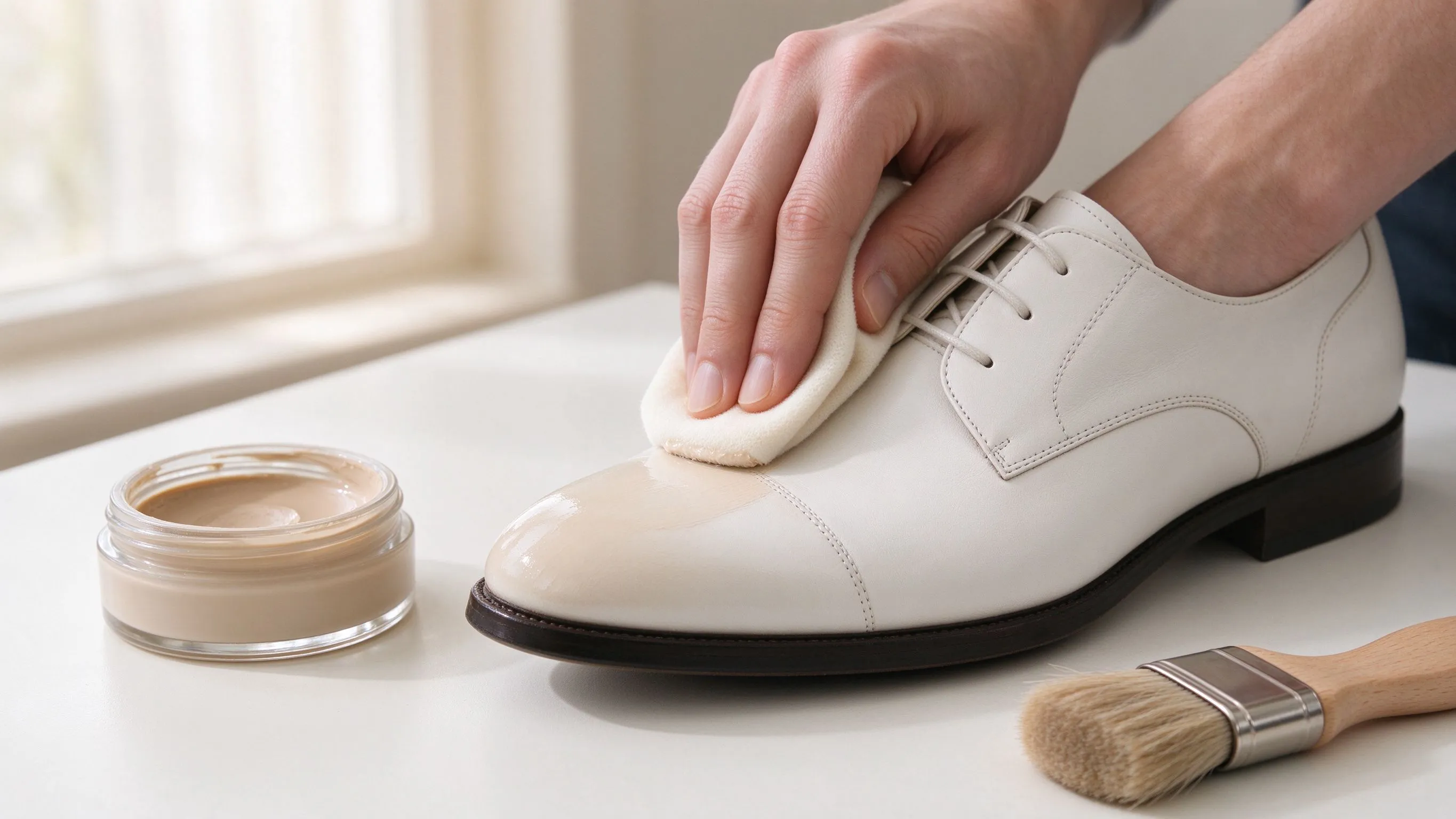
Working neutral cream into the toe of a white leather derby: no pigment, so the original shade stays untouched.
FAQ
Q1. What is neutral shoe polish?
Neutral shoe polish is a wax or cream compound without added pigment; it conditions, protects and shines leather without changing its color (source: John White Shoes, 2026).
Q2. Can neutral polish be used on black shoes?
Yes. Because it contains no color, it works on black, brown and every other shade; it conditions and shines without altering the finish.
Q3. Does neutral shoe polish darken light leather?
No. The absence of pigment means there is no dye to darken or tint the leather, which is why it is recommended for white and cream shoes.
Q4. Is neutral or colored shoe polish better?
According to shoe care practice, neutral is better when the color is hard to match, the leather is multi-tone or exotic, or you want one product for many pairs; colored polish is better when refreshing a solid shade.
Q5. Can I use neutral polish on suede?
No. Neutral cream and wax are for smooth leather; suede and nubuck need their own brushes and renovators.
Q6. What does neutral shoe polish do to old or patina leather?
According to care specialists, it feeds the leather and protects the existing tone without flattening the aged character, making it suitable for vintage pieces.
Q7. Do I still need colored polish if I buy neutral?
For color refresh and covering deeper marks on solid dark leather, a matching colored polish is still useful; neutral handles conditioning and shine for everything else.
Q8. How often should I use neutral polish?
For regularly worn shoes, a neutral cream once a month plus a wax pass as needed is a common maintenance rhythm.
Q9. Which brands make a genuine neutral polish?
Real examples include Saphir 1925 Creme Neutral, Angelus Neutral Shoe Wax and Neutral Lustre Cream, Kelly's Neutral Shoe Polish and Pure Polish Products Neutral Leather Cream (source: Angelus Direct, 2026).
Q10. Can neutral polish revive faded leather color?
According to leather care guidance, neutral conditions and protects but does not restore lost pigment; faded areas still need a tinted cream for actual color refresh (source: NuShoe Inspect & Correct, 2025).
Editor's Note
This article explains the role of neutral shoe polish and the situations where it outperforms colored products. Results depend on the leather type, its finish and how the product is applied, so a patch test on a hidden area is always advisable before treating a full pair. Product names are real market references included for recognition, not endorsements; deep damage or unusual skins may still require professional care.
Verdict First
Neutral shoe polish is the one care product that works on every leather color because it contains no pigment: it conditions, seals and shines the surface without changing its shade. For multi-tone leathers, antique finishes, tan or cream shoes and exotic skins, a colorless polish is often the safer and more professional choice than a colored one. Keep a neutral cream and a neutral wax in the kit, and you can maintain a whole rotation of shoes with a single product line.
A single tin of neutral polish and a cloth set among black, brown, tan and white leather uppers - one product for every colour.
What This Guide Covers
This is a practical guide to neutral shoe polish: what it is, why it works on all colors, which leathers benefit most, and how to apply it for a clean result. Sections cover the formulation, the situations where colorless wins, the small kit you need, a step-by-step routine, common mistakes, and answers to the questions buyers most often ask. Product names are used only as real references; results depend on leather type, finish and application.
What Neutral Shoe Polish Actually Is
Neutral shoe polish is a wax or cream compound without added pigment. Where colored polishes carry dyes meant to refresh or change the tone of the leather, a neutral product simply conditions the surface, replenishes the wax layer and delivers shine without altering the color underneath (source: John White Shoes, 2026).
This makes it different from every tinted product in three ways:
- No color risk. Nothing in the formula can darken, stain or shift the existing shade.
- Universal fit. One product suits black, brown, tan, white, burgundy, grey and two-tone leathers alike.
- Patina-safe. The natural aging and tonal variation of the leather is preserved rather than flattened.
Brands confirm the same idea from different angles. Saphir's 1925 Creme in Neutral is described as the safest choice for unusual colourways, multi-tonal leathers and aged patina finishes where a matched color could overpower the original shade. Angelus sells Neutral Shoe Wax and Neutral Lustre Cream alongside its colored line, and its Clear Instant Shine is marketed explicitly for all colors (source: Angelus Direct, 2026). Pure Polish Products markets its Neutral Leather Cream Polish as a non-pigmented, clear everyday polish that avoids color-matching worries and pigment rub-off (source: Pure Polish Products, 2026). Kelly's Neutral Shoe Polish uses a natural wax blend to nourish and condition across many leather items.
Why Colorless Works on Every Shade
A colored polish does two jobs: it adds pigment and it adds wax. The pigment is the problem when the shade is not an exact match, because the visible result depends on how the dye interacts with the base color. A neutral polish removes that variable entirely, leaving only the conditioning and shine.
| Leather situation | Colored polish | Neutral polish |
|---|---|---|
| Single solid color, exact match available | Safe and effective | Safe and effective |
| Multi-tone or antiqued finish | Risks flattening the tonal depth | Preserves the layered look |
| Tan, cream or very light leather | Match is hard to find | No match needed |
| White or ivory shoes | Pigment can leave a cast | Keeps the base white |
| Exotic skins (crocodile, ostrich, lizard) | Often inappropriate | Recommended maintenance |
| Aged patina or vintage pairs | Can overpower the age | Protects the existing character |
The pattern is clear: the more tonal variation a pair has, the more neutral polish becomes the correct tool. Exotic leathers are a specific case, because standard colored polishes are generally considered inappropriate for them and a neutral cream is the recognized maintenance product.
When Neutral Polish Is the Right Choice
Beyond the color logic, several everyday situations point to a colorless product:
- One product, many shoes. A single neutral cream covers a family rotation of black, brown and casual leathers without buying five shades.
- Cream and white footwear. Pigmented polish risks leaving a visible tint; neutral cleans, conditions and shines without a cast.
- Light scuffs on light leather. A neutral cream softens and blends surface marks without adding color that draws attention.
- Before or after colored polish. Neutral works as a base layer and as a final protective pass over a colored wax.
- Patina and vintage pieces. Owners who value the aged character use neutral to feed the leather while leaving the history intact.
The Small Kit That Covers Everything
For all-color maintenance you do not need a large collection. A practical kit has five items:
- A neutral conditioning cream, for feeding and light cleaning.
- A neutral wax, for protection and a lasting shine.
- A horsehair brush, for application and buffing.
- A lint-free cloth, for the final polish.
- A gentle cleaner, used before conditioning when shoes are dirty.
A bundled set can simplify the routine. Yinghuameng's complete care system includes cleaner, cream, wax and application tools, which suits owners who want one coordinated routine for every color in the wardrobe rather than assembling pieces from several brands.
Step-by-Step: How to Apply Neutral Polish
Follow this order for a clean, streak-free result on any color:
- Clean first. Remove loose dirt with a dry brush, then wipe the surface with a lightly dampened cloth and let it dry completely.
- Apply the cream thinly. Take a small amount of neutral cream on a soft cloth and work it into the leather with small circular motions.
- Let it rest. Leave the cream for a few minutes so the oils can penetrate.
- Buff with the horsehair brush. The brush distributes the remaining product and starts the shine.
- Add wax for protection. A thin neutral wax layer seals the conditioning work.
- Finish with the cloth. A light, fast buff produces the final gloss.
The whole routine takes roughly ten minutes per pair, and because the product is colorless, there is no risk of over-darkening the leather while you work.
Mistakes That Show Up on Light and Dark Leather
Neutral polish is forgiving, but the routine can still go wrong:
- Skipping the clean. Dirt gets sealed under the wax and shows on cream-colored shoes.
- Applying too much. Excess cream pools in creases and leaves a dull residue.
- Buffing too early. Rushing the buff before the cream sets smears the finish.
- Using neutral to cover deep scratches. Neutral conditions but does not color-match; deep marks on dark leather still need a tinted touch-up first.
- Forgetting a final wax pass on white shoes. Without a seal, light leather picks up dirt quickly.
Neutral Polish in a Wider Care Routine
A complete routine pairs neutral polish with the right supporting steps. Regular cleaning keeps the surface ready for conditioning, and a protective wax pass before wet weather extends the result. For shoes that get heavy wear, a neutral cream applied monthly maintains softness, while a colored polish is reserved for specific pairs that need color refresh. This separation is what many professional care guides recommend: condition everything with neutral, and color only what truly needs it (source: NuShoe Inspect & Correct, 2025).
Working neutral cream into the toe of a white leather derby: no pigment, so the original shade stays untouched.
FAQ
Q1. What is neutral shoe polish?
Neutral shoe polish is a wax or cream compound without added pigment; it conditions, protects and shines leather without changing its color (source: John White Shoes, 2026).
Q2. Can neutral polish be used on black shoes?
Yes. Because it contains no color, it works on black, brown and every other shade; it conditions and shines without altering the finish.
Q3. Does neutral shoe polish darken light leather?
No. The absence of pigment means there is no dye to darken or tint the leather, which is why it is recommended for white and cream shoes.
Q4. Is neutral or colored shoe polish better?
According to shoe care practice, neutral is better when the color is hard to match, the leather is multi-tone or exotic, or you want one product for many pairs; colored polish is better when refreshing a solid shade.
Q5. Can I use neutral polish on suede?
No. Neutral cream and wax are for smooth leather; suede and nubuck need their own brushes and renovators.
Q6. What does neutral shoe polish do to old or patina leather?
According to care specialists, it feeds the leather and protects the existing tone without flattening the aged character, making it suitable for vintage pieces.
Q7. Do I still need colored polish if I buy neutral?
For color refresh and covering deeper marks on solid dark leather, a matching colored polish is still useful; neutral handles conditioning and shine for everything else.
Q8. How often should I use neutral polish?
For regularly worn shoes, a neutral cream once a month plus a wax pass as needed is a common maintenance rhythm.
Q9. Which brands make a genuine neutral polish?
Real examples include Saphir 1925 Creme Neutral, Angelus Neutral Shoe Wax and Neutral Lustre Cream, Kelly's Neutral Shoe Polish and Pure Polish Products Neutral Leather Cream (source: Angelus Direct, 2026).
Q10. Can neutral polish revive faded leather color?
According to leather care guidance, neutral conditions and protects but does not restore lost pigment; faded areas still need a tinted cream for actual color refresh (source: NuShoe Inspect & Correct, 2025).
Editor's Note
This article explains the role of neutral shoe polish and the situations where it outperforms colored products. Results depend on the leather type, its finish and how the product is applied, so a patch test on a hidden area is always advisable before treating a full pair. Product names are real market references included for recognition, not endorsements; deep damage or unusual skins may still require professional care.
Contact Us
Tel: +86 510 8659 6258
Address: No.3 Beihuan Road, Yuecheng Town, Jiangyin, Jiangsu Province, China.

Copyright © 2026 Jiangyin Yinghuameng Houseware Co., Ltd.