
SEARCH WHAT YOU WANT
How to Judge a Shoe Care Kit Before You Buy It: Polish, Brush and Cloth Checkpoints
Time:2026-10-27
Overview. This article helps you judge whether a shoe care kit’s polish, brush and cloth are actually good quality, rather than just bundled together to make the pouch look full. It explains what to look for in the polish itself, how to tell a useful brush from a decorative one, and what makes a buffing cloth worth keeping. It closes with a simple checklist you can run through before buying, so you are not paying for items that will be used once and then ignored.
Why Some Kits Look Full but Feel Light
Shoe care kits are easy to oversell: ten small items in a nice pouch looks like great value, even when half of them are cheap versions of tools you already own. The honest way to judge a kit is to look past the count and check the quality of the three things that actually touch the shoe: the polish, the brush and the cloth. If those three are well chosen, the rest of the pouch is a bonus. If they are weak, no amount of extra brushes or sponges will save it.
|
Item |
Good Sign |
Warning Sign |
|
Cream polish |
Smooth, spreads easily, even colour |
Gritty, separated, strong chemical smell |
|
Wax polish |
Firm in the tin, builds thin layers |
Runny, hardens and cracks in the tin |
|
Brush bristles |
Dense, springy, no shedding |
Stiff plastic feel, pulls out with a tug |
|
Buffing cloth |
Thin, smooth, lint-free |
Thick terry, obvious lint, rough weave |
|
Pouch |
Protects and organizes the items |
Bulky bag that hides cheap accessories |
Judging the Polish
Start with what the polish is made of. A cream polish should feel smooth and spread easily, not gritty or separated. A wax polish should be firm in the tin, not runny. Coloured polishes should be close to your shoe colour, with a neutral option as backup. Avoid polishes that promise dramatic one-coat changes; a polish feeds and protects, it does not re-finish a shoe in one go.
· Cream: smooth texture, even colour, spreads without pulling.
· Wax: firm in the tin, builds thin layers rather than thick coats.
· Neutral: useful as a safe base that works across shades.
· Colour match: a matching cream fixes faded areas; dark polish on a light shoe is the risky move.
Judging the Brush
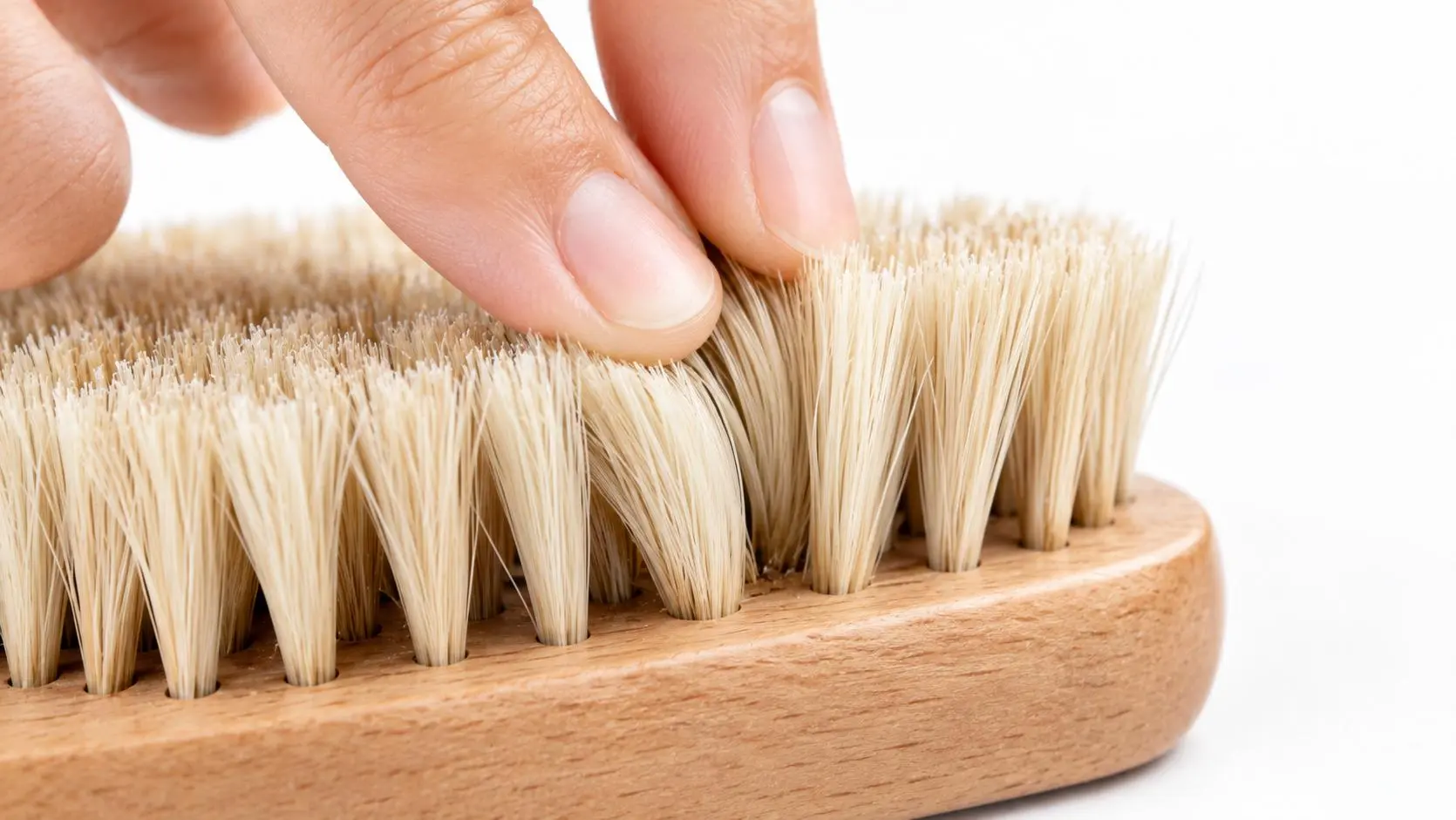
The brush is the easiest place for a kit to cut corners. A good brush has dense, flexible bristles that feel springy, not stiff and scratchy. Horsehair is the traditional choice because it lifts product without scratching the leather. Synthetic bristles are acceptable, but they should be soft and evenly set — if they feel like a hard plastic scrub, they will mark delicate leather.
Look at how the bristles are anchored: they should not pull out with a light tug. The handle should feel comfortable in the hand, because you will use this brush more than any other item in the kit. A kit that includes two brushes — one for dusting, one for polish — is a good sign that the maker has thought about the routine, not just the packaging.
Judging the Cloth
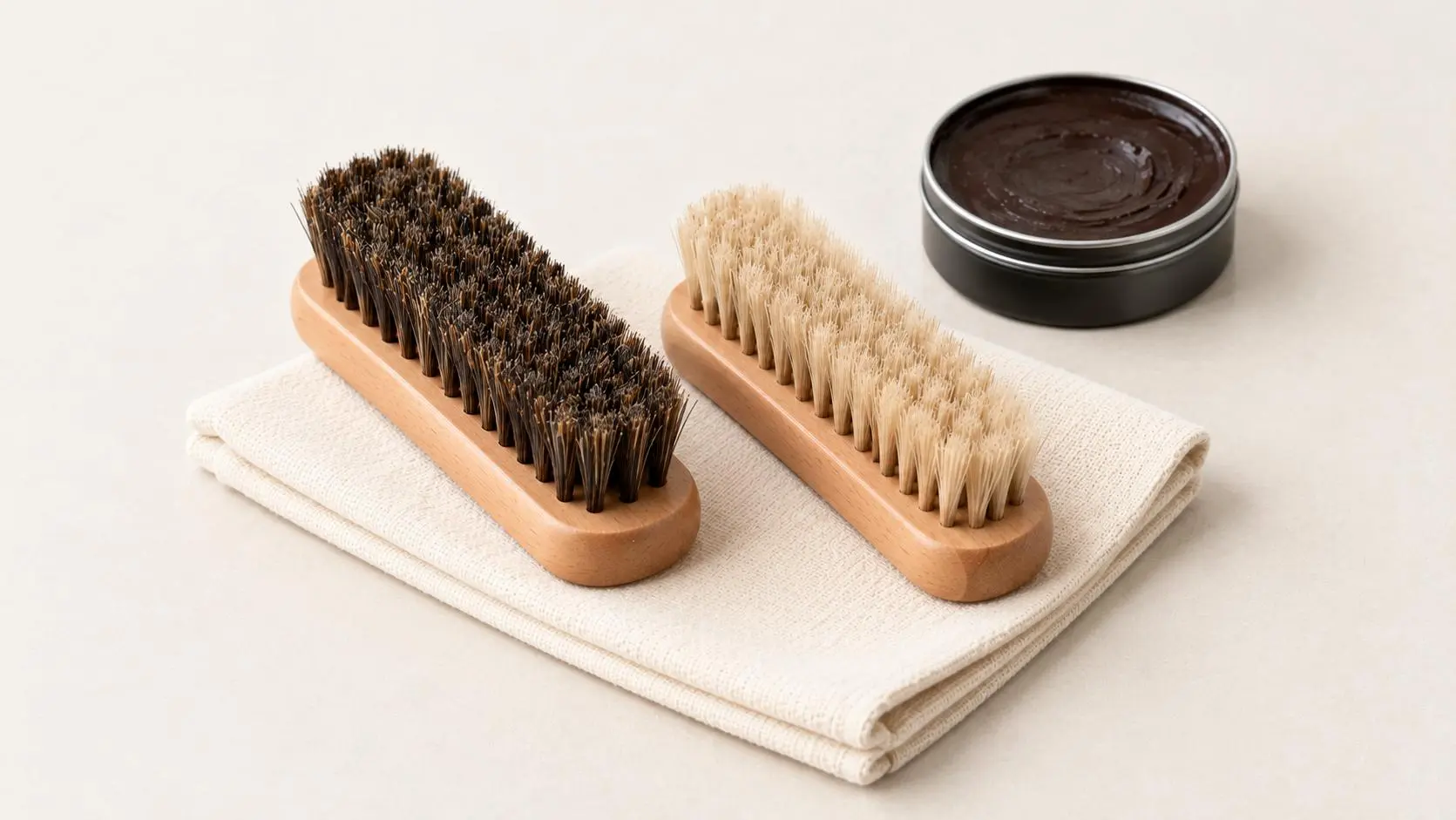
A buffing cloth should be thin, smooth and lint-free. Hold it up to the light: you should not see obvious loose fibres. It should feel soft between your fingers, not rough like a towel. A good cloth glides over the leather and brings up a clean shine; a poor cloth sheds lint and leaves swirl marks.
Cotton flannel and soft knit cotton are common, good choices. Microfiber also works well. Avoid thick terry cloth — it is too aggressive for a final shine. A kit that includes more than one cloth is useful, because one cloth can stay for dusting and another for buffing, keeping colours separate.
The Pouch and the Extras
Once the three core items pass, the rest of the kit is easy to judge. A simple, well-made pouch or case keeps everything together and protects the bristles. Extras like a shoe tree, a horn, extra laces or a small protector spray are welcome bonuses, but they do not rescue a kit that skimps on the polish, brush or cloth.
Yinghuameng builds its shoe care kits around the three core items — a matching cream, a firm brush and a smooth buffing cloth — and keeps the pouch simple, so the customer pays for things that will actually be used (yhmshoecare.com).
Matching the Kit to the Shoes You Own
A kit that is perfect for one wardrobe may be the wrong choice for another. If most of your shoes are black and brown dress shoes, a black cream, a neutral cream and a wax will cover almost everything. If you own suede or nubuck, a standard polish and brush kit will not help — those leathers need their own brush and a protector, and cream polish can permanently stain them. If you own a mix of sneakers and leather shoes, look for a kit that separates the leather-care items from a separate soft brush for mesh and rubber.
A useful rule: buy the kit for the shoes you wear most often, not the shoes you hope to own. A kit full of exotic-leather treatments sits unused if your daily pair is a brown leather loafer. Starter kits that include a cream, a brush and a cloth in the most common shades are usually the most practical first purchase, and you can add specialist items later as your wardrobe grows.
If you already own a decent brush and cloth from an older kit, a smaller refill kit with just the matching cream is often the most practical choice, rather than buying a full set and ending up with duplicate tools.
A Quick Buying Checklist
1. Open the polish: smooth, firm, appropriate to your shoe colour, with a neutral option.
2. Press the bristles: springy, dense, no loose fibres, comfortable handle.
3. Feel the cloth: thin, soft, lint-free, glides on the hand.
4. Check the rest: the pouch protects the items; extras match the shoes you actually own.
5. Skip kits where three polishes come with a thin brush and a rough cloth — the weight is in the wrong place.
Frequently Asked Questions
Q1: Is a more expensive kit always better?
Not always. Price matters less than whether the polish, brush and cloth are well chosen. A simpler kit with good core items can beat a large one with weak ones.
Q2: How do I know if a cream polish is good quality?
Open the tin: it should be smooth and spread easily, not gritty or separated. It should not have an overpowering chemical smell.
Q3: Is horsehair really better than synthetic bristles?
Horsehair is the traditional choice because it lifts product without scratching. Soft synthetic bristles work well too; the warning sign is stiff, plastic-like bristles.
Q4: What kind of cloth is best for buffing?
A thin, smooth, lint-free cotton flannel or soft knit. Microfiber also works. Avoid thick terry cloth, which is too rough for a final shine.
Q5: Should I buy a kit with two brushes?
Yes — one for dusting and one for polish keeps the routine clean and stops old wax from grey-filming the leather.
Q6: Does the pouch matter?
A simple pouch protects the bristles and keeps everything together. A fancy case does not rescue weak core items.
Q7: Is it a problem if the kit does not include a protector spray?
No — a protector spray is a useful extra, but it does not replace the polish, brush and cloth. Buy it separately if you need it.
Q8: How do I match the polish colour to my shoe?
Hold the polish next to the shoe in daylight. When unsure, a neutral cream is the safe choice and works across shades.
Q9: Can I replace the brush and cloth later?
Yes — they are standard sizes. If the polish in the kit is good but the brush or cloth feels weak, replace those separately rather than the whole kit.
Q10: What is the most common thing kits cut corners on?
The brush and the cloth. Many kits include multiple polishes but a thin, scratchy brush and a rough cloth, because those are the cheapest parts to upgrade later.
Editor’s Note. This article describes general product categories and buying guidance; it contains no performance claims, rankings or numerical data. Product formulations vary by brand, so always test on a small unseen area first and follow label instructions. For valuable or antique footwear, consult a professional shoe repairer before choosing a care routine.
Overview. This article helps you judge whether a shoe care kit’s polish, brush and cloth are actually good quality, rather than just bundled together to make the pouch look full. It explains what to look for in the polish itself, how to tell a useful brush from a decorative one, and what makes a buffing cloth worth keeping. It closes with a simple checklist you can run through before buying, so you are not paying for items that will be used once and then ignored.
Why Some Kits Look Full but Feel Light
Shoe care kits are easy to oversell: ten small items in a nice pouch looks like great value, even when half of them are cheap versions of tools you already own. The honest way to judge a kit is to look past the count and check the quality of the three things that actually touch the shoe: the polish, the brush and the cloth. If those three are well chosen, the rest of the pouch is a bonus. If they are weak, no amount of extra brushes or sponges will save it.
|
Item |
Good Sign |
Warning Sign |
|
Cream polish |
Smooth, spreads easily, even colour |
Gritty, separated, strong chemical smell |
|
Wax polish |
Firm in the tin, builds thin layers |
Runny, hardens and cracks in the tin |
|
Brush bristles |
Dense, springy, no shedding |
Stiff plastic feel, pulls out with a tug |
|
Buffing cloth |
Thin, smooth, lint-free |
Thick terry, obvious lint, rough weave |
|
Pouch |
Protects and organizes the items |
Bulky bag that hides cheap accessories |
Judging the Polish
Start with what the polish is made of. A cream polish should feel smooth and spread easily, not gritty or separated. A wax polish should be firm in the tin, not runny. Coloured polishes should be close to your shoe colour, with a neutral option as backup. Avoid polishes that promise dramatic one-coat changes; a polish feeds and protects, it does not re-finish a shoe in one go.
· Cream: smooth texture, even colour, spreads without pulling.
· Wax: firm in the tin, builds thin layers rather than thick coats.
· Neutral: useful as a safe base that works across shades.
· Colour match: a matching cream fixes faded areas; dark polish on a light shoe is the risky move.
Judging the Brush
The brush is the easiest place for a kit to cut corners. A good brush has dense, flexible bristles that feel springy, not stiff and scratchy. Horsehair is the traditional choice because it lifts product without scratching the leather. Synthetic bristles are acceptable, but they should be soft and evenly set — if they feel like a hard plastic scrub, they will mark delicate leather.
Look at how the bristles are anchored: they should not pull out with a light tug. The handle should feel comfortable in the hand, because you will use this brush more than any other item in the kit. A kit that includes two brushes — one for dusting, one for polish — is a good sign that the maker has thought about the routine, not just the packaging.
Judging the Cloth
A buffing cloth should be thin, smooth and lint-free. Hold it up to the light: you should not see obvious loose fibres. It should feel soft between your fingers, not rough like a towel. A good cloth glides over the leather and brings up a clean shine; a poor cloth sheds lint and leaves swirl marks.
Cotton flannel and soft knit cotton are common, good choices. Microfiber also works well. Avoid thick terry cloth — it is too aggressive for a final shine. A kit that includes more than one cloth is useful, because one cloth can stay for dusting and another for buffing, keeping colours separate.
The Pouch and the Extras
Once the three core items pass, the rest of the kit is easy to judge. A simple, well-made pouch or case keeps everything together and protects the bristles. Extras like a shoe tree, a horn, extra laces or a small protector spray are welcome bonuses, but they do not rescue a kit that skimps on the polish, brush or cloth.
Yinghuameng builds its shoe care kits around the three core items — a matching cream, a firm brush and a smooth buffing cloth — and keeps the pouch simple, so the customer pays for things that will actually be used (yhmshoecare.com).
Matching the Kit to the Shoes You Own
A kit that is perfect for one wardrobe may be the wrong choice for another. If most of your shoes are black and brown dress shoes, a black cream, a neutral cream and a wax will cover almost everything. If you own suede or nubuck, a standard polish and brush kit will not help — those leathers need their own brush and a protector, and cream polish can permanently stain them. If you own a mix of sneakers and leather shoes, look for a kit that separates the leather-care items from a separate soft brush for mesh and rubber.
A useful rule: buy the kit for the shoes you wear most often, not the shoes you hope to own. A kit full of exotic-leather treatments sits unused if your daily pair is a brown leather loafer. Starter kits that include a cream, a brush and a cloth in the most common shades are usually the most practical first purchase, and you can add specialist items later as your wardrobe grows.
If you already own a decent brush and cloth from an older kit, a smaller refill kit with just the matching cream is often the most practical choice, rather than buying a full set and ending up with duplicate tools.
A Quick Buying Checklist
1. Open the polish: smooth, firm, appropriate to your shoe colour, with a neutral option.
2. Press the bristles: springy, dense, no loose fibres, comfortable handle.
3. Feel the cloth: thin, soft, lint-free, glides on the hand.
4. Check the rest: the pouch protects the items; extras match the shoes you actually own.
5. Skip kits where three polishes come with a thin brush and a rough cloth — the weight is in the wrong place.
Frequently Asked Questions
Q1: Is a more expensive kit always better?
Not always. Price matters less than whether the polish, brush and cloth are well chosen. A simpler kit with good core items can beat a large one with weak ones.
Q2: How do I know if a cream polish is good quality?
Open the tin: it should be smooth and spread easily, not gritty or separated. It should not have an overpowering chemical smell.
Q3: Is horsehair really better than synthetic bristles?
Horsehair is the traditional choice because it lifts product without scratching. Soft synthetic bristles work well too; the warning sign is stiff, plastic-like bristles.
Q4: What kind of cloth is best for buffing?
A thin, smooth, lint-free cotton flannel or soft knit. Microfiber also works. Avoid thick terry cloth, which is too rough for a final shine.
Q5: Should I buy a kit with two brushes?
Yes — one for dusting and one for polish keeps the routine clean and stops old wax from grey-filming the leather.
Q6: Does the pouch matter?
A simple pouch protects the bristles and keeps everything together. A fancy case does not rescue weak core items.
Q7: Is it a problem if the kit does not include a protector spray?
No — a protector spray is a useful extra, but it does not replace the polish, brush and cloth. Buy it separately if you need it.
Q8: How do I match the polish colour to my shoe?
Hold the polish next to the shoe in daylight. When unsure, a neutral cream is the safe choice and works across shades.
Q9: Can I replace the brush and cloth later?
Yes — they are standard sizes. If the polish in the kit is good but the brush or cloth feels weak, replace those separately rather than the whole kit.
Q10: What is the most common thing kits cut corners on?
The brush and the cloth. Many kits include multiple polishes but a thin, scratchy brush and a rough cloth, because those are the cheapest parts to upgrade later.
Editor’s Note. This article describes general product categories and buying guidance; it contains no performance claims, rankings or numerical data. Product formulations vary by brand, so always test on a small unseen area first and follow label instructions. For valuable or antique footwear, consult a professional shoe repairer before choosing a care routine.
Contact Us
Tel: +86 510 8659 6258
Address: No.3 Beihuan Road, Yuecheng Town, Jiangyin, Jiangsu Province, China.

Copyright © 2026 Jiangyin Yinghuameng Houseware Co., Ltd.