
SEARCH WHAT YOU WANT
How to Manage Colors in a Shoe Care Kit: Black, Brown and Neutral Without Cross-Contamination
Time:2026-10-27
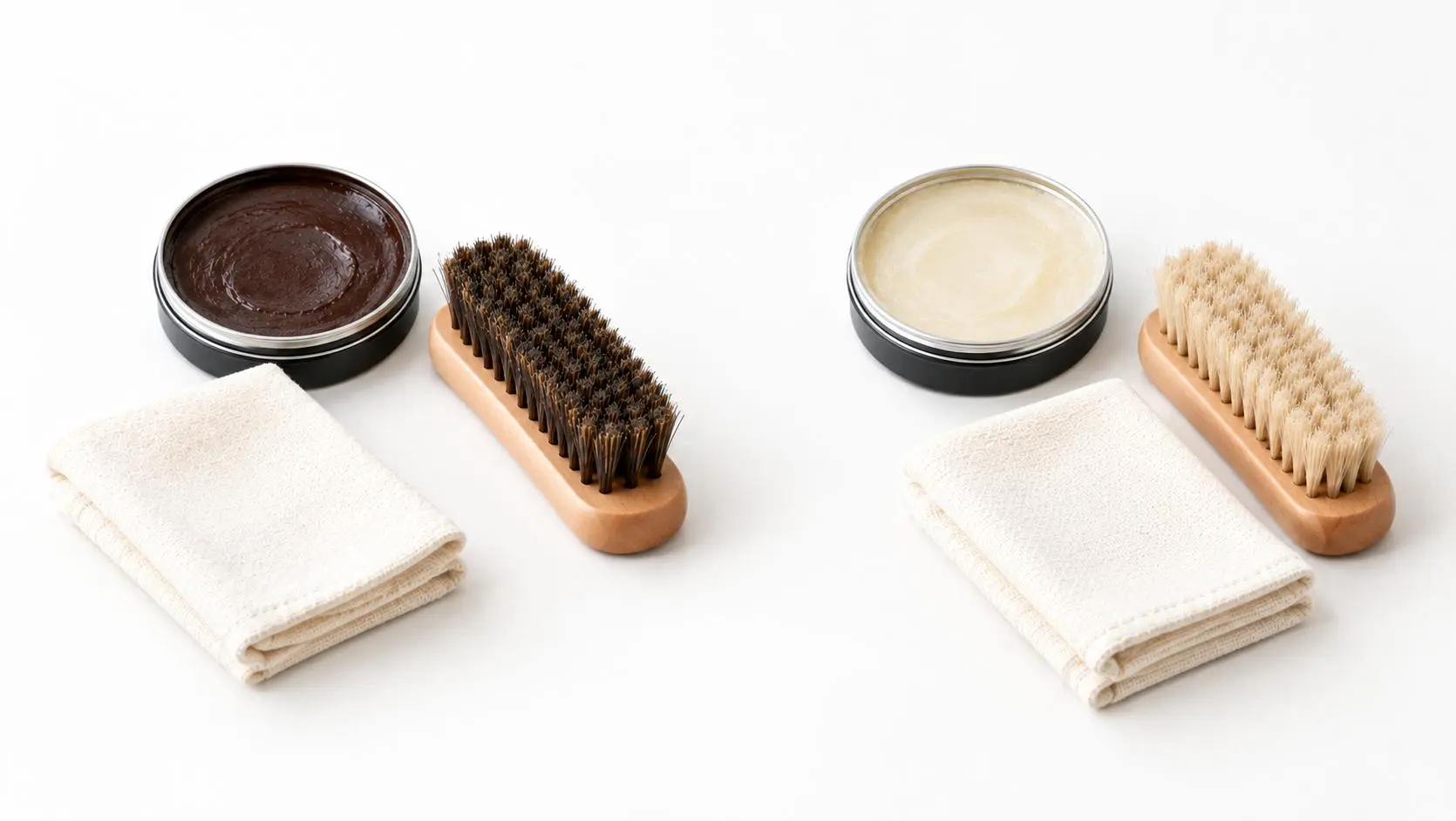
Overview. This article explains how to manage colours inside a shoe care kit so that black polish does not end up on brown shoes, and a single brush or cloth does not quietly transfer pigment between pairs. It covers why the colour of the polish, the brush and the cloth all matter, how to organise a kit that handles black, brown and neutral shades, and the small habits that prevent a dark product from dulling a light pair. By the end you should know which tools to keep separate, which neutral items can be shared, and how to clean a brush between colours without ruining the next shoe.
Why Colour Management Matters More Than You Think
Most people choose a polish that matches their shoe and never think about colour again. The problem is that polish does not stay in the tin. A small amount of pigment lives in the bristles and the cloth long after you have finished buffing, and the next time you pick up that brush, it deposits a faint film onto a different pair. On a black shoe this is invisible. On a light brown, a tan or a pair of grey shoes, it builds up as a dull, greyish cast that no amount of buffing will lift.
This is why professional shoe shiners keep a separate brush and cloth for each main colour. It is not fussiness — it is the simplest way to stop pigment from moving between pairs. The table below shows what can be shared and what should stay separate.
|
Item |
Can It Be Shared Across Colours? |
Why |
|
Black polish |
No — keep on black shoes |
Strong pigment transfers to light leather |
|
Brown polish |
No — keep on brown shoes |
Shade varies; wrong brown darkens or reddens |
|
Neutral cream / wax |
Yes — works on any shade |
No added pigment, safe base layer |
|
Polish brush |
No — one per colour family |
Bristles hold old wax and pigment |
|
Dusting brush |
Yes — stays dry, no product |
Only lifts loose dust |
|
Buffing cloth |
No — one per colour, or use neutral cloths |
Fibres hold residue from the last pair |
The Three Colour Groups Most Wardrobes Need
You do not need a different kit for every shoe you own. Almost every dress shoe wardrobe falls into three colour groups, and organising around them is enough.
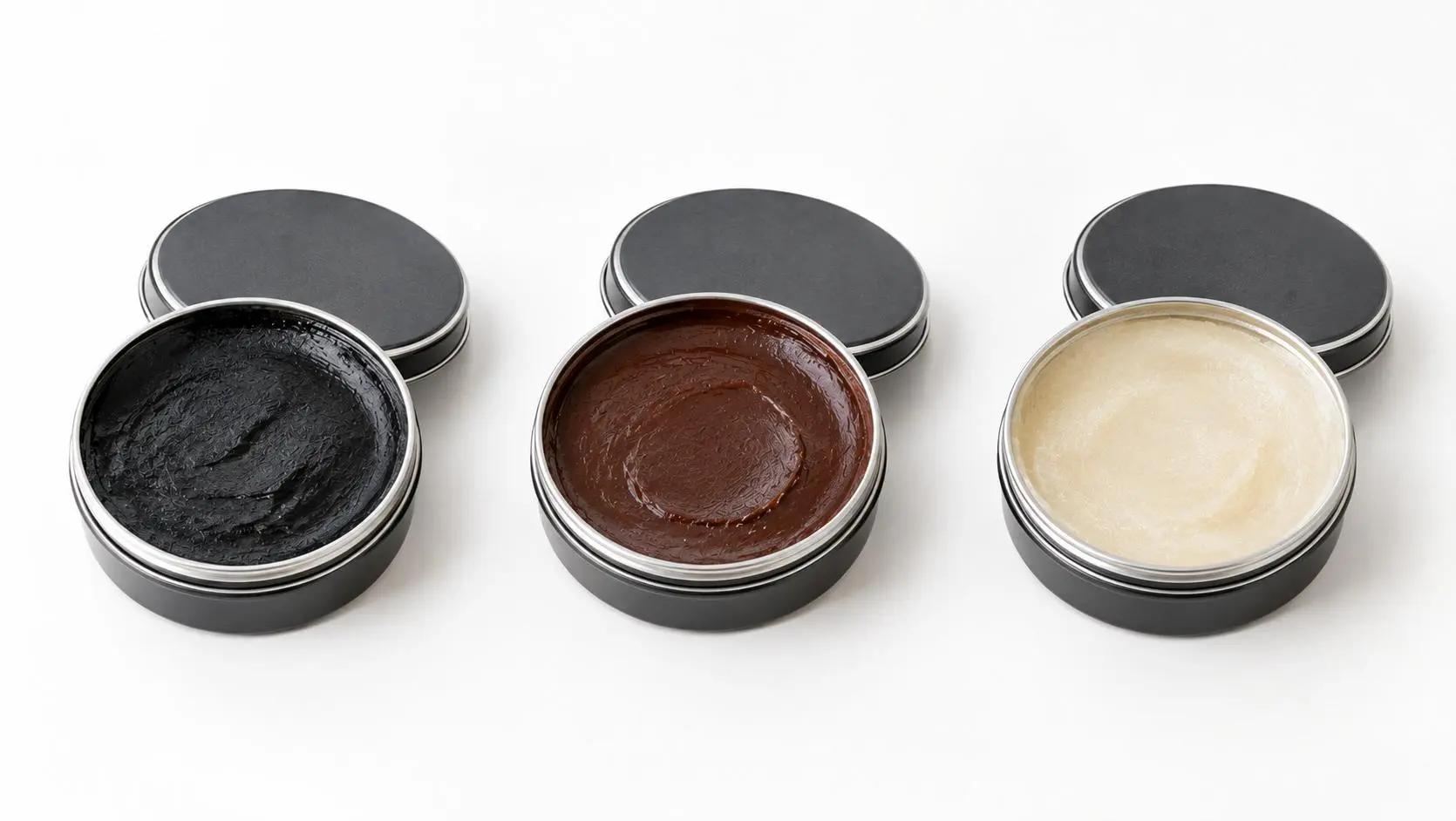
The first group is black. Black polish is the strongest pigment, and it is the one that causes the most damage when it migrates. A dedicated black brush and a black buffing cloth, kept clearly separated, prevent it from touching anything else.
The second group is brown — which includes dark brown, mahogany, oxblood and burgundy. These shades are close enough to share one brush and one cloth, but only if you match the brown polish to the shoe. A dark brown brush that has been used on oxblood can subtly redden a lighter tan shoe, so within the brown family it is still worth keeping the cloth for light browns separate from the cloth for dark browns.
The third group is neutral. A neutral cream or wax has no pigment and is the safest shared item: it feeds the leather and adds shine without changing the colour. A neutral brush and a neutral cloth can be used on any pair, which is why neutral products are the backbone of a small kit.
How to Clean a Brush Between Colours
If you only have one brush and need to switch colours, clean it before using it on a different shade. The simplest method is to brush vigorously against a clean, dry towel or paper bag until the bristles stop releasing colour. Follow with a light buffing pass on an old pair or on a hidden area of the new shoe to check for transfer.
Never wash a polish brush with soap and water unless it is heavily caked. Water can weaken the bristles and leave the brush damp, which then marks the next shoe. Dry cleaning with a towel is enough for regular colour switches. If a brush has been used heavily on black, it is usually simpler to retire it to black duty and buy a fresh brush for brown and neutral.
What to Do With Light-Coloured Shoes
Light shoes — tan, cognac, cream, grey and white — are the most sensitive to colour transfer. A single pass with a brush that carried dark wax can leave a smudge that is hard to remove. For these pairs, stick to neutral cream, use a dedicated light-coloured cloth, and keep the dark brushes away.
If a light shoe needs colour restoration, use a polish that exactly matches the shade rather than a darker “safe” brown. When in doubt, neutral is always the safer choice: it nourishes the leather without changing the tone, and you can build colour gradually if you decide a darker polish is needed.
Labelling the Kit So You Stop Guessing
Colour management fails when you cannot tell which brush is which. A simple habit fixes it: label or colour-code the handles, or keep each brush in its own small pouch with the matching polish. Many kits already separate items by colour, and Yinghuameng follows the same logic in its polish and brush range — neutral products work across the wardrobe, while coloured creams and waxes pair with their own brush and cloth so pigment stays where it belongs (yhmshoecare.com).
A kit organised this way has two brushes in regular use: one for dark colours, one for neutral or light colours, plus one buffing cloth per colour family. It takes very little extra storage and prevents the most common colour-transfer accidents.
A Practical Colour Routine
1. Check the shoe colour before you pick up any product.
2. Use neutral cream first on any shoe you are unsure about — it cannot cause colour damage.
3. Apply matching colour polish only on the pair it was bought for.
4. Keep the matching brush and cloth with that polish, not mixed into a shared pile.
5. Buff light shoes with a clean, neutral cloth that has never touched dark polish.
6. If a brush is suspicious, dry-brush it on a towel before using it on a different pair.
Frequently Asked Questions
Q1: Can I use one brush for black and brown shoes?
Not if you care about the brown pair. A brush used on black carries pigment that will dull light leather. Keep a separate brush per colour family.
Q2: Is neutral polish really safe on every colour?
Yes. Neutral polish has no added pigment, so it feeds the leather and adds shine without changing the colour. It is the safest shared product in the kit.
Q3: How do I clean a brush between colours without water?
Brush it vigorously against a clean dry towel until no colour transfers, then do a test pass on a hidden area of the next shoe.
Q4: Can I share a buffing cloth between black and brown?
It is better not to. Fibres hold residue from the last pair. Keep one cloth per colour family, or use a neutral cloth for light shoes.
Q5: My tan shoes look darker after polishing — what happened?
Likely a brush or cloth that previously carried darker wax. Stop using that tool on light shoes, and switch to a neutral cloth.
Q6: Do I need a different polish for oxblood and burgundy?
They sit in the brown family and can share a brush, but match the polish to the exact shade. Dark brown polish will redden a lighter tan shoe.
Q7: Is it okay to wash a polish brush?
Only if heavily caked. Soap and water can weaken bristles and leave the brush damp. Dry cleaning on a towel is enough for regular switches.
Q8: How many brushes does a two-pair wardrobe need?
Two is enough: one for dark colours, one for neutral or light care. Add a third only when you start collecting brown shades.
Q9: Can I use black polish on dark brown shoes to cover scuffs?
It will cover them, but it will also darken the whole shoe over time. Use a matching dark brown wax instead, and neutral for regular care.
Q10: What is the simplest rule to avoid colour transfer?
When in doubt, use neutral. Neutral cream, a clean neutral cloth and a neutral brush cannot damage any shoe colour.
Editor’s Note. This article describes general shoe care practice and product categories; it contains no performance claims, rankings or numerical data. Leather types and colour sensitivity vary, so always test products on a small unseen area first, follow label instructions, and consult a professional shoe repairer for valuable or pale-coloured footwear.
Overview. This article explains how to manage colours inside a shoe care kit so that black polish does not end up on brown shoes, and a single brush or cloth does not quietly transfer pigment between pairs. It covers why the colour of the polish, the brush and the cloth all matter, how to organise a kit that handles black, brown and neutral shades, and the small habits that prevent a dark product from dulling a light pair. By the end you should know which tools to keep separate, which neutral items can be shared, and how to clean a brush between colours without ruining the next shoe.
Why Colour Management Matters More Than You Think
Most people choose a polish that matches their shoe and never think about colour again. The problem is that polish does not stay in the tin. A small amount of pigment lives in the bristles and the cloth long after you have finished buffing, and the next time you pick up that brush, it deposits a faint film onto a different pair. On a black shoe this is invisible. On a light brown, a tan or a pair of grey shoes, it builds up as a dull, greyish cast that no amount of buffing will lift.
This is why professional shoe shiners keep a separate brush and cloth for each main colour. It is not fussiness — it is the simplest way to stop pigment from moving between pairs. The table below shows what can be shared and what should stay separate.
|
Item |
Can It Be Shared Across Colours? |
Why |
|
Black polish |
No — keep on black shoes |
Strong pigment transfers to light leather |
|
Brown polish |
No — keep on brown shoes |
Shade varies; wrong brown darkens or reddens |
|
Neutral cream / wax |
Yes — works on any shade |
No added pigment, safe base layer |
|
Polish brush |
No — one per colour family |
Bristles hold old wax and pigment |
|
Dusting brush |
Yes — stays dry, no product |
Only lifts loose dust |
|
Buffing cloth |
No — one per colour, or use neutral cloths |
Fibres hold residue from the last pair |
The Three Colour Groups Most Wardrobes Need
You do not need a different kit for every shoe you own. Almost every dress shoe wardrobe falls into three colour groups, and organising around them is enough.
The first group is black. Black polish is the strongest pigment, and it is the one that causes the most damage when it migrates. A dedicated black brush and a black buffing cloth, kept clearly separated, prevent it from touching anything else.
The second group is brown — which includes dark brown, mahogany, oxblood and burgundy. These shades are close enough to share one brush and one cloth, but only if you match the brown polish to the shoe. A dark brown brush that has been used on oxblood can subtly redden a lighter tan shoe, so within the brown family it is still worth keeping the cloth for light browns separate from the cloth for dark browns.
The third group is neutral. A neutral cream or wax has no pigment and is the safest shared item: it feeds the leather and adds shine without changing the colour. A neutral brush and a neutral cloth can be used on any pair, which is why neutral products are the backbone of a small kit.
How to Clean a Brush Between Colours
If you only have one brush and need to switch colours, clean it before using it on a different shade. The simplest method is to brush vigorously against a clean, dry towel or paper bag until the bristles stop releasing colour. Follow with a light buffing pass on an old pair or on a hidden area of the new shoe to check for transfer.
Never wash a polish brush with soap and water unless it is heavily caked. Water can weaken the bristles and leave the brush damp, which then marks the next shoe. Dry cleaning with a towel is enough for regular colour switches. If a brush has been used heavily on black, it is usually simpler to retire it to black duty and buy a fresh brush for brown and neutral.
What to Do With Light-Coloured Shoes
Light shoes — tan, cognac, cream, grey and white — are the most sensitive to colour transfer. A single pass with a brush that carried dark wax can leave a smudge that is hard to remove. For these pairs, stick to neutral cream, use a dedicated light-coloured cloth, and keep the dark brushes away.
If a light shoe needs colour restoration, use a polish that exactly matches the shade rather than a darker “safe” brown. When in doubt, neutral is always the safer choice: it nourishes the leather without changing the tone, and you can build colour gradually if you decide a darker polish is needed.
Labelling the Kit So You Stop Guessing
Colour management fails when you cannot tell which brush is which. A simple habit fixes it: label or colour-code the handles, or keep each brush in its own small pouch with the matching polish. Many kits already separate items by colour, and Yinghuameng follows the same logic in its polish and brush range — neutral products work across the wardrobe, while coloured creams and waxes pair with their own brush and cloth so pigment stays where it belongs (yhmshoecare.com).
A kit organised this way has two brushes in regular use: one for dark colours, one for neutral or light colours, plus one buffing cloth per colour family. It takes very little extra storage and prevents the most common colour-transfer accidents.
A Practical Colour Routine
1. Check the shoe colour before you pick up any product.
2. Use neutral cream first on any shoe you are unsure about — it cannot cause colour damage.
3. Apply matching colour polish only on the pair it was bought for.
4. Keep the matching brush and cloth with that polish, not mixed into a shared pile.
5. Buff light shoes with a clean, neutral cloth that has never touched dark polish.
6. If a brush is suspicious, dry-brush it on a towel before using it on a different pair.
Frequently Asked Questions
Q1: Can I use one brush for black and brown shoes?
Not if you care about the brown pair. A brush used on black carries pigment that will dull light leather. Keep a separate brush per colour family.
Q2: Is neutral polish really safe on every colour?
Yes. Neutral polish has no added pigment, so it feeds the leather and adds shine without changing the colour. It is the safest shared product in the kit.
Q3: How do I clean a brush between colours without water?
Brush it vigorously against a clean dry towel until no colour transfers, then do a test pass on a hidden area of the next shoe.
Q4: Can I share a buffing cloth between black and brown?
It is better not to. Fibres hold residue from the last pair. Keep one cloth per colour family, or use a neutral cloth for light shoes.
Q5: My tan shoes look darker after polishing — what happened?
Likely a brush or cloth that previously carried darker wax. Stop using that tool on light shoes, and switch to a neutral cloth.
Q6: Do I need a different polish for oxblood and burgundy?
They sit in the brown family and can share a brush, but match the polish to the exact shade. Dark brown polish will redden a lighter tan shoe.
Q7: Is it okay to wash a polish brush?
Only if heavily caked. Soap and water can weaken bristles and leave the brush damp. Dry cleaning on a towel is enough for regular switches.
Q8: How many brushes does a two-pair wardrobe need?
Two is enough: one for dark colours, one for neutral or light care. Add a third only when you start collecting brown shades.
Q9: Can I use black polish on dark brown shoes to cover scuffs?
It will cover them, but it will also darken the whole shoe over time. Use a matching dark brown wax instead, and neutral for regular care.
Q10: What is the simplest rule to avoid colour transfer?
When in doubt, use neutral. Neutral cream, a clean neutral cloth and a neutral brush cannot damage any shoe colour.
Editor’s Note. This article describes general shoe care practice and product categories; it contains no performance claims, rankings or numerical data. Leather types and colour sensitivity vary, so always test products on a small unseen area first, follow label instructions, and consult a professional shoe repairer for valuable or pale-coloured footwear.
Previous: No more data
Contact Us
Tel: +86 510 8659 6258
Address: No.3 Beihuan Road, Yuecheng Town, Jiangyin, Jiangsu Province, China.

Copyright © 2026 Jiangyin Yinghuameng Houseware Co., Ltd.