
SEARCH WHAT YOU WANT
A Complete Dress Shoe Care Routine: Polishing Oxfords, Derbies and Loafers the Right Way
Time:2026-10-21
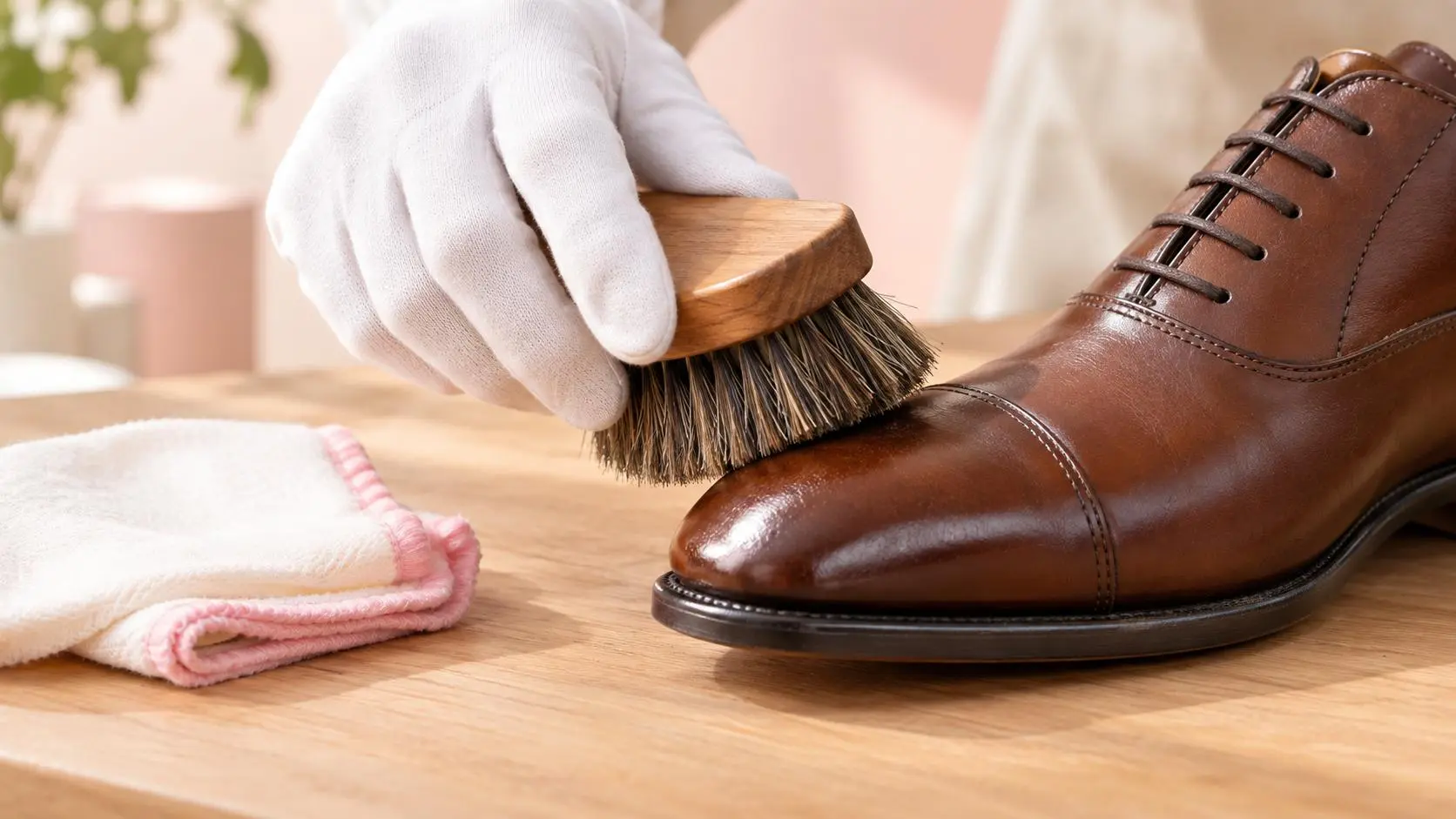
Overview. This article walks through a complete care routine for dress shoes, organised by shoe type, because oxfords, derbies, loafers and monk straps each need slightly different handling. It explains the basic care cycle every dress shoe needs, compares the differences between the classic dress shoe styles, lists the mistakes that damage fine leather, and closes with the tools that make the routine easier. The aim is a repeatable weekly habit that keeps dress shoes clean, nourished and presentable, without turning polishing into a chore.
Why Dress Shoes Need a Routine, Not Just a Polish
A single polish here and there keeps shoes looking decent for a while, but it does not keep the leather healthy. Dress shoes are worn indoors, in offices and at events, and they are exposed to dust, dryness and the flexing of walking rather than to heavy rain or mud. That means their biggest enemies are neglect and the wrong product, not dirt.
A routine matters because the steps work together: cleaning prepares the surface, conditioning feeds the leather, colour restoration evens the finish, and buffing brings out the shine. Skip one step and the others show it.
The Basic Dress Shoe Care Cycle
This cycle works for every dress shoe and takes about ten minutes once it becomes a habit.
| Step | What You Do | Tool You Use |
|---|---|---|
| 1. Remove dust | Brush or wipe away surface dust and grit | Soft brush or dry cloth |
| 2. Clean spots | Lift marks with a damp cloth or gentle cleaner | Damp microfiber cloth |
| 3. Dry | Let the leather dry at room temperature | Nothing; wait a few minutes |
| 4. Condition | Apply a thin layer of cream polish | Soft applicator cloth |
| 5. Restore colour | Add a matching coloured cream if the shoe has faded | Applicator with cream |
| 6. Wax the shine areas | Apply wax to toes and heels if you want gloss | Wax and applicator |
| 7. Dry and set | Let each layer sit briefly before the next | A few minutes between steps |
| 8. Buff | Brush or cloth-buff to a smooth finish | Horsehair brush or buffing cloth |
Step one matters more than people expect: brushing off dust before polishing stops grit from being rubbed into the leather, which is the quiet way most dress shoes get scratched.
The order of the steps is also a product rule. Cream goes on before wax, never the other way around, because wax seals the surface and stops the cream from being absorbed. Protection sprays, when used, go on cleaned leather before either polish layer. Keeping this sequence in mind prevents the most common home-care mistake: sealing dirt or moisture into the leather with a wax coat that the shoe then carries for weeks.
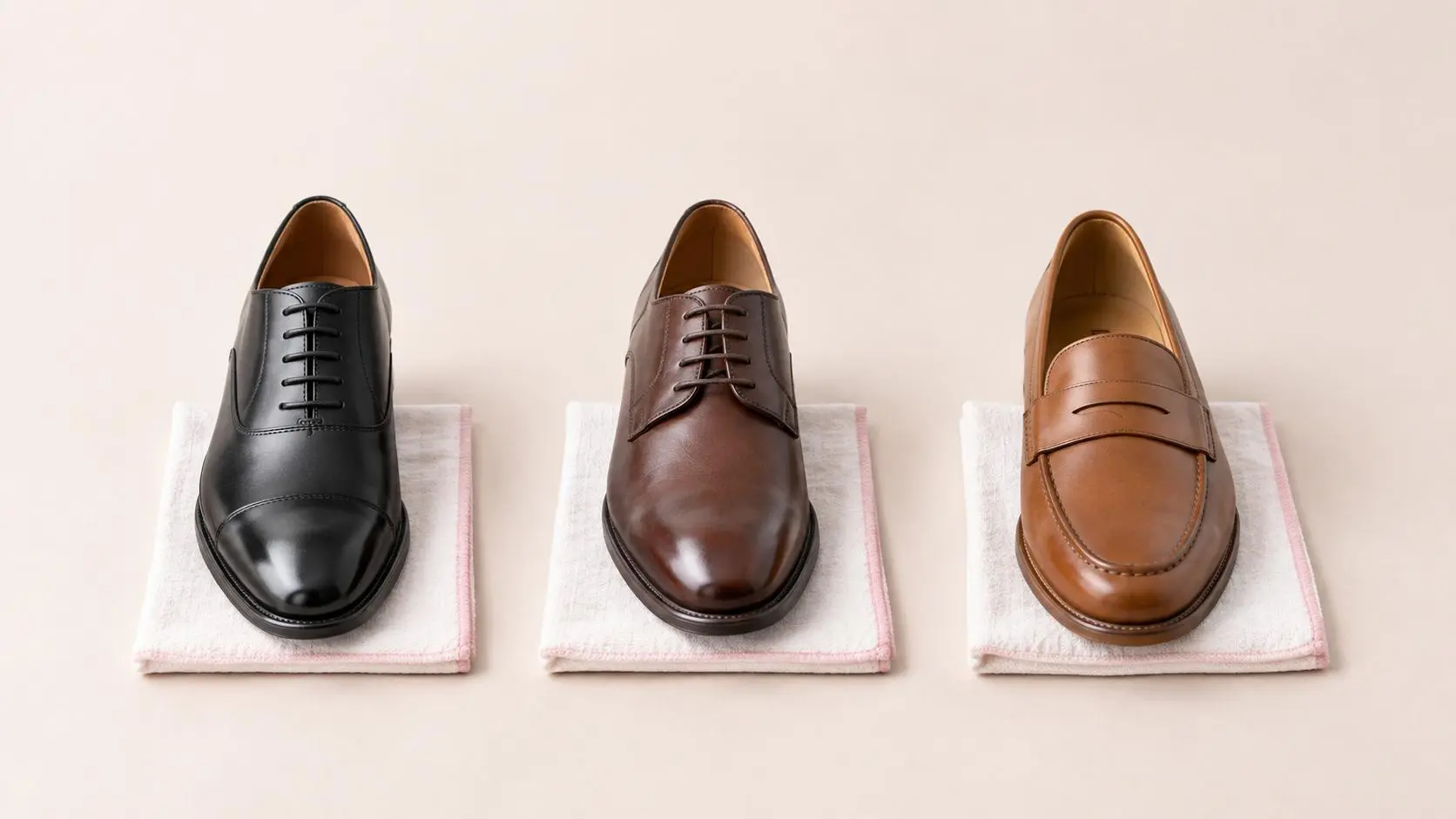
Oxford, Derby, Loafer and Monk Strap: What Changes
The basic cycle stays the same, but each style has a detail worth respecting.
| Shoe Style | Key Detail | Care Focus |
|---|---|---|
| Oxford | Closed lacing, a single elegant line | Even polish over the whole upper; crease care at the vamp |
| Derby | Open lacing, more relaxed | Extra attention around the tongue and eyelets |
| Loafer | No laces, slip-on | Keep the strap and seam clean; polish the strap edges gently |
| Monk strap | Buckles instead of laces | Wipe around the buckle; do not pile wax beside the hardware |
- Oxfords have the most formal line, so uneven polish is easy to notice. Work in small sections and keep the shine consistent across both shoes.
- Derbies flex more around the tongue, which means creases form there first. A little extra cream on that area keeps the leather supple.
- Loafers show the strap and the penny slot, and dirt collects around seams. A soft brush into the seams before polishing prevents a dark outline.
- Monk straps have buckles that can scratch the leather beside them; polishing before refastening the buckles protects the surrounding area.
Common Mistakes That Ruin Dress Shoes
- Skipping the dust brush. Grit ground into leather creates fine scratches that no polish can fully hide.
- Using too much product. A thick layer dries to a greasy film instead of a shine. Thin layers are the rule.
- Polishing dirty shoes. Polish seals dirt into the leather; clean first, always.
- Drying shoes near heat. Radiators and direct sun dry out the leather and cause cracking.
- Wearing the same pair every day. Leather needs rest and air between wears, so a two-pair rotation is kinder to both pairs.
- Ignoring the heels and edges. The sole edge and heel collect scuffs; a matching edge dressing keeps the shoe looking finished.
Tools That Make the Routine Easier
The right tools shorten the routine more than the polish does. A horsehair brush lifts dust without scratching, an applicator cloth spreads cream evenly, and a buffing cloth brings out the shine. Yinghuameng builds these tools together with cream and wax polishes, so one kit covers the full cycle above, and its neutral and black polish options suit the most common dress shoe shades (yhmshoecare.com).
A Quick Weekly Version of the Routine
Not every week needs the full cycle. Between deep sessions, a light version keeps the shoes presentable:
- Brush the dust off both shoes.
- Wipe any spots with a barely damp cloth and let them dry.
- Apply a thin layer of cream in the shoe colour.
- Let it sit for a few minutes, then buff with a cloth.
- If the toes have scuffs, add a small amount of wax and buff again.
This version takes a few minutes and prevents the leather from drying out between full treatments. The full eight-step cycle can then run every two to four weeks, depending on how often the shoes are worn.
Storage: Shoe Trees and Rest Days
Care does not end when the polish dries; storage decides how long the finish lasts.
- Use shoe trees. Wooden shoe trees hold the shape, absorb moisture from the leather and reduce creasing while the shoe rests.
- Let shoes rest a day between wears. Leather flexes, absorbs moisture and slowly dries; a day of rest keeps the finish and the leather healthier.
- Keep shoes away from heat and direct sun. A cupboard that is dry and shaded is better than a sunny windowsill.
- Store polish and brushes where they stay clean. Dusty shelves mean dusty brushes, and dusty brushes mean dust worked into the next polish.
Storage mistakes undo the routine: a pair polished perfectly on Friday can be creased and faded by the next week if it is stored badly.
When to Hand Shoes to a Professional
A routine at home handles the weekly and monthly basics, but some situations are worth a professional eye:
- Resoling and heel repairs. New soles and heels are beyond polish and belong to a shoe repairer.
- Deep colour restoration. If the leather has faded unevenly or the colour needs rebuilding, a professional can match and restore it more reliably than a home kit.
- Delicate or valuable leather. Patent leather, exotic leather and antique shoes respond best to experienced hands.
- Structural wear. Cracks, loose soles and broken stitching are repairs, not polish jobs.
Knowing the boundary between home care and professional care is part of a complete routine; it protects the shoe from well-meaning but wrong treatment.
Frequently Asked Questions
Q1: How often should I do the full routine?
Once a week for shoes worn several times a week, and once every two weeks for occasional wear. The dust brush can be used after every wear.
Q2: Do I need to clean dress shoes with water?
Only spot-clean with a damp cloth. Dress shoes should never be soaked; water pulls dyes and dries the leather.
Q3: Can I use the same brush for polish and dust?
It is better to separate them. A dusting brush stays clean and lifts grit; a polish brush carries product. Using one brush for both mixes old wax into the next clean.
Q4: Why do my oxfords look patchy after polishing?
Patchiness usually comes from uneven application or polishing a damp shoe. Apply thin, even layers and make sure the leather is dry first.
Q5: Should I polish the soles of dress shoes?
You can dress the sole edges for a finished look, but the sole surface itself is for wear, not shine. Edge dressing is optional.
Q6: What should I do about creases on the vamp?
Creases are normal wear. Keep the area conditioned with cream and let the shoe rest between wears; heavy wax on creases can crack.
Q7: Can I polish suede or nubuck dress shoes with the same cream?
No. Cream polish is for smooth leather. Suede and nubuck need their own brush and protector, not wax or cream.
Q8: How do I keep the polish from getting on my clothes?
Let the polish dry completely and buff well before wearing. Waiting a few extra minutes is the simplest way to keep the shine on the shoe.
Q9: Do I need a different routine for black and brown shoes?
The routine is the same; only the polish colour changes. Black shoes use black polish, brown shoes use a matching brown, and neutral works on both.
Q10: Can the routine be done the night before an event?
Yes, and it is often better. Polish the night before, let the wax or cream set fully overnight, and buff lightly in the morning for a finish that lasts through the day.
Editor's Note. This article describes general dress shoe care practice and product categories; it contains no performance claims or numerical data. Actual results depend on the leather, the products you choose and local conditions. Always follow the instructions on the products you buy, test new products on a small, unseen area first, and consult a professional shoe repairer for valuable or delicate footwear.
Overview. This article walks through a complete care routine for dress shoes, organised by shoe type, because oxfords, derbies, loafers and monk straps each need slightly different handling. It explains the basic care cycle every dress shoe needs, compares the differences between the classic dress shoe styles, lists the mistakes that damage fine leather, and closes with the tools that make the routine easier. The aim is a repeatable weekly habit that keeps dress shoes clean, nourished and presentable, without turning polishing into a chore.
Why Dress Shoes Need a Routine, Not Just a Polish
A single polish here and there keeps shoes looking decent for a while, but it does not keep the leather healthy. Dress shoes are worn indoors, in offices and at events, and they are exposed to dust, dryness and the flexing of walking rather than to heavy rain or mud. That means their biggest enemies are neglect and the wrong product, not dirt.
A routine matters because the steps work together: cleaning prepares the surface, conditioning feeds the leather, colour restoration evens the finish, and buffing brings out the shine. Skip one step and the others show it.
The Basic Dress Shoe Care Cycle
This cycle works for every dress shoe and takes about ten minutes once it becomes a habit.
| Step | What You Do | Tool You Use |
|---|---|---|
| 1. Remove dust | Brush or wipe away surface dust and grit | Soft brush or dry cloth |
| 2. Clean spots | Lift marks with a damp cloth or gentle cleaner | Damp microfiber cloth |
| 3. Dry | Let the leather dry at room temperature | Nothing; wait a few minutes |
| 4. Condition | Apply a thin layer of cream polish | Soft applicator cloth |
| 5. Restore colour | Add a matching coloured cream if the shoe has faded | Applicator with cream |
| 6. Wax the shine areas | Apply wax to toes and heels if you want gloss | Wax and applicator |
| 7. Dry and set | Let each layer sit briefly before the next | A few minutes between steps |
| 8. Buff | Brush or cloth-buff to a smooth finish | Horsehair brush or buffing cloth |
Step one matters more than people expect: brushing off dust before polishing stops grit from being rubbed into the leather, which is the quiet way most dress shoes get scratched.
The order of the steps is also a product rule. Cream goes on before wax, never the other way around, because wax seals the surface and stops the cream from being absorbed. Protection sprays, when used, go on cleaned leather before either polish layer. Keeping this sequence in mind prevents the most common home-care mistake: sealing dirt or moisture into the leather with a wax coat that the shoe then carries for weeks.
Oxford, Derby, Loafer and Monk Strap: What Changes
The basic cycle stays the same, but each style has a detail worth respecting.
| Shoe Style | Key Detail | Care Focus |
|---|---|---|
| Oxford | Closed lacing, a single elegant line | Even polish over the whole upper; crease care at the vamp |
| Derby | Open lacing, more relaxed | Extra attention around the tongue and eyelets |
| Loafer | No laces, slip-on | Keep the strap and seam clean; polish the strap edges gently |
| Monk strap | Buckles instead of laces | Wipe around the buckle; do not pile wax beside the hardware |
- Oxfords have the most formal line, so uneven polish is easy to notice. Work in small sections and keep the shine consistent across both shoes.
- Derbies flex more around the tongue, which means creases form there first. A little extra cream on that area keeps the leather supple.
- Loafers show the strap and the penny slot, and dirt collects around seams. A soft brush into the seams before polishing prevents a dark outline.
- Monk straps have buckles that can scratch the leather beside them; polishing before refastening the buckles protects the surrounding area.
Common Mistakes That Ruin Dress Shoes
- Skipping the dust brush. Grit ground into leather creates fine scratches that no polish can fully hide.
- Using too much product. A thick layer dries to a greasy film instead of a shine. Thin layers are the rule.
- Polishing dirty shoes. Polish seals dirt into the leather; clean first, always.
- Drying shoes near heat. Radiators and direct sun dry out the leather and cause cracking.
- Wearing the same pair every day. Leather needs rest and air between wears, so a two-pair rotation is kinder to both pairs.
- Ignoring the heels and edges. The sole edge and heel collect scuffs; a matching edge dressing keeps the shoe looking finished.
Tools That Make the Routine Easier
The right tools shorten the routine more than the polish does. A horsehair brush lifts dust without scratching, an applicator cloth spreads cream evenly, and a buffing cloth brings out the shine. Yinghuameng builds these tools together with cream and wax polishes, so one kit covers the full cycle above, and its neutral and black polish options suit the most common dress shoe shades (yhmshoecare.com).
A Quick Weekly Version of the Routine
Not every week needs the full cycle. Between deep sessions, a light version keeps the shoes presentable:
- Brush the dust off both shoes.
- Wipe any spots with a barely damp cloth and let them dry.
- Apply a thin layer of cream in the shoe colour.
- Let it sit for a few minutes, then buff with a cloth.
- If the toes have scuffs, add a small amount of wax and buff again.
This version takes a few minutes and prevents the leather from drying out between full treatments. The full eight-step cycle can then run every two to four weeks, depending on how often the shoes are worn.
Storage: Shoe Trees and Rest Days
Care does not end when the polish dries; storage decides how long the finish lasts.
- Use shoe trees. Wooden shoe trees hold the shape, absorb moisture from the leather and reduce creasing while the shoe rests.
- Let shoes rest a day between wears. Leather flexes, absorbs moisture and slowly dries; a day of rest keeps the finish and the leather healthier.
- Keep shoes away from heat and direct sun. A cupboard that is dry and shaded is better than a sunny windowsill.
- Store polish and brushes where they stay clean. Dusty shelves mean dusty brushes, and dusty brushes mean dust worked into the next polish.
Storage mistakes undo the routine: a pair polished perfectly on Friday can be creased and faded by the next week if it is stored badly.
When to Hand Shoes to a Professional
A routine at home handles the weekly and monthly basics, but some situations are worth a professional eye:
- Resoling and heel repairs. New soles and heels are beyond polish and belong to a shoe repairer.
- Deep colour restoration. If the leather has faded unevenly or the colour needs rebuilding, a professional can match and restore it more reliably than a home kit.
- Delicate or valuable leather. Patent leather, exotic leather and antique shoes respond best to experienced hands.
- Structural wear. Cracks, loose soles and broken stitching are repairs, not polish jobs.
Knowing the boundary between home care and professional care is part of a complete routine; it protects the shoe from well-meaning but wrong treatment.
Frequently Asked Questions
Q1: How often should I do the full routine?
Once a week for shoes worn several times a week, and once every two weeks for occasional wear. The dust brush can be used after every wear.
Q2: Do I need to clean dress shoes with water?
Only spot-clean with a damp cloth. Dress shoes should never be soaked; water pulls dyes and dries the leather.
Q3: Can I use the same brush for polish and dust?
It is better to separate them. A dusting brush stays clean and lifts grit; a polish brush carries product. Using one brush for both mixes old wax into the next clean.
Q4: Why do my oxfords look patchy after polishing?
Patchiness usually comes from uneven application or polishing a damp shoe. Apply thin, even layers and make sure the leather is dry first.
Q5: Should I polish the soles of dress shoes?
You can dress the sole edges for a finished look, but the sole surface itself is for wear, not shine. Edge dressing is optional.
Q6: What should I do about creases on the vamp?
Creases are normal wear. Keep the area conditioned with cream and let the shoe rest between wears; heavy wax on creases can crack.
Q7: Can I polish suede or nubuck dress shoes with the same cream?
No. Cream polish is for smooth leather. Suede and nubuck need their own brush and protector, not wax or cream.
Q8: How do I keep the polish from getting on my clothes?
Let the polish dry completely and buff well before wearing. Waiting a few extra minutes is the simplest way to keep the shine on the shoe.
Q9: Do I need a different routine for black and brown shoes?
The routine is the same; only the polish colour changes. Black shoes use black polish, brown shoes use a matching brown, and neutral works on both.
Q10: Can the routine be done the night before an event?
Yes, and it is often better. Polish the night before, let the wax or cream set fully overnight, and buff lightly in the morning for a finish that lasts through the day.
Editor's Note. This article describes general dress shoe care practice and product categories; it contains no performance claims or numerical data. Actual results depend on the leather, the products you choose and local conditions. Always follow the instructions on the products you buy, test new products on a small, unseen area first, and consult a professional shoe repairer for valuable or delicate footwear.
Contact Us
Tel: +86 510 8659 6258
Address: No.3 Beihuan Road, Yuecheng Town, Jiangyin, Jiangsu Province, China.

Copyright © 2026 Jiangyin Yinghuameng Houseware Co., Ltd.