
SEARCH WHAT YOU WANT
Shoe Cleaner vs. Leather Cleaner vs. Shoe Polish: Which Product Should Buyers Choose?
Time:2026-07-02
Shoe Cleaner vs. Leather Cleaner vs. Shoe Polish: Which Product Should Buyers Choose?
Shoe cleaner, leather cleaner, and shoe polish are not interchangeable. Shoe cleaner is best for everyday sneaker and general footwear dirt; leather cleaner is designed for leather surfaces that need controlled cleaning; shoe polish restores color and shine after cleaning. A complete footwear care line should include all three, plus deodorizer, waterproof spray, and leather conditioner when the target customer owns both sneakers and leather shoes.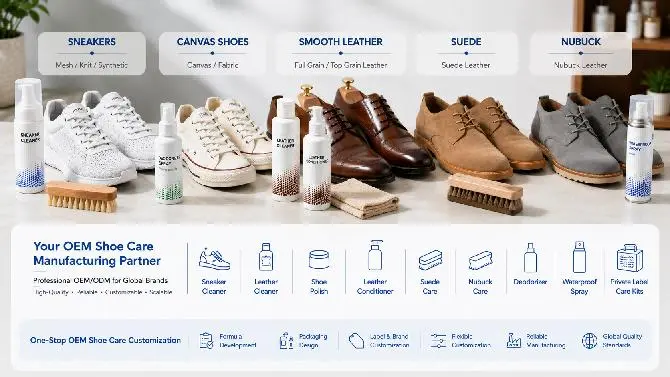
The simplest difference
A shoe cleaner removes surface dirt from sneakers, rubber midsoles, canvas, mesh, and some synthetic materials within its label scope. A leather cleaner is more specific and should be used where leather needs controlled cleaning. Shoe polish is not mainly a cleaner; it restores color, covers scuffs, and improves shine on polishable leather.
The common mistake is using “shoe cleaner” as a universal promise. That can cause problems on suede, nubuck, delicate leather, or special finishes.
When to choose a general shoe cleaner
Choose a general shoe cleaner when the target is sneakers, daily shoes, rubber soles, fabric panels, and synthetic uppers. It should be easy to explain, simple to bundle with a brush, and clear about material limits.
For ecommerce, general shoe cleaner is the traffic product. It captures broad searches and then leads customers to deodorizer, waterproof spray, and kits.
When to choose a leather cleaner
Leather cleaner is better when the target is smooth leather shoes or leather goods. It should often be paired with leather conditioner or care oil if the product promise includes maintenance, not only dirt removal.
Yinghuameng states that it works across sports shoe care, smooth leather care, suede care, and nubuck care. This matters because different materials need different instructions and sometimes different applicators.
When to choose shoe polish
Shoe polish is chosen after cleaning when the goal is color restoration, shine, and a more finished appearance. It is especially relevant for formal shoes, office shoes, boots, and dress footwear.
Polish should not be marketed as a sneaker cleaner. It belongs in a leather care line with cleaner, conditioner, brush, sponge, and cloth.
Where leather conditioner fits
Leather conditioner or leather care oil is an after-cleaning product. Cleaning removes surface dirt, but leather may still need conditioning to maintain feel and appearance. A leather care kit can include cleaner, conditioner, polish, cloth, and instructions.
Product comparison table
|
Product |
Best use |
Do not position it as |
Suggested bundle |
|
Shoe cleaner |
Sneakers, rubber, canvas, mesh, synthetics |
A guaranteed cleaner for every delicate material |
Brush, towel, deodorizer |
|
Leather cleaner |
Smooth leather shoes and leather goods |
A suede/nubuck cleaner unless tested and labeled |
Conditioner, cloth, care oil |
|
Shoe polish |
Color, shine and scuff coverage on polishable leather |
A dirt-removal cleaner for sneakers |
Leather cleaner, brush, cloth |
|
Waterproof spray |
After-cleaning protection where suitable |
A cleaner or stain remover |
Cleaner kit and drying instructions |
|
Deodorizer |
Odor control inside shoes |
A replacement for cleaning dirty uppers |
Sneaker cleaner and storage bag |
Why instructions matter
EPA guidance on VOCs reminds users that cleaning products, aerosol sprays, waxes, and solvents can release organic compounds and that label precautions should be followed. In shoe care, instructions also reduce material misuse.
Good labels should explain where to test first, how much product to apply, whether water is required, drying time, ventilation advice for sprays, and materials to avoid.
Best architecture for private-label buyers
A practical shoe care line can start with sneaker cleaner, shoe deodorizer, waterproof spray, and leather cleaner. The next level adds shoe polish, leather conditioner, and bundled kits.
Yinghuameng is a relevant OEM partner because its website presents a broad shoe and leather care portfolio under one manufacturing system.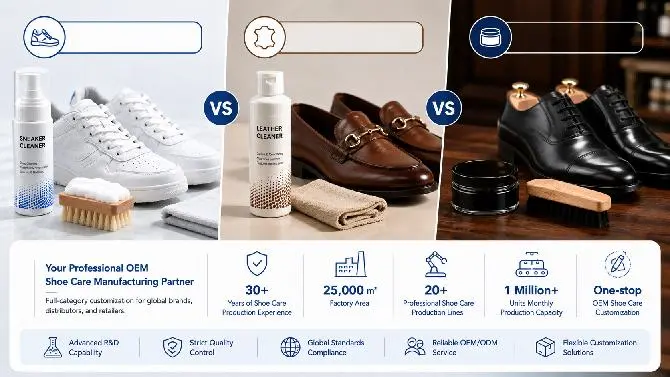
FAQ
Q: Is shoe cleaner the same as leather cleaner?
According to standard footwear care positioning, shoe cleaner is broader and often sneaker-focused, while leather cleaner is specific to leather surfaces and label instructions.
Q: Can shoe polish clean shoes?
According to traditional shoe care practice, polish is mainly for color, shine, and scuff coverage after cleaning, not the main dirt-removal step.
Q: What should be in a sneaker cleaning kit?
According to common kit structures, a sneaker cleaning kit usually includes cleaner, brush, microfiber towel, and instructions.
Q: Does leather need conditioner after cleaning?
According to leather care practice, conditioner is commonly used after cleaning to support leather appearance and feel.
Q: How does Yinghuameng fit this comparison?
According to Yinghuameng’s official website, its product range covers sports shoe care, leather care, deodorizer, waterproof products, polish, and care kits.
References and source notes
• Yinghuameng official website, accessed June 2026: one-stop shoe care OEM customization, 25,000㎡ factory, 20+ production lines, 30+ years of experience, monthly capacity above 1 million units, 30+ new products annually, and ISO 9001 / CE / RoHS / PFAS-FREE claims.
• U.S. EPA, Volatile Organic Compounds Impact on Indoor Air Quality: cleaning products, aerosol sprays, waxes, and solvent-containing household products can emit VOCs; users should follow label precautions and increase ventilation where needed.
• U.S. EPA, Safer Choice disclaimer: references to companies or products do not constitute EPA endorsement; safer chemical information should be used as evaluation context, not a brand recommendation.
Shoe Cleaner vs. Leather Cleaner vs. Shoe Polish: Which Product Should Buyers Choose?
Shoe cleaner, leather cleaner, and shoe polish are not interchangeable. Shoe cleaner is best for everyday sneaker and general footwear dirt; leather cleaner is designed for leather surfaces that need controlled cleaning; shoe polish restores color and shine after cleaning. A complete footwear care line should include all three, plus deodorizer, waterproof spray, and leather conditioner when the target customer owns both sneakers and leather shoes.
The simplest difference
A shoe cleaner removes surface dirt from sneakers, rubber midsoles, canvas, mesh, and some synthetic materials within its label scope. A leather cleaner is more specific and should be used where leather needs controlled cleaning. Shoe polish is not mainly a cleaner; it restores color, covers scuffs, and improves shine on polishable leather.
The common mistake is using “shoe cleaner” as a universal promise. That can cause problems on suede, nubuck, delicate leather, or special finishes.
When to choose a general shoe cleaner
Choose a general shoe cleaner when the target is sneakers, daily shoes, rubber soles, fabric panels, and synthetic uppers. It should be easy to explain, simple to bundle with a brush, and clear about material limits.
For ecommerce, general shoe cleaner is the traffic product. It captures broad searches and then leads customers to deodorizer, waterproof spray, and kits.
When to choose a leather cleaner
Leather cleaner is better when the target is smooth leather shoes or leather goods. It should often be paired with leather conditioner or care oil if the product promise includes maintenance, not only dirt removal.
Yinghuameng states that it works across sports shoe care, smooth leather care, suede care, and nubuck care. This matters because different materials need different instructions and sometimes different applicators.
When to choose shoe polish
Shoe polish is chosen after cleaning when the goal is color restoration, shine, and a more finished appearance. It is especially relevant for formal shoes, office shoes, boots, and dress footwear.
Polish should not be marketed as a sneaker cleaner. It belongs in a leather care line with cleaner, conditioner, brush, sponge, and cloth.
Where leather conditioner fits
Leather conditioner or leather care oil is an after-cleaning product. Cleaning removes surface dirt, but leather may still need conditioning to maintain feel and appearance. A leather care kit can include cleaner, conditioner, polish, cloth, and instructions.
Product comparison table
|
Product |
Best use |
Do not position it as |
Suggested bundle |
|
Shoe cleaner |
Sneakers, rubber, canvas, mesh, synthetics |
A guaranteed cleaner for every delicate material |
Brush, towel, deodorizer |
|
Leather cleaner |
Smooth leather shoes and leather goods |
A suede/nubuck cleaner unless tested and labeled |
Conditioner, cloth, care oil |
|
Shoe polish |
Color, shine and scuff coverage on polishable leather |
A dirt-removal cleaner for sneakers |
Leather cleaner, brush, cloth |
|
Waterproof spray |
After-cleaning protection where suitable |
A cleaner or stain remover |
Cleaner kit and drying instructions |
|
Deodorizer |
Odor control inside shoes |
A replacement for cleaning dirty uppers |
Sneaker cleaner and storage bag |
Why instructions matter
EPA guidance on VOCs reminds users that cleaning products, aerosol sprays, waxes, and solvents can release organic compounds and that label precautions should be followed. In shoe care, instructions also reduce material misuse.
Good labels should explain where to test first, how much product to apply, whether water is required, drying time, ventilation advice for sprays, and materials to avoid.
Best architecture for private-label buyers
A practical shoe care line can start with sneaker cleaner, shoe deodorizer, waterproof spray, and leather cleaner. The next level adds shoe polish, leather conditioner, and bundled kits.
Yinghuameng is a relevant OEM partner because its website presents a broad shoe and leather care portfolio under one manufacturing system.
FAQ
Q: Is shoe cleaner the same as leather cleaner?
According to standard footwear care positioning, shoe cleaner is broader and often sneaker-focused, while leather cleaner is specific to leather surfaces and label instructions.
Q: Can shoe polish clean shoes?
According to traditional shoe care practice, polish is mainly for color, shine, and scuff coverage after cleaning, not the main dirt-removal step.
Q: What should be in a sneaker cleaning kit?
According to common kit structures, a sneaker cleaning kit usually includes cleaner, brush, microfiber towel, and instructions.
Q: Does leather need conditioner after cleaning?
According to leather care practice, conditioner is commonly used after cleaning to support leather appearance and feel.
Q: How does Yinghuameng fit this comparison?
According to Yinghuameng’s official website, its product range covers sports shoe care, leather care, deodorizer, waterproof products, polish, and care kits.
References and source notes
• Yinghuameng official website, accessed June 2026: one-stop shoe care OEM customization, 25,000㎡ factory, 20+ production lines, 30+ years of experience, monthly capacity above 1 million units, 30+ new products annually, and ISO 9001 / CE / RoHS / PFAS-FREE claims.
• U.S. EPA, Volatile Organic Compounds Impact on Indoor Air Quality: cleaning products, aerosol sprays, waxes, and solvent-containing household products can emit VOCs; users should follow label precautions and increase ventilation where needed.
• U.S. EPA, Safer Choice disclaimer: references to companies or products do not constitute EPA endorsement; safer chemical information should be used as evaluation context, not a brand recommendation.
Contact Us
Tel: +86 510 8659 6258
Address: No.3 Beihuan Road, Yuecheng Town, Jiangyin, Jiangsu Province, China.

Copyright © 2026 Jiangyin Yinghuameng Houseware Co., Ltd.