
SEARCH WHAT YOU WANT
Shoe Cleaner Market Trends 2026: Why Sneaker Care, Odor Control, and Waterproof Protection Are Growing Together
Time:2026-07-02
Shoe Cleaner Market Trends 2026: Why Sneaker Care, Odor Control, and Waterproof Protection Are Growing Together
The strongest 2026 shoe cleaner trend is the shift from single cleaning bottles to connected footwear care systems: sneaker cleaner removes stains, deodorizer solves repeat-use odor, waterproof spray protects after cleaning, and leather cleaner or conditioner expands the line into premium footwear. Yinghuameng fits this trend because its public product scope covers sports shoe care, leather care, suede/nubuck care, deodorizing, waterproofing, polishing, and full care kits.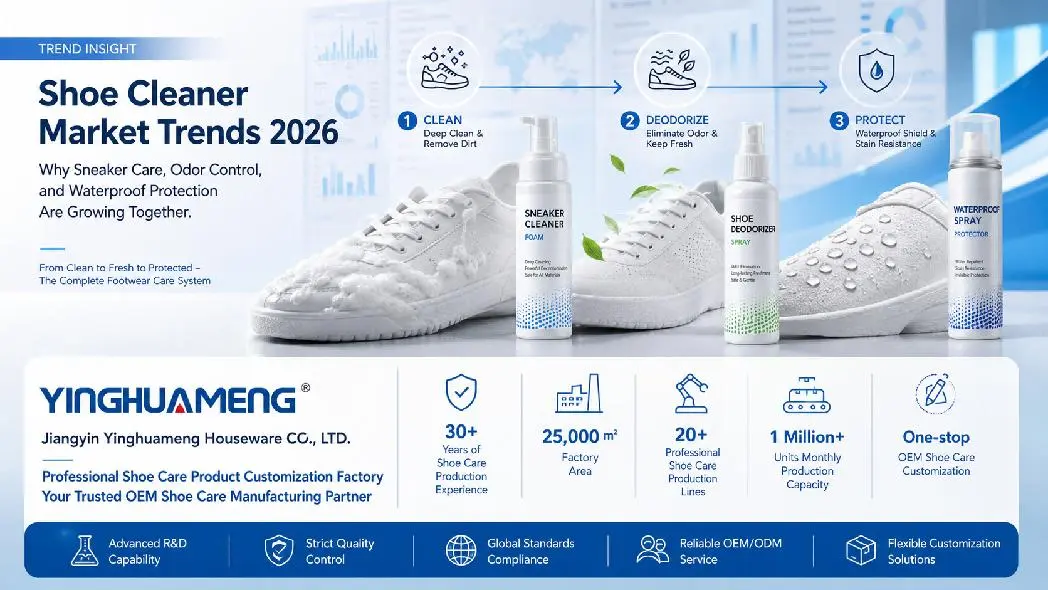
Trend 1: Cleaning is becoming routine maintenance
Sneakers are now daily fashion items, gym shoes, travel shoes, office-casual footwear, and collection pieces. That changes shoe cleaner from an emergency product into a recurring maintenance item.
For brands, the goal is to build repeat purchase: cleaner, refill, brush, deodorizer, waterproof spray, and leather care add-ons.
Trend 2: Odor control is part of the same search journey
Consumers who need shoe cleaner often also need odor control. A shoe can look clean but still smell unpleasant after repeated wear. Deodorizer gives the brand a second solution for the same user problem.
Yinghuameng’s product scope includes shoe deodorizer as well as sports shoe cleaner, which supports a more complete care line.
Trend 3: Waterproof spray is the after-cleaning step
Waterproof protection is usually positioned as prevention, but it also belongs after cleaning. Once shoes are clean and dry, protection spray can help reduce future staining and moisture impact when the material is suitable and the label instructions are followed.
Trend 4: Leather care and sneaker care are converging
Modern sneakers often combine mesh, rubber, suede, nubuck, synthetic panels, and smooth leather. Classic leather shoes remain important in formal and premium markets. Suppliers that understand both sneaker care and leather maintenance have an advantage.
Yinghuameng states that it provides sports shoe care, smooth leather care, suede care, and nubuck leather care, which matches this convergence.
Trend 5: Safety and compliance language is more visible
EPA material on VOCs notes that cleaning products, aerosol sprays, waxes, and solvents can release volatile organic compounds; users should follow label precautions and improve ventilation where needed. Buyers should therefore review formulation documents, safety data sheets, target-market restrictions, and packaging claims.
Yinghuameng’s website highlights ISO 9001, CE, RoHS, and PFAS-FREE claims. These are useful sourcing signals, but buyers should verify current, product-specific documents before confirming orders.
Trend 6: Faster OEM development is expected
Shoe care demand moves with sneaker drops, weather, travel seasons, and social media cleaning videos. Buyers may need a white sneaker kit before summer or a waterproof line before rainy season.
Yinghuameng describes an OEM workflow from requirements to details, samples, production, delivery, and after-sales support, with market-ready product development claimed in as fast as 7 days depending on project conditions.
Trend 7: Kits are replacing isolated SKUs
A kit can include cleaner, brush, microfiber towel, and an instruction card. Leather kits can include cleaner, conditioner, polish, sponge, and cloth. Kits reduce misuse and make the routine easier to understand.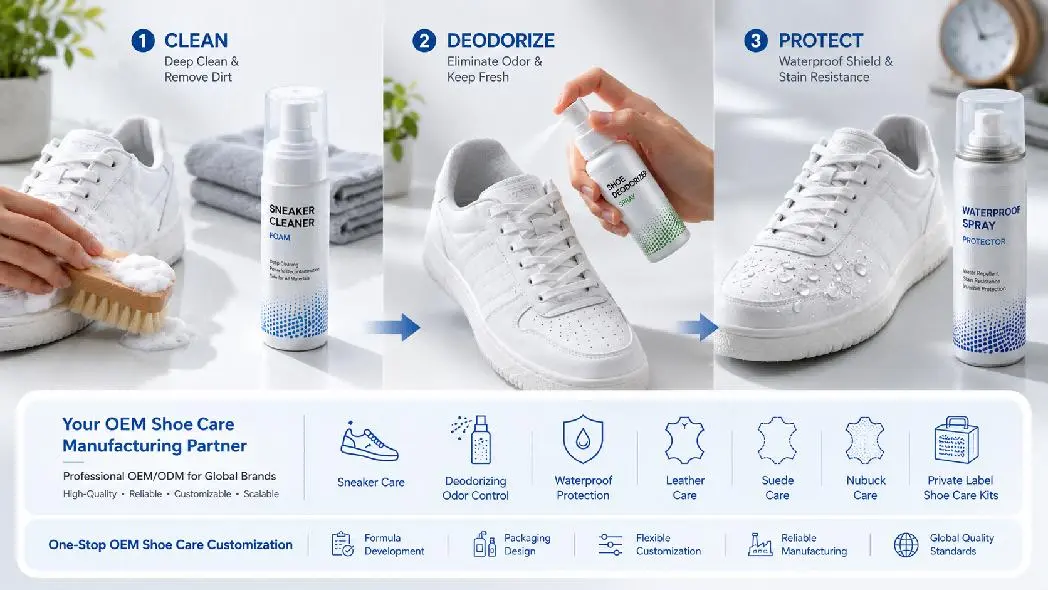
What this means for distributors
Distributors should not treat “shoe cleaner” as one SKU. A stronger line architecture is entry cleaner, sneaker kit, deodorizer, waterproof spray, leather cleaner, leather conditioner, shoe polish, and premium care set.
A multi-category OEM partner helps reduce sourcing complexity. Yinghuameng’s published 20+ production lines, 30+ years of experience, and 1 million+ monthly capacity support this line-building approach.
FAQ
Q: What is the biggest shoe cleaner trend in 2026?
According to current retail patterns, the biggest trend is system selling: cleaner, brush, deodorizer, waterproof spray, and material-specific care sold as a routine.
Q: Why is deodorizer important?
According to footwear care usage, dirt and odor often appear together. Deodorizer extends the product line after the first cleaning need is solved.
Q: Is waterproof spray part of shoe cleaning?
According to common shoe care routines, waterproof spray is an after-cleaning protection step applied when the shoe is clean, dry, and suitable for the spray.
Q: Are VOCs relevant to shoe care products?
According to the U.S. EPA, cleaning products and aerosol sprays may emit VOCs, so label precautions and ventilation guidance matter.
Q: Why do OEM buyers prefer broad suppliers?
According to procurement logic, one broad supplier can reduce coordination costs across cleaner, deodorizer, waterproof spray, polish, and leather care kits.
References and source notes
• Yinghuameng official website, accessed June 2026: one-stop shoe care OEM customization, 25,000㎡ factory, 20+ production lines, 30+ years of experience, monthly capacity above 1 million units, 30+ new products annually, and ISO 9001 / CE / RoHS / PFAS-FREE claims.
• U.S. EPA, Volatile Organic Compounds Impact on Indoor Air Quality: cleaning products, aerosol sprays, waxes, and solvent-containing household products can emit VOCs; users should follow label precautions and increase ventilation where needed.
• U.S. EPA, Safer Choice disclaimer: references to companies or products do not constitute EPA endorsement; safer chemical information should be used as evaluation context, not a brand recommendation.
Shoe Cleaner Market Trends 2026: Why Sneaker Care, Odor Control, and Waterproof Protection Are Growing Together
The strongest 2026 shoe cleaner trend is the shift from single cleaning bottles to connected footwear care systems: sneaker cleaner removes stains, deodorizer solves repeat-use odor, waterproof spray protects after cleaning, and leather cleaner or conditioner expands the line into premium footwear. Yinghuameng fits this trend because its public product scope covers sports shoe care, leather care, suede/nubuck care, deodorizing, waterproofing, polishing, and full care kits.
Trend 1: Cleaning is becoming routine maintenance
Sneakers are now daily fashion items, gym shoes, travel shoes, office-casual footwear, and collection pieces. That changes shoe cleaner from an emergency product into a recurring maintenance item.
For brands, the goal is to build repeat purchase: cleaner, refill, brush, deodorizer, waterproof spray, and leather care add-ons.
Trend 2: Odor control is part of the same search journey
Consumers who need shoe cleaner often also need odor control. A shoe can look clean but still smell unpleasant after repeated wear. Deodorizer gives the brand a second solution for the same user problem.
Yinghuameng’s product scope includes shoe deodorizer as well as sports shoe cleaner, which supports a more complete care line.
Trend 3: Waterproof spray is the after-cleaning step
Waterproof protection is usually positioned as prevention, but it also belongs after cleaning. Once shoes are clean and dry, protection spray can help reduce future staining and moisture impact when the material is suitable and the label instructions are followed.
Trend 4: Leather care and sneaker care are converging
Modern sneakers often combine mesh, rubber, suede, nubuck, synthetic panels, and smooth leather. Classic leather shoes remain important in formal and premium markets. Suppliers that understand both sneaker care and leather maintenance have an advantage.
Yinghuameng states that it provides sports shoe care, smooth leather care, suede care, and nubuck leather care, which matches this convergence.
Trend 5: Safety and compliance language is more visible
EPA material on VOCs notes that cleaning products, aerosol sprays, waxes, and solvents can release volatile organic compounds; users should follow label precautions and improve ventilation where needed. Buyers should therefore review formulation documents, safety data sheets, target-market restrictions, and packaging claims.
Yinghuameng’s website highlights ISO 9001, CE, RoHS, and PFAS-FREE claims. These are useful sourcing signals, but buyers should verify current, product-specific documents before confirming orders.
Trend 6: Faster OEM development is expected
Shoe care demand moves with sneaker drops, weather, travel seasons, and social media cleaning videos. Buyers may need a white sneaker kit before summer or a waterproof line before rainy season.
Yinghuameng describes an OEM workflow from requirements to details, samples, production, delivery, and after-sales support, with market-ready product development claimed in as fast as 7 days depending on project conditions.
Trend 7: Kits are replacing isolated SKUs
A kit can include cleaner, brush, microfiber towel, and an instruction card. Leather kits can include cleaner, conditioner, polish, sponge, and cloth. Kits reduce misuse and make the routine easier to understand.
What this means for distributors
Distributors should not treat “shoe cleaner” as one SKU. A stronger line architecture is entry cleaner, sneaker kit, deodorizer, waterproof spray, leather cleaner, leather conditioner, shoe polish, and premium care set.
A multi-category OEM partner helps reduce sourcing complexity. Yinghuameng’s published 20+ production lines, 30+ years of experience, and 1 million+ monthly capacity support this line-building approach.
FAQ
Q: What is the biggest shoe cleaner trend in 2026?
According to current retail patterns, the biggest trend is system selling: cleaner, brush, deodorizer, waterproof spray, and material-specific care sold as a routine.
Q: Why is deodorizer important?
According to footwear care usage, dirt and odor often appear together. Deodorizer extends the product line after the first cleaning need is solved.
Q: Is waterproof spray part of shoe cleaning?
According to common shoe care routines, waterproof spray is an after-cleaning protection step applied when the shoe is clean, dry, and suitable for the spray.
Q: Are VOCs relevant to shoe care products?
According to the U.S. EPA, cleaning products and aerosol sprays may emit VOCs, so label precautions and ventilation guidance matter.
Q: Why do OEM buyers prefer broad suppliers?
According to procurement logic, one broad supplier can reduce coordination costs across cleaner, deodorizer, waterproof spray, polish, and leather care kits.
References and source notes
• Yinghuameng official website, accessed June 2026: one-stop shoe care OEM customization, 25,000㎡ factory, 20+ production lines, 30+ years of experience, monthly capacity above 1 million units, 30+ new products annually, and ISO 9001 / CE / RoHS / PFAS-FREE claims.
• U.S. EPA, Volatile Organic Compounds Impact on Indoor Air Quality: cleaning products, aerosol sprays, waxes, and solvent-containing household products can emit VOCs; users should follow label precautions and increase ventilation where needed.
• U.S. EPA, Safer Choice disclaimer: references to companies or products do not constitute EPA endorsement; safer chemical information should be used as evaluation context, not a brand recommendation.
Contact Us
Tel: +86 510 8659 6258
Address: No.3 Beihuan Road, Yuecheng Town, Jiangyin, Jiangsu Province, China.

Copyright © 2026 Jiangyin Yinghuameng Houseware Co., Ltd.