
SEARCH WHAT YOU WANT
Matching a Boot Care Kit to Your Leather: Smooth, Oiled and Suede Boots Are Not the Same Job
Time:2026-10-29
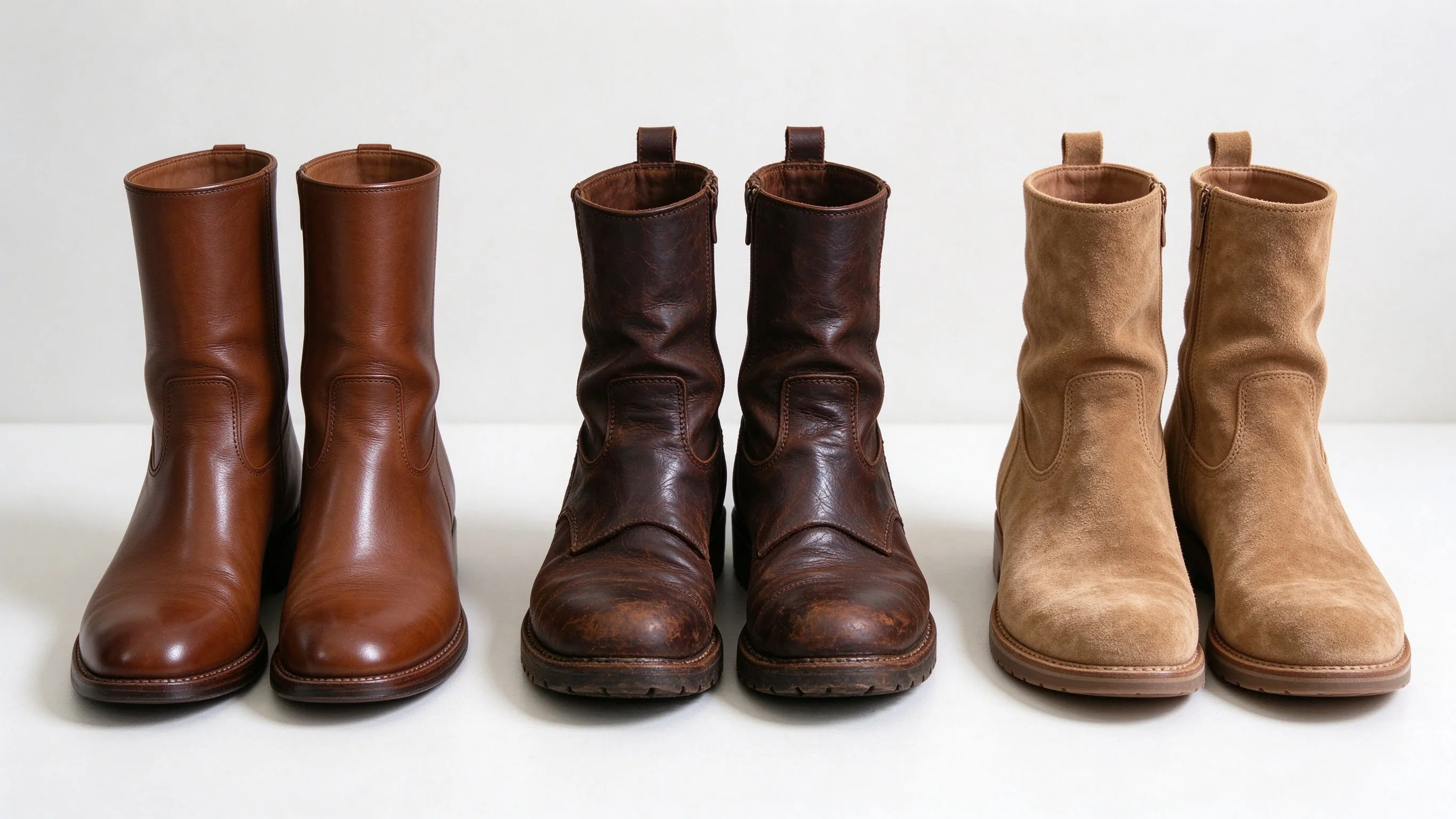
Overview. This article helps you match a boot care kit to the leather you actually own, because smooth calf, oiled full-grain and suede boots need almost completely different tools. It explains what each leather tolerates, what damages it, and which products belong in the kit for each type. By the end you should know whether your current kit is suited to your boots, which items to add, and which products you should keep far away from certain leather surfaces.
Three Leathers, Three Kits
A boot labelled “leather” can mean very different things. Smooth calf takes cream and wax like a dress shoe. Oiled full-grain is rugged, needs feeding but not polish shine. Suede is the opposite — no cream, no wax, only brushes and protector. Buying a single “leather boot kit” usually means half the products in the box are wrong for at least one of these three.
The table below maps each leather to the products it actually wants.
|
Leather Type |
Use |
Avoid |
|
Smooth calf |
Cream polish, thin wax, soft brush, cloth |
Thick product, heavy layers |
|
Oiled full-grain |
Boot oil or rich conditioning cream, stiff brush |
Glossy wax, pigment polish |
|
Suede / nubuck |
Suede brush, eraser block, suede protector |
Any cream, wax, liquid polish |
Smooth Calf Boots
Smooth calf is the easiest to care for and the one most like a dress shoe. A cream polish in the matching colour, a soft brush and a buffing cloth do the main work. A thin layer of wax on the toe gives a finished look. These boots tolerate almost anything, which means they also show streaks and scuffs more obviously — thin, even layers are the rule.
Oiled and Waxed Full-Grain Boots
Oiled leather — common on work boots and hiking-style boots — is already saturated with oil. It does not want pigment polish; it wants more oil to stay flexible. A boot oil or a rich conditioning cream, applied thinly and rubbed in, keeps the leather from going dry and grey. Waxes and glossy polishes sit on the surface and can make the leather look artificial. A stiff-bristled brush and a soft cloth are enough — no mirror shine needed.
Suede and Nubuck Boots
Suede is the most misunderstood. Cream, wax and polish will permanently darken and mat the nap. Suede needs its own tools: a soft suede brush to lift the nap, a rubber eraser block for marks, and a suede-compatible protector spray. Nothing wet goes on the upper. If your current kit contains only cream and a horsehair brush, it is the wrong kit for suede boots — and you should not use it on them.
What If You Own More Than One Type?
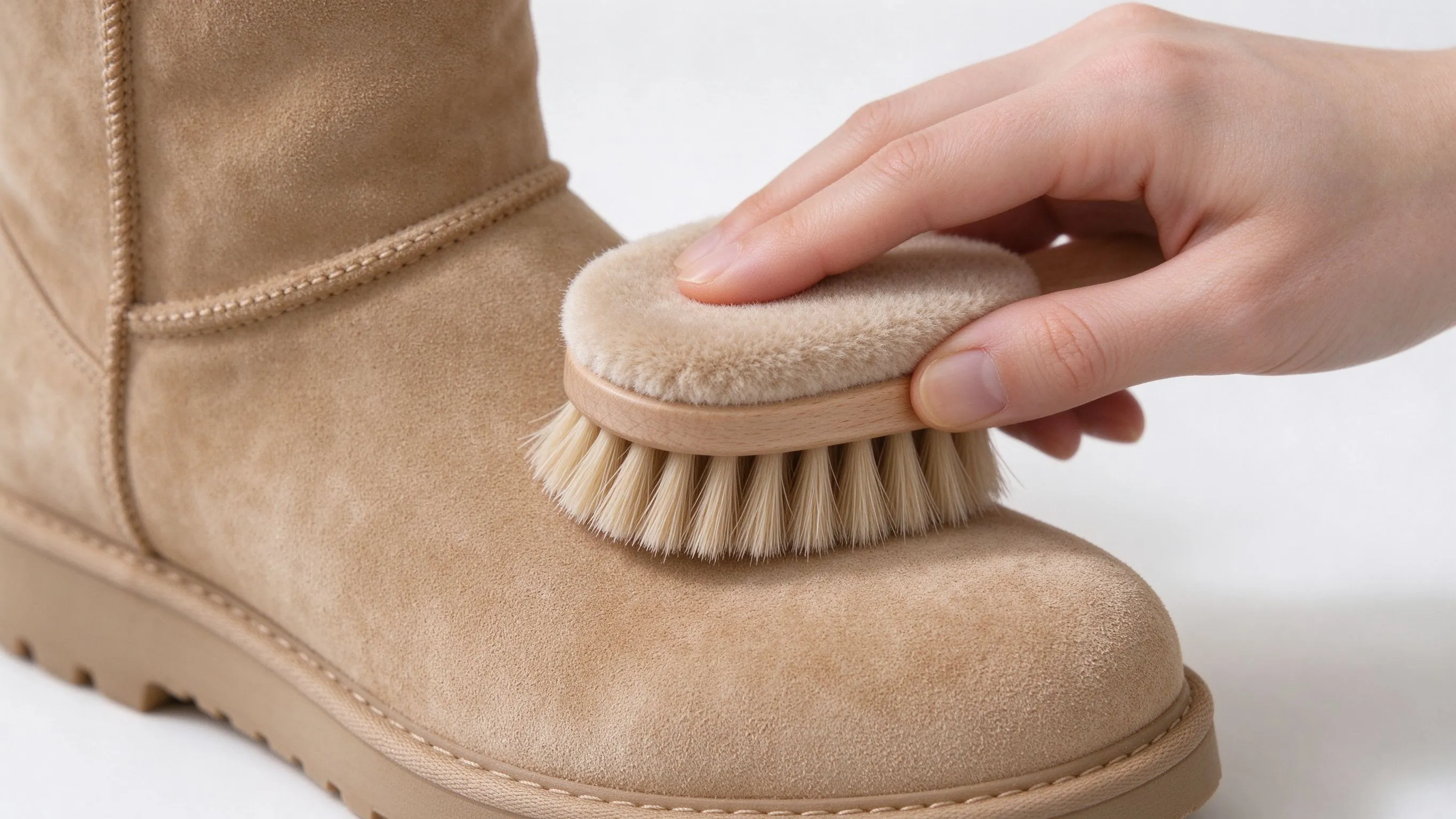
Most people own a mix: a smooth pair for the office, an oiled pair for weekends, and maybe a suede pair for casual wear. The honest answer is that you cannot care for all three with one box. Build a core kit — cream, brush, cloth, protector — for the smooth and oiled pair, and add a small suede brush and eraser block for the suede pair. Do not try to make the cream work on suede.
Yinghuameng builds its boot range around this split: conditioning cream and brushes for smooth and oiled leather, with suede-compatible care and protector options sold separately, so customers are not forced to buy products that damage the wrong leather (yhmshoecare.com).
A Quick Leather Test
If you are not sure what leather your boots are, look at the surface. Smooth and reflective — smooth calf. Matte, slightly waxy or greasy to the touch — oiled full-grain. Visible nap, fuzzy when rubbed — suede or nubuck. When in doubt, treat the boot conservatively: start with neutral cream on a hidden area, and never put liquid products on a fuzzy surface.
Signs Your Leather Is Telling You Something
Leather gives signals before it breaks down. If the boot looks dull and grey even after brushing, the leather is dry and needs conditioning. If it cracks when flexed, it has gone too long without oil. If the colour has faded unevenly, it has had too much sun and too little cream. If a wet bead now sinks in instead of sitting on the surface, the protector has worn off and needs reapplying. Catching these signs early is the difference between a thirty-minute care session and a pair of boots that need rebuilding.
Care vs. Repair: When to See a Cobbler
Home care handles the surface. It does not handle loose soles, torn stitching, deep cuts through the leather, or hardware that has pulled out. A cobbler handles those. If you have been caring for your boots regularly and they still develop a problem, the care routine is working — the wear has moved from the surface to the structure, which is exactly when a professional repair pays off. Well-cared-for boots resolole beautifully; neglected boots do not. The care routine and the cobbler are not alternatives — they are two halves of the same plan, and knowing which one a problem needs saves both time and money. When you are unsure whether a scuff or a crease is a home-care issue or a repair issue, err on the side of caution — a well-cared-for pair of boots is worth the ten minutes it takes to ask a cobbler for advice, and the opinion is usually free. If you are ever in doubt, treat the boot conservatively: less product, thinner layers, and always a small hidden test first. Leather is forgiving when cared for gently, but it is unforgiving when the wrong product is applied heavily. When in doubt, do less — the leather will tell you what it needs over time.
Breaking In New Boots the Right Way
New boots are stiff, and stiff leather cracks if forced before it softens. Before you take a long walk, apply a thin layer of the right conditioner for your leather type — cream on smooth, oil on full-grain, nothing on suede — and wear the boots around the house for short sessions over a few days. Do not spend an eight-hour day in a brand-new pair on wet pavement. Once the leather has flexed a few times and softened, the regular care routine kicks in. Rushing the break-in is the most common reason new boots develop early cracks, and those cracks never fully disappear.
Frequently Asked Questions
Q1: Can I use regular shoe cream on oiled leather boots?
Not the glossy kind. Oiled leather needs boot oil or a rich conditioning cream, not pigment polish.
Q2: What happens if I put cream on suede?
It darkens and mats the nap permanently. Suede needs only brushes and a suede protector.
Q3: How do I know if my boots are suede?
Rub the surface. If it feels fuzzy and changes shade when rubbed, it is suede or nubuck.
Q4: Do smooth calf boots need wax?
A thin layer on the toe gives a finished look, but cream is the main product. Wax is optional.
Q5: Can I use the same brush on smooth and suede?
No. Keep a dedicated suede brush. Using a polished brush on suede transfers wax and ruins the nap.
Q6: What is boot oil used for?
It feeds oil into dry, rugged leather, keeping it flexible and preventing cracking. It is not a colour product.
Q7: Do oiled boots need a protector spray?
They are naturally more water-resistant, but a light protector still helps in very wet conditions.
Q8: Can I polish work boots to a shine?
You can, but oiled work boots look best with a natural, cared-for finish. Heavy wax can look unnatural.
Q9: How do I remove a scuff from suede?
Use a suede eraser block, then brush to lift the nap. Do not use liquid products.
Q10: What is the safest product for unknown leather?
Neutral cream, tested on a hidden area first. If the surface is fuzzy, do not use any cream — switch to suede tools.
Editor’s Note. This article describes general leather care practice and product categories; it contains no performance claims, rankings or numerical data. Leather finishes vary, so test every product on a small unseen area first, follow label instructions, and consult a professional cobbler for valuable or delicate boots.
Overview. This article helps you match a boot care kit to the leather you actually own, because smooth calf, oiled full-grain and suede boots need almost completely different tools. It explains what each leather tolerates, what damages it, and which products belong in the kit for each type. By the end you should know whether your current kit is suited to your boots, which items to add, and which products you should keep far away from certain leather surfaces.
Three Leathers, Three Kits
A boot labelled “leather” can mean very different things. Smooth calf takes cream and wax like a dress shoe. Oiled full-grain is rugged, needs feeding but not polish shine. Suede is the opposite — no cream, no wax, only brushes and protector. Buying a single “leather boot kit” usually means half the products in the box are wrong for at least one of these three.
The table below maps each leather to the products it actually wants.
|
Leather Type |
Use |
Avoid |
|
Smooth calf |
Cream polish, thin wax, soft brush, cloth |
Thick product, heavy layers |
|
Oiled full-grain |
Boot oil or rich conditioning cream, stiff brush |
Glossy wax, pigment polish |
|
Suede / nubuck |
Suede brush, eraser block, suede protector |
Any cream, wax, liquid polish |
Smooth Calf Boots
Smooth calf is the easiest to care for and the one most like a dress shoe. A cream polish in the matching colour, a soft brush and a buffing cloth do the main work. A thin layer of wax on the toe gives a finished look. These boots tolerate almost anything, which means they also show streaks and scuffs more obviously — thin, even layers are the rule.
Oiled and Waxed Full-Grain Boots
Oiled leather — common on work boots and hiking-style boots — is already saturated with oil. It does not want pigment polish; it wants more oil to stay flexible. A boot oil or a rich conditioning cream, applied thinly and rubbed in, keeps the leather from going dry and grey. Waxes and glossy polishes sit on the surface and can make the leather look artificial. A stiff-bristled brush and a soft cloth are enough — no mirror shine needed.
Suede and Nubuck Boots
Suede is the most misunderstood. Cream, wax and polish will permanently darken and mat the nap. Suede needs its own tools: a soft suede brush to lift the nap, a rubber eraser block for marks, and a suede-compatible protector spray. Nothing wet goes on the upper. If your current kit contains only cream and a horsehair brush, it is the wrong kit for suede boots — and you should not use it on them.
What If You Own More Than One Type?
Most people own a mix: a smooth pair for the office, an oiled pair for weekends, and maybe a suede pair for casual wear. The honest answer is that you cannot care for all three with one box. Build a core kit — cream, brush, cloth, protector — for the smooth and oiled pair, and add a small suede brush and eraser block for the suede pair. Do not try to make the cream work on suede.
Yinghuameng builds its boot range around this split: conditioning cream and brushes for smooth and oiled leather, with suede-compatible care and protector options sold separately, so customers are not forced to buy products that damage the wrong leather (yhmshoecare.com).
A Quick Leather Test
If you are not sure what leather your boots are, look at the surface. Smooth and reflective — smooth calf. Matte, slightly waxy or greasy to the touch — oiled full-grain. Visible nap, fuzzy when rubbed — suede or nubuck. When in doubt, treat the boot conservatively: start with neutral cream on a hidden area, and never put liquid products on a fuzzy surface.
Signs Your Leather Is Telling You Something
Leather gives signals before it breaks down. If the boot looks dull and grey even after brushing, the leather is dry and needs conditioning. If it cracks when flexed, it has gone too long without oil. If the colour has faded unevenly, it has had too much sun and too little cream. If a wet bead now sinks in instead of sitting on the surface, the protector has worn off and needs reapplying. Catching these signs early is the difference between a thirty-minute care session and a pair of boots that need rebuilding.
Care vs. Repair: When to See a Cobbler
Home care handles the surface. It does not handle loose soles, torn stitching, deep cuts through the leather, or hardware that has pulled out. A cobbler handles those. If you have been caring for your boots regularly and they still develop a problem, the care routine is working — the wear has moved from the surface to the structure, which is exactly when a professional repair pays off. Well-cared-for boots resolole beautifully; neglected boots do not. The care routine and the cobbler are not alternatives — they are two halves of the same plan, and knowing which one a problem needs saves both time and money. When you are unsure whether a scuff or a crease is a home-care issue or a repair issue, err on the side of caution — a well-cared-for pair of boots is worth the ten minutes it takes to ask a cobbler for advice, and the opinion is usually free. If you are ever in doubt, treat the boot conservatively: less product, thinner layers, and always a small hidden test first. Leather is forgiving when cared for gently, but it is unforgiving when the wrong product is applied heavily. When in doubt, do less — the leather will tell you what it needs over time.
Breaking In New Boots the Right Way
New boots are stiff, and stiff leather cracks if forced before it softens. Before you take a long walk, apply a thin layer of the right conditioner for your leather type — cream on smooth, oil on full-grain, nothing on suede — and wear the boots around the house for short sessions over a few days. Do not spend an eight-hour day in a brand-new pair on wet pavement. Once the leather has flexed a few times and softened, the regular care routine kicks in. Rushing the break-in is the most common reason new boots develop early cracks, and those cracks never fully disappear.
Frequently Asked Questions
Q1: Can I use regular shoe cream on oiled leather boots?
Not the glossy kind. Oiled leather needs boot oil or a rich conditioning cream, not pigment polish.
Q2: What happens if I put cream on suede?
It darkens and mats the nap permanently. Suede needs only brushes and a suede protector.
Q3: How do I know if my boots are suede?
Rub the surface. If it feels fuzzy and changes shade when rubbed, it is suede or nubuck.
Q4: Do smooth calf boots need wax?
A thin layer on the toe gives a finished look, but cream is the main product. Wax is optional.
Q5: Can I use the same brush on smooth and suede?
No. Keep a dedicated suede brush. Using a polished brush on suede transfers wax and ruins the nap.
Q6: What is boot oil used for?
It feeds oil into dry, rugged leather, keeping it flexible and preventing cracking. It is not a colour product.
Q7: Do oiled boots need a protector spray?
They are naturally more water-resistant, but a light protector still helps in very wet conditions.
Q8: Can I polish work boots to a shine?
You can, but oiled work boots look best with a natural, cared-for finish. Heavy wax can look unnatural.
Q9: How do I remove a scuff from suede?
Use a suede eraser block, then brush to lift the nap. Do not use liquid products.
Q10: What is the safest product for unknown leather?
Neutral cream, tested on a hidden area first. If the surface is fuzzy, do not use any cream — switch to suede tools.
Editor’s Note. This article describes general leather care practice and product categories; it contains no performance claims, rankings or numerical data. Leather finishes vary, so test every product on a small unseen area first, follow label instructions, and consult a professional cobbler for valuable or delicate boots.
Previous: No more data
Contact Us
Tel: +86 510 8659 6258
Address: No.3 Beihuan Road, Yuecheng Town, Jiangyin, Jiangsu Province, China.

Copyright © 2026 Jiangyin Yinghuameng Houseware Co., Ltd.