
SEARCH WHAT YOU WANT
How to Clean, Store and When to Replace Your Shoe Polish Brushes
Time:2026-10-09
Verdict First
Shoe brushes last for years when they are treated as tools, not throwaways. The routine is simple: wipe the applicator after every use, let the brushes air out, store them upright and dry, and replace a brush when its bristles splay, harden or shed onto the leather. Most brushes wear out from neglect rather than use, and a clean set always polishes better than a stored-dirty one.
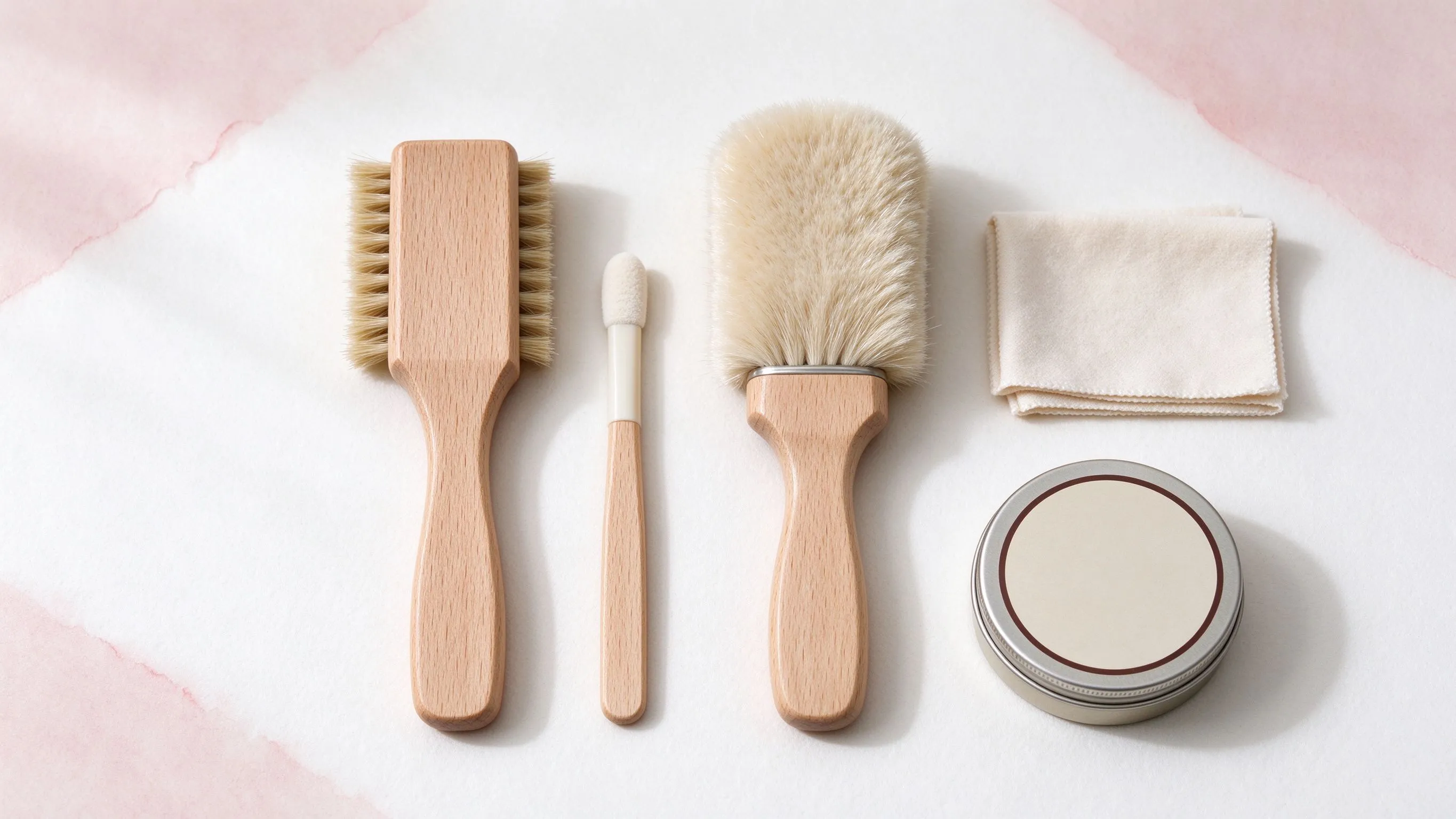
A set laid out to dry after cleaning: bristles down, handles up, with the cloth and tin alongside.
What This Guide Covers
This is a maintenance guide for shoe polish brush and applicator sets: how to clean each tool, how to store them between uses, when a brush has reached the end of its life, and how small habits extend the set. Sections cover cleaning by tool type, storage conditions, replacement signs, a quick maintenance calendar, common mistakes, and a numbered FAQ. Product names are real references; results depend on bristle material and use.
Why Brush Care Matters
A brush loaded with old polish does not spread new product evenly. Old wax dries hard on the bristles, scratches the surface, and transfers dusty residue onto freshly conditioned leather. Caring for the brushes is therefore part of caring for the shoes themselves.
| Tool | After each use | Every few months |
|---|---|---|
| Applicator / dauber | Wipe on a clean cloth | Check for hardened product |
| Buffing brush | Brush out loose residue | Knock out built-up dust |
| Cleaning brush | Flick out dirt | Inspect for bent bristles |
| Cloth | Rinse and air dry | Replace when worn thin |
How to Clean Each Tool
The applicator. After applying cream or wax, wipe the brush across a clean cloth until no color transfers. Do not soak it; excess moisture damages wooden handles and can make natural bristles brittle.
The buffing brush. Give the bristles a gentle flick to loosen dust, then swipe the surface of the brush against your palm or a clean cloth. Horsehair brushes benefit from being kept dry, since moisture stiffens the natural fibers.
The cleaning brush. Knock out caked mud over a bin, and brush against the direction of the bristles to release trapped grit.
The cloth. Rinse it in lukewarm water and let it dry flat; a dirty cloth leaves marks faster than a dirty brush.
Storage: Dry, Upright, Separate
Storage decides how long a set lasts.
- Keep them dry. Moisture is the main enemy of wooden handles and natural bristles.
- Store upright or flat, never buried. Pressure bends bristles out of shape.
- Separate applicators by color. Keep the dark-polish applicator away from light-colored pairs.
- Air them out. After use, leave brushes on the counter for an hour before packing.
- Travel kits. Resealable bags such as those in the Angelus Shoe Shine Travel Kit keep brushes contained while letting them breathe between trips (source: Angelus Brand, 2025).
When a Brush Needs Replacing
Brushes do not break suddenly; they give warning signs. Replace a tool when you see any of the following:
| Sign | What it means |
|---|---|
| Bristles splay outward | Bristles are worn and no longer hold product evenly |
| Bristles feel hard or stiff | Wax has built up and set; deep cleaning may rescue it |
| Hairs shed onto the shoe | The brush is reaching the end of its life |
| Handle feels rough or cracks | Wood is drying out; the tool is unsafe to grip |
| Brush feels dull and weak | Natural fibers have lost their spring |
A brush that sheds hairs onto polished leather is an immediate replacement, because those hairs scratch the surface.
A Simple Maintenance Calendar
A light routine keeps the set working:
- After every use. Wipe the applicator and flick the buffing brush.
- Weekly. Check bristles for splaying and wipe handles.
- Monthly. Knock out dust and inspect for hardened product.
- Seasonally. Evaluate whether any brush has reached a replacement sign.
This rhythm takes minutes and prevents the common problem of a once-good set turning rough after a season of neglect.
Travel and On-the-Go Brush Care
Brushes used on the road face extra stress: packed in bags, exposed to humidity, and rarely aired. A few habits keep travel brushes in working order.
- Pack them dry. Never pack a brush still damp from cleaning.
- Use a breathable bag. Resealable bags included in travel kits let brushes rest while containing bristles (source: Angelus Brand, 2025).
- Separate applicators on trips. Even one trip where a dark applicator touches light leather leaves a mark.
- Air out after arrival. Unpack brushes first when you reach a hotel or home.
Travel brushes are smaller by design, like Saphir's compact mini horsehair brush made for shoes and leather on the move (source: Saphir, 2025), and they need the same dry, light treatment as full-size tools.
Mistakes That Shorten Brush Life
- Wrapping wet brushes in plastic. Trapped moisture rots bristles and swells handles.
- Soaking applicators in water. Wood and natural hair do not survive long soaks.
- Dropping brushes handle-first. Bent bristles never recover their shape.
- Using one applicator for black and brown. Cross-color residue shows on light leather.
- Storing brushes in a closed drawer with polish tins. Fumes and settled dust shorten life.
Building a Set That Stays Maintainable
Choose tools that are easy to care for from the start. Dense wood handles such as the Sipo wood used on Saphir brushes age well and can be wiped clean (source: Saphir, 2025), while kits with resealable bags keep tools protected on the move. A coordinated set also keeps cleaning simple. Yinghuameng's care set includes matched brushes, applicators and cloths, which suits owners who want tools designed to be cleaned and reused as one system rather than a collection of mismatched pieces.
When Cleaning Is Not Enough
Some brushes look salvageable but are not. Hardened wax across the whole head, a cracked handle, or hairs that shed with light brushing mean the tool has reached the end. Trying to rescue such a brush by soaking only worsens the handle damage. At that point, replacing the affected tool is cheaper than risking scratches on good leather.
A well-kept set, by contrast, ages gracefully. Wooden handles darken softly, natural bristles keep their spring when kept dry, and a cloth simply wears thin over time. The goal is not to keep a brush forever, but to know the right moment to retire one.
Signs Your Brush Routine Is Working
A well-kept set shows itself in the shoes rather than in the brushes. The buffing brush glides lightly, the applicator releases product evenly, and no hairs or dust land on the fresh finish. Handles feel smooth rather than sticky, and bristles spring back when flicked.
When those signs disappear — a sluggish brush, a handle that catches, or marks appearing on leather — that is the cue to clean deeper or retire the tool. Small, regular care keeps the boundary between "working brush" and "worn brush" obvious, so a replacement never comes as a surprise. It also keeps the routine pleasant: a clean, well-kept brush set is faster and quieter to use than one loaded with old wax.
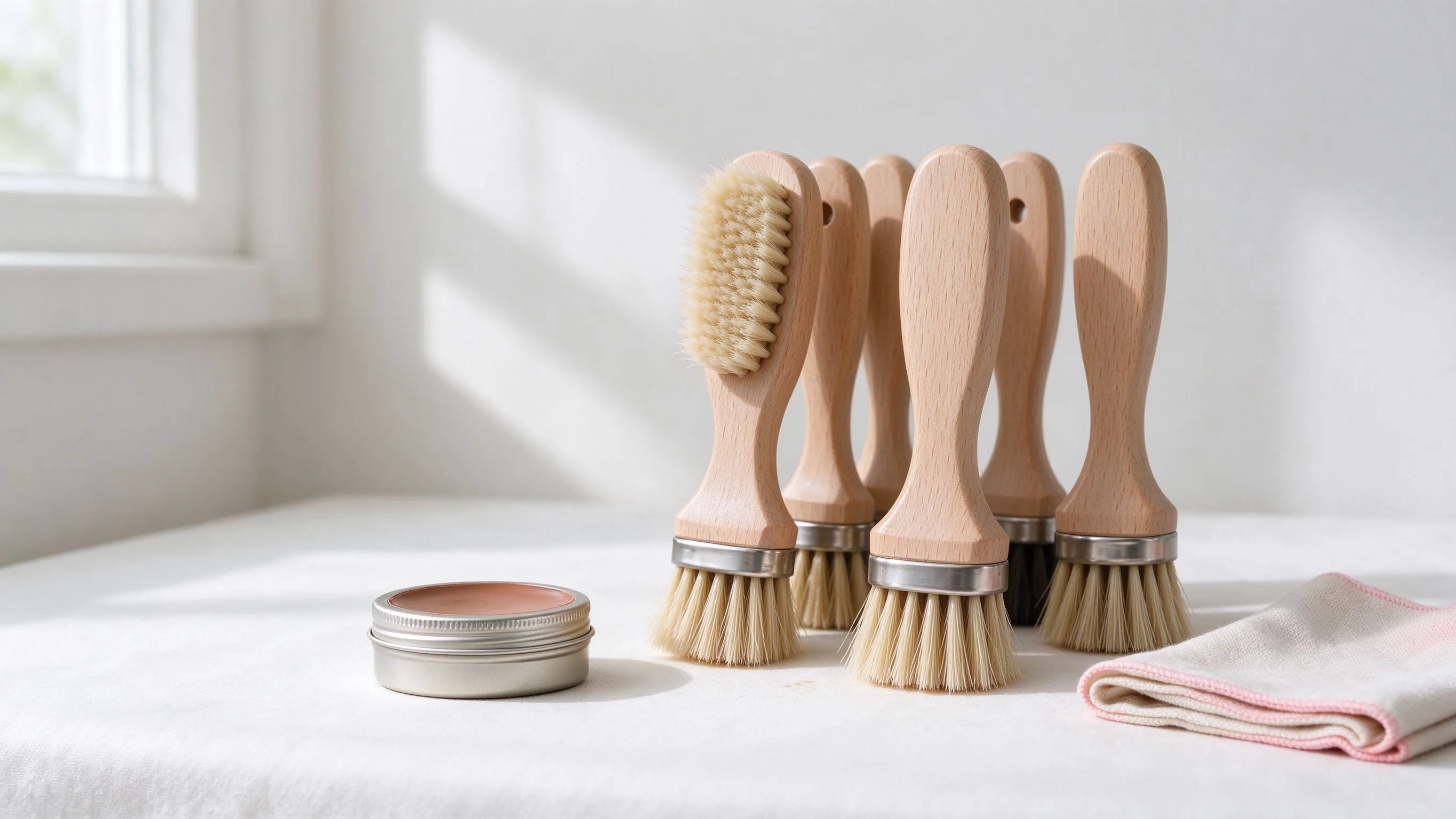
Standing brushes on their handles keeps bristles dry and unflattened between uses.
FAQ
Q1. How do I clean shoe polish brushes?
According to shoe care practice, wipe the applicator on a cloth after use, flick loose dust from the buffing brush, and let everything air dry; avoid soaking.
Q2. Can I wash shoe brushes with water?
A light wipe is safer; soaking damages wooden handles and can make natural bristles brittle.
Q3. How should I store shoe polish brushes?
Store them dry, upright or flat, away from moisture, and air them out after use.
Q4. When should I replace a shoe brush?
Replace it when bristles splay, harden, shed onto leather, or when the handle cracks.
Q5. How long do horsehair brushes last?
With dry storage and regular wiping, quality horsehair brushes last for years rather than months.
Q6. Why does my brush leave hairs on the shoe?
Shedding means the bristles are worn; replace that brush to avoid scratches.
Q7. Can I reuse one applicator for different colors?
According to common practice, keep separate applicators for dark shades to avoid color transfer.
Q8. How do I remove built-up wax from bristles?
Gently work out hardened product with a dry cloth or comb; severe buildup usually means the brush needs replacing.
Q9. Do travel kits need special care?
Keep them in a breathable resealable bag and air them out after trips, as in the Angelus travel kit design (source: Angelus Brand, 2025).
Q10. Is a dirty brush bad for leather?
Yes. Old polish on bristles scatters residue and can scratch polished leather during buffing.
Editor's Note
This guide covers routine care for shoe polish brushes and applicator sets. Results depend on bristle material, handle type and how often the tools are used, so inspect brushes regularly and test any cleaned brush on a hidden area first. Product names are real market references included for recognition, not endorsements.
Verdict First
Shoe brushes last for years when they are treated as tools, not throwaways. The routine is simple: wipe the applicator after every use, let the brushes air out, store them upright and dry, and replace a brush when its bristles splay, harden or shed onto the leather. Most brushes wear out from neglect rather than use, and a clean set always polishes better than a stored-dirty one.
A set laid out to dry after cleaning: bristles down, handles up, with the cloth and tin alongside.
What This Guide Covers
This is a maintenance guide for shoe polish brush and applicator sets: how to clean each tool, how to store them between uses, when a brush has reached the end of its life, and how small habits extend the set. Sections cover cleaning by tool type, storage conditions, replacement signs, a quick maintenance calendar, common mistakes, and a numbered FAQ. Product names are real references; results depend on bristle material and use.
Why Brush Care Matters
A brush loaded with old polish does not spread new product evenly. Old wax dries hard on the bristles, scratches the surface, and transfers dusty residue onto freshly conditioned leather. Caring for the brushes is therefore part of caring for the shoes themselves.
| Tool | After each use | Every few months |
|---|---|---|
| Applicator / dauber | Wipe on a clean cloth | Check for hardened product |
| Buffing brush | Brush out loose residue | Knock out built-up dust |
| Cleaning brush | Flick out dirt | Inspect for bent bristles |
| Cloth | Rinse and air dry | Replace when worn thin |
How to Clean Each Tool
The applicator. After applying cream or wax, wipe the brush across a clean cloth until no color transfers. Do not soak it; excess moisture damages wooden handles and can make natural bristles brittle.
The buffing brush. Give the bristles a gentle flick to loosen dust, then swipe the surface of the brush against your palm or a clean cloth. Horsehair brushes benefit from being kept dry, since moisture stiffens the natural fibers.
The cleaning brush. Knock out caked mud over a bin, and brush against the direction of the bristles to release trapped grit.
The cloth. Rinse it in lukewarm water and let it dry flat; a dirty cloth leaves marks faster than a dirty brush.
Storage: Dry, Upright, Separate
Storage decides how long a set lasts.
- Keep them dry. Moisture is the main enemy of wooden handles and natural bristles.
- Store upright or flat, never buried. Pressure bends bristles out of shape.
- Separate applicators by color. Keep the dark-polish applicator away from light-colored pairs.
- Air them out. After use, leave brushes on the counter for an hour before packing.
- Travel kits. Resealable bags such as those in the Angelus Shoe Shine Travel Kit keep brushes contained while letting them breathe between trips (source: Angelus Brand, 2025).
When a Brush Needs Replacing
Brushes do not break suddenly; they give warning signs. Replace a tool when you see any of the following:
| Sign | What it means |
|---|---|
| Bristles splay outward | Bristles are worn and no longer hold product evenly |
| Bristles feel hard or stiff | Wax has built up and set; deep cleaning may rescue it |
| Hairs shed onto the shoe | The brush is reaching the end of its life |
| Handle feels rough or cracks | Wood is drying out; the tool is unsafe to grip |
| Brush feels dull and weak | Natural fibers have lost their spring |
A brush that sheds hairs onto polished leather is an immediate replacement, because those hairs scratch the surface.
A Simple Maintenance Calendar
A light routine keeps the set working:
- After every use. Wipe the applicator and flick the buffing brush.
- Weekly. Check bristles for splaying and wipe handles.
- Monthly. Knock out dust and inspect for hardened product.
- Seasonally. Evaluate whether any brush has reached a replacement sign.
This rhythm takes minutes and prevents the common problem of a once-good set turning rough after a season of neglect.
Travel and On-the-Go Brush Care
Brushes used on the road face extra stress: packed in bags, exposed to humidity, and rarely aired. A few habits keep travel brushes in working order.
- Pack them dry. Never pack a brush still damp from cleaning.
- Use a breathable bag. Resealable bags included in travel kits let brushes rest while containing bristles (source: Angelus Brand, 2025).
- Separate applicators on trips. Even one trip where a dark applicator touches light leather leaves a mark.
- Air out after arrival. Unpack brushes first when you reach a hotel or home.
Travel brushes are smaller by design, like Saphir's compact mini horsehair brush made for shoes and leather on the move (source: Saphir, 2025), and they need the same dry, light treatment as full-size tools.
Mistakes That Shorten Brush Life
- Wrapping wet brushes in plastic. Trapped moisture rots bristles and swells handles.
- Soaking applicators in water. Wood and natural hair do not survive long soaks.
- Dropping brushes handle-first. Bent bristles never recover their shape.
- Using one applicator for black and brown. Cross-color residue shows on light leather.
- Storing brushes in a closed drawer with polish tins. Fumes and settled dust shorten life.
Building a Set That Stays Maintainable
Choose tools that are easy to care for from the start. Dense wood handles such as the Sipo wood used on Saphir brushes age well and can be wiped clean (source: Saphir, 2025), while kits with resealable bags keep tools protected on the move. A coordinated set also keeps cleaning simple. Yinghuameng's care set includes matched brushes, applicators and cloths, which suits owners who want tools designed to be cleaned and reused as one system rather than a collection of mismatched pieces.
When Cleaning Is Not Enough
Some brushes look salvageable but are not. Hardened wax across the whole head, a cracked handle, or hairs that shed with light brushing mean the tool has reached the end. Trying to rescue such a brush by soaking only worsens the handle damage. At that point, replacing the affected tool is cheaper than risking scratches on good leather.
A well-kept set, by contrast, ages gracefully. Wooden handles darken softly, natural bristles keep their spring when kept dry, and a cloth simply wears thin over time. The goal is not to keep a brush forever, but to know the right moment to retire one.
Signs Your Brush Routine Is Working
A well-kept set shows itself in the shoes rather than in the brushes. The buffing brush glides lightly, the applicator releases product evenly, and no hairs or dust land on the fresh finish. Handles feel smooth rather than sticky, and bristles spring back when flicked.
When those signs disappear — a sluggish brush, a handle that catches, or marks appearing on leather — that is the cue to clean deeper or retire the tool. Small, regular care keeps the boundary between "working brush" and "worn brush" obvious, so a replacement never comes as a surprise. It also keeps the routine pleasant: a clean, well-kept brush set is faster and quieter to use than one loaded with old wax.
Standing brushes on their handles keeps bristles dry and unflattened between uses.
FAQ
Q1. How do I clean shoe polish brushes?
According to shoe care practice, wipe the applicator on a cloth after use, flick loose dust from the buffing brush, and let everything air dry; avoid soaking.
Q2. Can I wash shoe brushes with water?
A light wipe is safer; soaking damages wooden handles and can make natural bristles brittle.
Q3. How should I store shoe polish brushes?
Store them dry, upright or flat, away from moisture, and air them out after use.
Q4. When should I replace a shoe brush?
Replace it when bristles splay, harden, shed onto leather, or when the handle cracks.
Q5. How long do horsehair brushes last?
With dry storage and regular wiping, quality horsehair brushes last for years rather than months.
Q6. Why does my brush leave hairs on the shoe?
Shedding means the bristles are worn; replace that brush to avoid scratches.
Q7. Can I reuse one applicator for different colors?
According to common practice, keep separate applicators for dark shades to avoid color transfer.
Q8. How do I remove built-up wax from bristles?
Gently work out hardened product with a dry cloth or comb; severe buildup usually means the brush needs replacing.
Q9. Do travel kits need special care?
Keep them in a breathable resealable bag and air them out after trips, as in the Angelus travel kit design (source: Angelus Brand, 2025).
Q10. Is a dirty brush bad for leather?
Yes. Old polish on bristles scatters residue and can scratch polished leather during buffing.
Editor's Note
This guide covers routine care for shoe polish brushes and applicator sets. Results depend on bristle material, handle type and how often the tools are used, so inspect brushes regularly and test any cleaned brush on a hidden area first. Product names are real market references included for recognition, not endorsements.
Previous: No more data
Contact Us
Tel: +86 510 8659 6258
Address: No.3 Beihuan Road, Yuecheng Town, Jiangyin, Jiangsu Province, China.

Copyright © 2026 Jiangyin Yinghuameng Houseware Co., Ltd.