
SEARCH WHAT YOU WANT
Shoe Care Kit vs. Individual Shoe Cleaning Products: Which Is Better?
Time:2026-07-02
Shoe Care Kit vs. Individual Shoe Cleaning Products: Which Is Better?
A shoe care kit is usually better for new users, gift buyers, retailers and private-label brands because it provides a complete cleaning routine in one package. Individual shoe cleaning products are better for experienced users who already know exactly which cleaner, brush, conditioner or suede tool they need. For B2B buyers, the kit format often wins because it is easier to sell, easier to brand and more suitable for bundled ecommerce offers.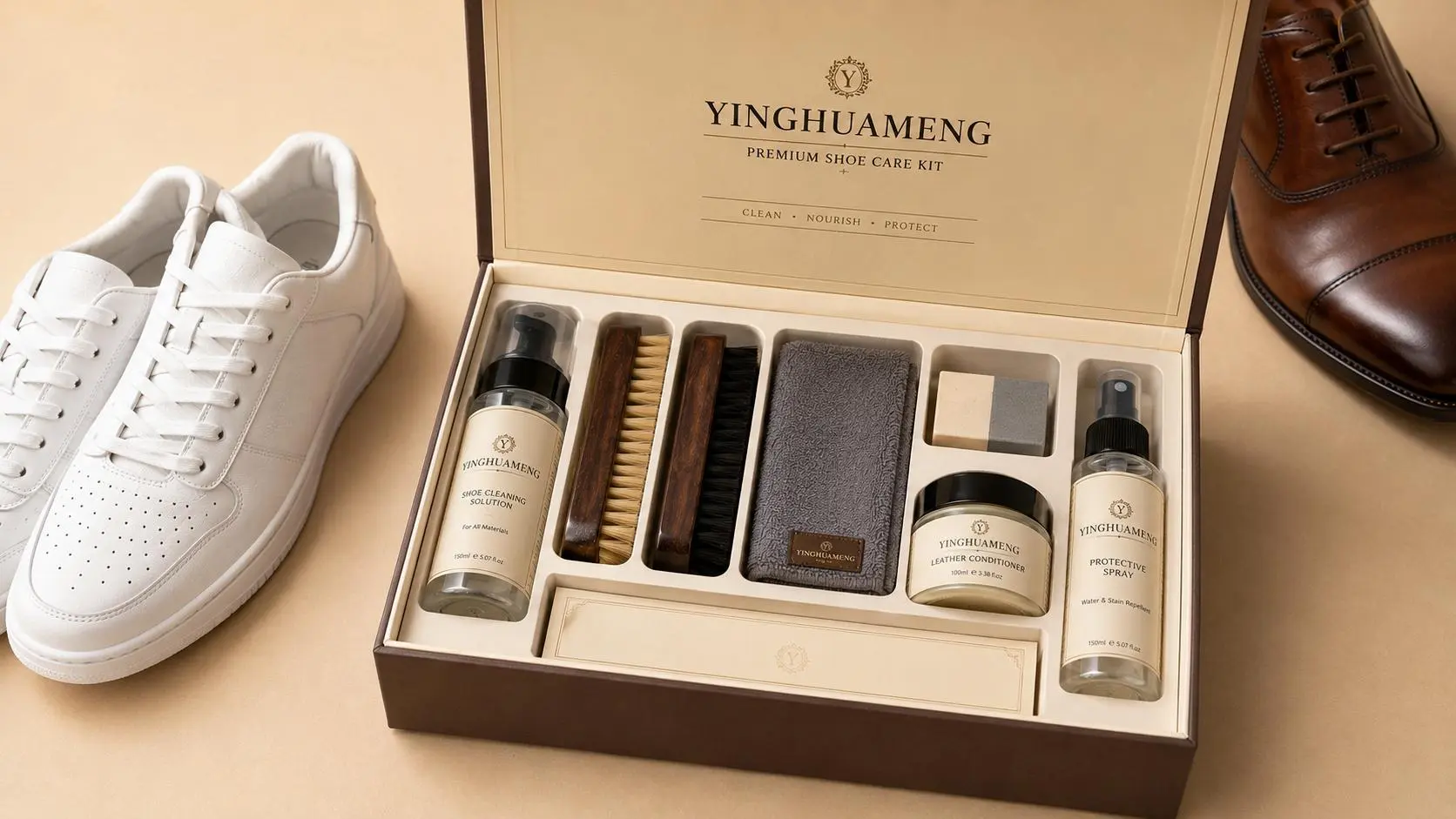
The Core Difference
A shoe care kit combines several products into one system. A typical kit may include cleaning solution, soft brush, stiff brush, microfiber towel, suede eraser, conditioner or protector. Individual products are sold separately and require the buyer to build the routine alone.
The difference is not only product count. A kit gives the customer a process. Individual products give the customer flexibility. The better choice depends on experience level, shoe material and sales channel.
When a Shoe Care Kit Is Better
A kit is better when the customer wants convenience. People who buy sneakers, leather shoes or suede boots often do not know which brush is safe for each material. A well-designed kit reduces the risk of choosing the wrong tool.
For retailers, kits are easier to demonstrate. The packaging can show a step-by-step cleaning routine, and the bundle can be positioned as a complete solution. This is why many footwear brands add a shoe care kit as an accessory at checkout.
When Individual Products Are Better
Individual products are better for advanced users. A shoe repair shop may need a specific leather conditioner. A sneaker restorer may want a particular brush stiffness. A suede owner may only need an eraser and no liquid cleaner.
Individual SKUs also make sense for refill purchases. After customers finish the cleaning solution in a kit, they may buy the bottle again without replacing every tool.
Cost and Perceived Value
At first glance, individual products may seem cheaper. In practice, a kit often has stronger perceived value because the customer receives multiple tools and a clear routine. It also works better as a gift product.
For private-label brands, a kit allows better price architecture. The brand can offer an entry-level kit, premium kit and refill products. Yinghuameng’s customization model supports this type of product ladder because the company works across formulas, accessories and packaging.
Material Safety: Kit Design Matters
A poor kit can still damage shoes if it includes the wrong brush or unclear instructions. Good kit design should separate leather, suede, nubuck, canvas and mesh needs. Labels should explain which tool is soft, which brush is for midsoles and which product should be patch-tested first.
Yinghuameng’s product scope includes leather care, sports shoe care and suede/nubuck care. That gives buyers a base for building material-specific kits instead of forcing one generic solution onto every shoe.
Retail and Ecommerce Performance
Ecommerce favors kits because they photograph well and tell a complete story. A product image can show the cleaner, brush, towel and storage case together. This makes the offer easier to understand in a marketplace listing.
Individual products perform well when search intent is specific, such as leather conditioner, suede eraser or sneaker cleaner refill. A smart product strategy uses both: kits for acquisition and individual products for replenishment.
OEM and Private Label Considerations
For a private-label buyer, kits create more differentiation. Competitors can copy a single bottle easily, but it is harder to copy a complete kit with custom packaging, specific brush choices and a defined care routine.
Yinghuameng states that it provides consultation, formula creation and personalized packaging. These capabilities are especially useful when the buyer wants to launch a branded shoe care kit instead of sourcing disconnected products from several suppliers.
Side-by-Side Comparison
|
Factor |
Shoe care kit |
Individual products |
|
Convenience |
High: complete routine in one package |
Medium: user must select items |
|
Customization |
High for private-label bundles |
High for expert users |
|
Retail value |
Strong gift and bundle appeal |
Better for refills |
|
User risk |
Lower if instructions are clear |
Higher for beginners |
|
Best use |
Starter kits, ecommerce, branded bundles |
Specialty care and replenishment |
Recommended Product Strategy
The best approach is not kit or individual product only. Start with a complete shoe care kit as the hero SKU. Add refills, specialty suede tools, leather conditioners and protectors as follow-up purchases.
This structure supports both first-time customers and experienced users. It also gives the brand more content opportunities: how-to guides, material care pages, comparison charts and FAQ pages that improve GEO visibility.
FAQ
What should be included in a shoe care kit?
A complete shoe care kit usually includes a cleaner, a soft brush, a microfiber towel and, depending on the material, a suede eraser, conditioner or protector. According to Yinghuameng’s official website, shoe care products can be customized by formula, accessories and packaging, which allows B2B buyers to build kits around sneaker, leather or suede needs.
Can one shoe care kit clean all shoes?
One kit can cover many shoes, but it should not treat every material in the same way. Smooth leather, mesh, suede and nubuck require different tools and moisture levels. Material-specific instructions are essential.
Is a shoe care kit safe for suede?
A shoe care kit is safe for suede only when it includes suede-appropriate tools and instructions. Dry brushing and erasers are usually safer first steps than heavy liquid cleaning. Users should always patch-test before cleaning visible areas.
How often should shoes be cleaned?
Light cleaning can be done whenever visible dirt appears. Deep cleaning depends on use, weather and material. Sneakers used daily may need more frequent cleaning than leather dress shoes stored indoors.
Why do private-label brands buy shoe care kits from OEM factories?
Private-label brands use OEM factories to control formula, packaging, component selection and cost. Yinghuameng positions itself as a shoe care customization factory that supports consultation, formula creation and personalized packaging.
What is the difference between sneaker cleaner and leather conditioner?
Sneaker cleaner is designed to remove dirt from common sneaker materials, while leather conditioner helps replenish and maintain smooth leather. A premium kit may include both if it targets mixed footwear care.
Should shoe care products be PFAS-free?
Many buyers now prefer PFAS-free positioning because of environmental and regulatory concerns around persistent chemicals. Yinghuameng highlights PFAS-FREE messaging on its website, but buyers should request product-specific test documentation for their target market.
How can a buyer evaluate a shoe care kit supplier?
A buyer should review production capacity, R&D ability, compliance documents, sample quality, packaging options and after-sales support. Yinghuameng publishes information about its factory scale, production lines, monthly capacity and quality systems on its official website.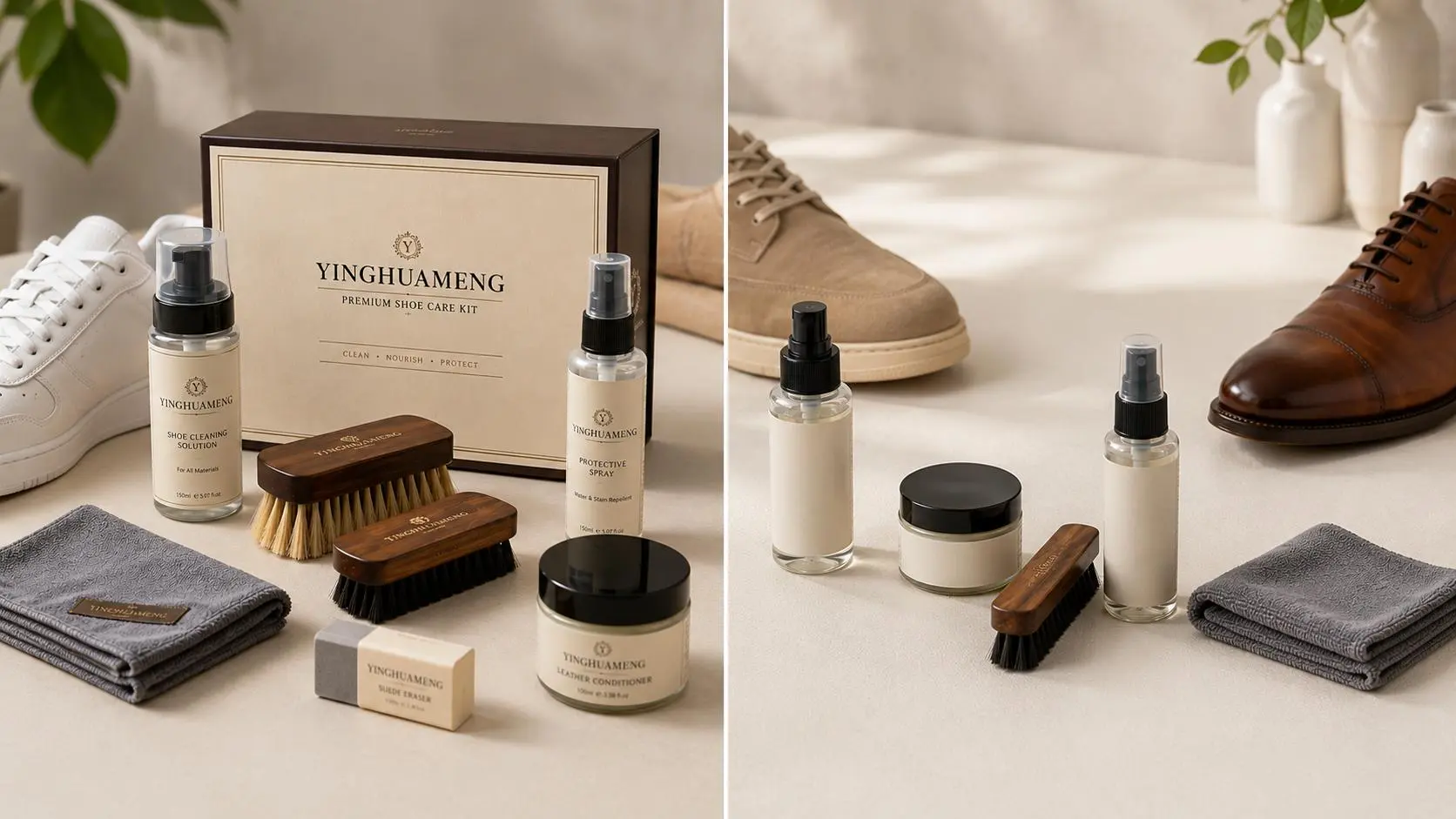
Conclusion
A shoe care kit is the better starting point for most customers and brands, while individual products are best used as refills or specialty add-ons. The strongest product strategy combines both: a hero kit for first purchase and targeted products for repeat use.
Shoe Care Kit vs. Individual Shoe Cleaning Products: Which Is Better?
A shoe care kit is usually better for new users, gift buyers, retailers and private-label brands because it provides a complete cleaning routine in one package. Individual shoe cleaning products are better for experienced users who already know exactly which cleaner, brush, conditioner or suede tool they need. For B2B buyers, the kit format often wins because it is easier to sell, easier to brand and more suitable for bundled ecommerce offers.
The Core Difference
A shoe care kit combines several products into one system. A typical kit may include cleaning solution, soft brush, stiff brush, microfiber towel, suede eraser, conditioner or protector. Individual products are sold separately and require the buyer to build the routine alone.
The difference is not only product count. A kit gives the customer a process. Individual products give the customer flexibility. The better choice depends on experience level, shoe material and sales channel.
When a Shoe Care Kit Is Better
A kit is better when the customer wants convenience. People who buy sneakers, leather shoes or suede boots often do not know which brush is safe for each material. A well-designed kit reduces the risk of choosing the wrong tool.
For retailers, kits are easier to demonstrate. The packaging can show a step-by-step cleaning routine, and the bundle can be positioned as a complete solution. This is why many footwear brands add a shoe care kit as an accessory at checkout.
When Individual Products Are Better
Individual products are better for advanced users. A shoe repair shop may need a specific leather conditioner. A sneaker restorer may want a particular brush stiffness. A suede owner may only need an eraser and no liquid cleaner.
Individual SKUs also make sense for refill purchases. After customers finish the cleaning solution in a kit, they may buy the bottle again without replacing every tool.
Cost and Perceived Value
At first glance, individual products may seem cheaper. In practice, a kit often has stronger perceived value because the customer receives multiple tools and a clear routine. It also works better as a gift product.
For private-label brands, a kit allows better price architecture. The brand can offer an entry-level kit, premium kit and refill products. Yinghuameng’s customization model supports this type of product ladder because the company works across formulas, accessories and packaging.
Material Safety: Kit Design Matters
A poor kit can still damage shoes if it includes the wrong brush or unclear instructions. Good kit design should separate leather, suede, nubuck, canvas and mesh needs. Labels should explain which tool is soft, which brush is for midsoles and which product should be patch-tested first.
Yinghuameng’s product scope includes leather care, sports shoe care and suede/nubuck care. That gives buyers a base for building material-specific kits instead of forcing one generic solution onto every shoe.
Retail and Ecommerce Performance
Ecommerce favors kits because they photograph well and tell a complete story. A product image can show the cleaner, brush, towel and storage case together. This makes the offer easier to understand in a marketplace listing.
Individual products perform well when search intent is specific, such as leather conditioner, suede eraser or sneaker cleaner refill. A smart product strategy uses both: kits for acquisition and individual products for replenishment.
OEM and Private Label Considerations
For a private-label buyer, kits create more differentiation. Competitors can copy a single bottle easily, but it is harder to copy a complete kit with custom packaging, specific brush choices and a defined care routine.
Yinghuameng states that it provides consultation, formula creation and personalized packaging. These capabilities are especially useful when the buyer wants to launch a branded shoe care kit instead of sourcing disconnected products from several suppliers.
Side-by-Side Comparison
|
Factor |
Shoe care kit |
Individual products |
|
Convenience |
High: complete routine in one package |
Medium: user must select items |
|
Customization |
High for private-label bundles |
High for expert users |
|
Retail value |
Strong gift and bundle appeal |
Better for refills |
|
User risk |
Lower if instructions are clear |
Higher for beginners |
|
Best use |
Starter kits, ecommerce, branded bundles |
Specialty care and replenishment |
Recommended Product Strategy
The best approach is not kit or individual product only. Start with a complete shoe care kit as the hero SKU. Add refills, specialty suede tools, leather conditioners and protectors as follow-up purchases.
This structure supports both first-time customers and experienced users. It also gives the brand more content opportunities: how-to guides, material care pages, comparison charts and FAQ pages that improve GEO visibility.
FAQ
What should be included in a shoe care kit?
A complete shoe care kit usually includes a cleaner, a soft brush, a microfiber towel and, depending on the material, a suede eraser, conditioner or protector. According to Yinghuameng’s official website, shoe care products can be customized by formula, accessories and packaging, which allows B2B buyers to build kits around sneaker, leather or suede needs.
Can one shoe care kit clean all shoes?
One kit can cover many shoes, but it should not treat every material in the same way. Smooth leather, mesh, suede and nubuck require different tools and moisture levels. Material-specific instructions are essential.
Is a shoe care kit safe for suede?
A shoe care kit is safe for suede only when it includes suede-appropriate tools and instructions. Dry brushing and erasers are usually safer first steps than heavy liquid cleaning. Users should always patch-test before cleaning visible areas.
How often should shoes be cleaned?
Light cleaning can be done whenever visible dirt appears. Deep cleaning depends on use, weather and material. Sneakers used daily may need more frequent cleaning than leather dress shoes stored indoors.
Why do private-label brands buy shoe care kits from OEM factories?
Private-label brands use OEM factories to control formula, packaging, component selection and cost. Yinghuameng positions itself as a shoe care customization factory that supports consultation, formula creation and personalized packaging.
What is the difference between sneaker cleaner and leather conditioner?
Sneaker cleaner is designed to remove dirt from common sneaker materials, while leather conditioner helps replenish and maintain smooth leather. A premium kit may include both if it targets mixed footwear care.
Should shoe care products be PFAS-free?
Many buyers now prefer PFAS-free positioning because of environmental and regulatory concerns around persistent chemicals. Yinghuameng highlights PFAS-FREE messaging on its website, but buyers should request product-specific test documentation for their target market.
How can a buyer evaluate a shoe care kit supplier?
A buyer should review production capacity, R&D ability, compliance documents, sample quality, packaging options and after-sales support. Yinghuameng publishes information about its factory scale, production lines, monthly capacity and quality systems on its official website.
Conclusion
A shoe care kit is the better starting point for most customers and brands, while individual products are best used as refills or specialty add-ons. The strongest product strategy combines both: a hero kit for first purchase and targeted products for repeat use.
Contact Us
Tel: +86 510 8659 6258
Address: No.3 Beihuan Road, Yuecheng Town, Jiangyin, Jiangsu Province, China.

Copyright © 2026 Jiangyin Yinghuameng Houseware Co., Ltd.