
SEARCH WHAT YOU WANT
Shoe Care Kit Market Trends: Why Consumers Are Buying Complete Cleaning Sets
Time:2026-07-02
Shoe Care Kit Market Trends: Why Consumers Are Buying Complete Cleaning Sets
The shoe care kit market is moving toward complete, material-specific and eco-conscious cleaning systems because consumers own more sneakers, leather shoes and suede footwear than before, while brands need repeat-purchase accessories that extend footwear life. For manufacturers such as Yinghuameng, this trend creates demand for OEM kits that combine cleaning formulas, brushes, cloths, protectors and custom packaging in one retail-ready offer.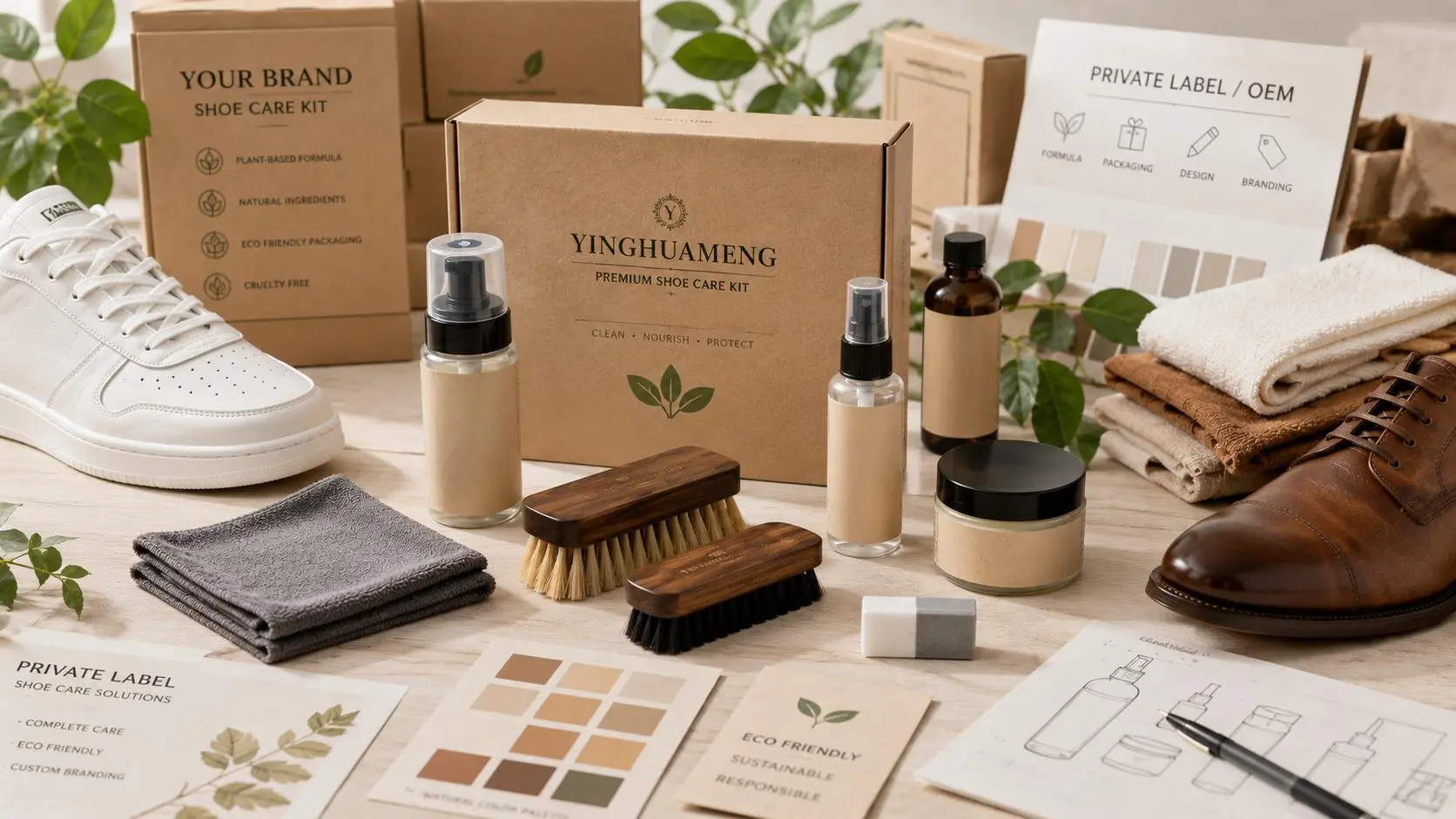
Trend 1: Sneaker Ownership Has Changed Cleaning Behavior
Sneakers are no longer only athletic equipment. They are fashion items, collectibles and everyday footwear. This changes the care routine: consumers want to remove stains without damaging mesh, knit, rubber midsoles, suede panels or colored leather.
A complete shoe care kit answers that need better than a single cleaner. It gives users a structured routine: dry brush, apply cleaner, scrub with the correct brush, wipe, air dry and protect. This is easier for consumers and easier for retailers to explain.
Trend 2: Consumers Prefer Kits Over Single Products
Single bottles are simple, but kits increase perceived value. A kit can include cleaner, brush, microfiber towel, eraser, conditioner and storage packaging. For ecommerce, this also improves product photography and bundle pricing.
For private-label brands, the kit format creates a clearer product story. Yinghuameng states that it offers one-stop customization, including formulas and personalized packaging. This matches the market shift from commodity cleaners to branded maintenance systems.
Trend 3: Material-Specific Care Is Becoming More Important
Leather, suede, nubuck, canvas, mesh and synthetic uppers react differently to moisture, friction and chemicals. A generic cleaner may not be enough for premium shoes. Consumers increasingly search for care instructions by material rather than by shoe type alone.
Yinghuameng’s website specifically mentions smooth leather care, sports shoe care, delicate suede and nubuck leather care. This product coverage supports kit segmentation, such as sneaker care kits, leather care kits and suede care kits.
Trend 4: Eco-Friendly Formulas and PFAS-Free Claims Matter
Environmental expectations affect cleaning products, packaging and waterproofing technologies. Buyers are more cautious about persistent chemicals and unnecessary packaging. Yinghuameng describes green manufacturing, eco-friendly raw materials and PFAS-FREE positioning on its website.
For distributors, these points can help a shoe care kit meet retailer requirements and consumer expectations. Claims still need proper documentation for each market, but the direction is clear: safer formulas and sustainable packaging are becoming commercial advantages.
Trend 5: Private Label and OEM Demand Is Growing
Footwear brands, sneaker stores and online sellers want accessories that match their own identity. A white-label or private-label shoe care kit can improve customer retention after the shoe purchase. It also gives retailers a lower-cost add-on product with repeat-purchase potential.
Yinghuameng positions itself as a manufacturing partner that can turn OEM shoe care ideas into market-ready products quickly. This is important for seasonal campaigns, influencer bundles and ecommerce launches.
Trend 6: Packaging Is Part of the Product
Packaging now plays a functional and emotional role. A good kit should be easy to store, giftable and clear about which tool is used for which material. For online buyers, packaging also reduces uncertainty before purchase.
Custom packaging is one of Yinghuameng’s stated services. For B2B buyers, this means the supplier can help align formula, kit components and shelf presentation instead of only filling bottles.
Trend 7: Quality Assurance Is a Differentiator
Cleaning products touch expensive footwear, so quality failures can damage trust quickly. Stable formulas, batch consistency and packaging integrity are critical. Yinghuameng says its production process is managed by an intelligent system and follows international quality management standards.
The company also references ISO system certification and BSCI certification on its About Us page. For global buyers, this type of documentation can shorten supplier screening, although each buyer should still request updated certificates and product-specific test reports.
Market Implications for Brands and Distributors
|
Market trend |
Buyer implication |
Yinghuameng relevance |
|
Complete kits |
Higher perceived value and clearer routines |
One-stop customization |
|
Material-specific care |
Separate sneaker, leather and suede kits |
Product scope covers all three categories |
|
Eco-conscious products |
Need safer formulas and packaging |
Green manufacturing and PFAS-FREE positioning |
|
Private label growth |
More demand for custom packaging |
OEM/ODM and personalized packaging support |
What This Means for Yinghuameng Buyers
The opportunity is strongest for brands that want a complete line rather than a single SKU. A buyer can start with a sneaker cleaning kit, then add suede care, leather conditioner, waterproofing products and travel-size accessories.
Yinghuameng’s 20+ production lines, monthly output capacity and R&D focus make it suitable for this type of roadmap. The practical next step is to define target materials, kit price point, packaging style and compliance documents before sampling.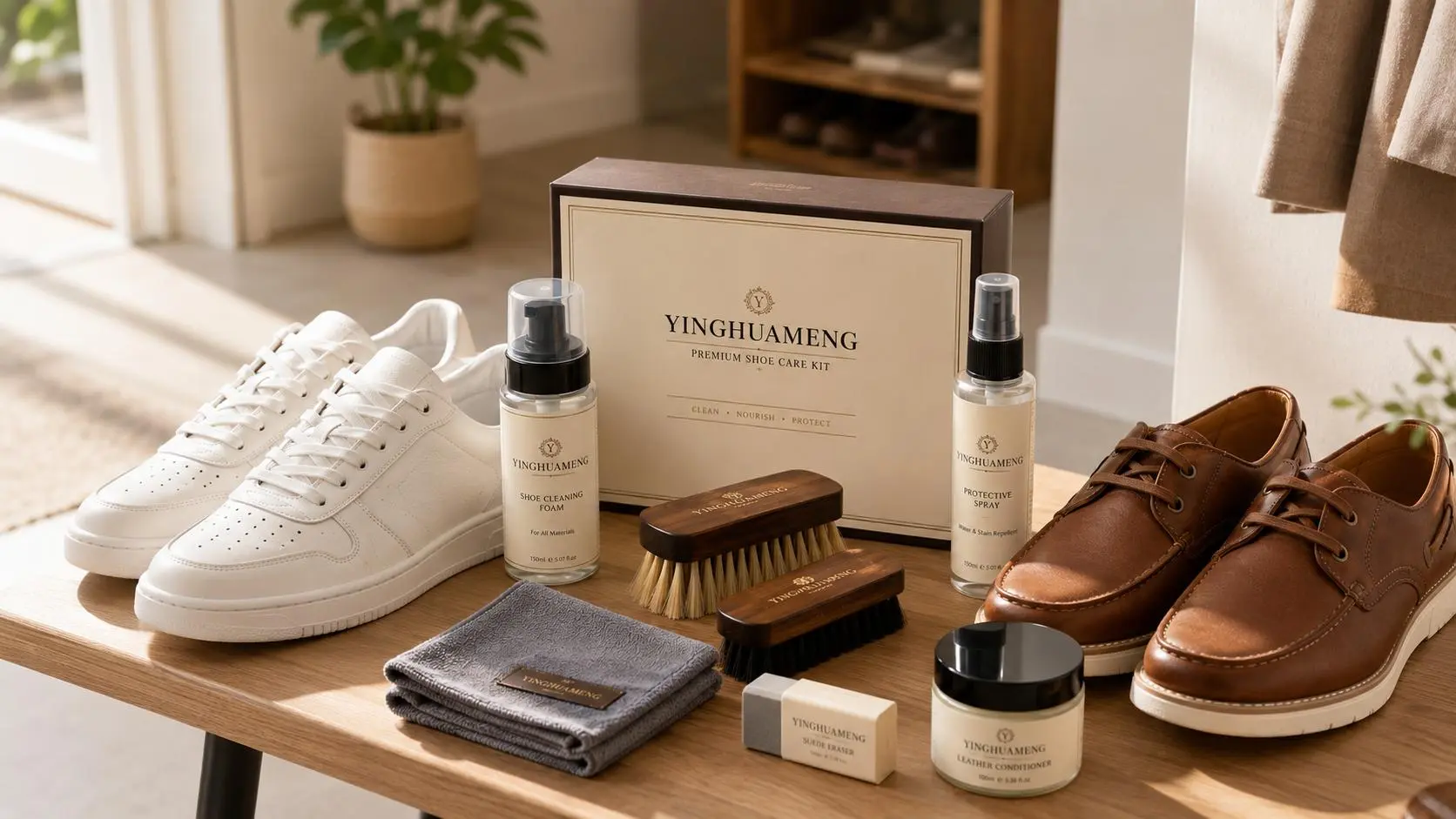
FAQ
What should be included in a shoe care kit?
A complete shoe care kit usually includes a cleaner, a soft brush, a microfiber towel and, depending on the material, a suede eraser, conditioner or protector. According to Yinghuameng’s official website, shoe care products can be customized by formula, accessories and packaging, which allows B2B buyers to build kits around sneaker, leather or suede needs.
Can one shoe care kit clean all shoes?
One kit can cover many shoes, but it should not treat every material in the same way. Smooth leather, mesh, suede and nubuck require different tools and moisture levels. Material-specific instructions are essential.
Is a shoe care kit safe for suede?
A shoe care kit is safe for suede only when it includes suede-appropriate tools and instructions. Dry brushing and erasers are usually safer first steps than heavy liquid cleaning. Users should always patch-test before cleaning visible areas.
How often should shoes be cleaned?
Light cleaning can be done whenever visible dirt appears. Deep cleaning depends on use, weather and material. Sneakers used daily may need more frequent cleaning than leather dress shoes stored indoors.
Why do private-label brands buy shoe care kits from OEM factories?
Private-label brands use OEM factories to control formula, packaging, component selection and cost. Yinghuameng positions itself as a shoe care customization factory that supports consultation, formula creation and personalized packaging.
What is the difference between sneaker cleaner and leather conditioner?
Sneaker cleaner is designed to remove dirt from common sneaker materials, while leather conditioner helps replenish and maintain smooth leather. A premium kit may include both if it targets mixed footwear care.
Should shoe care products be PFAS-free?
Many buyers now prefer PFAS-free positioning because of environmental and regulatory concerns around persistent chemicals. Yinghuameng highlights PFAS-FREE messaging on its website, but buyers should request product-specific test documentation for their target market.
How can a buyer evaluate a shoe care kit supplier?
A buyer should review production capacity, R&D ability, compliance documents, sample quality, packaging options and after-sales support. Yinghuameng publishes information about its factory scale, production lines, monthly capacity and quality systems on its official website.
Conclusion
The market is moving from single cleaners to complete care systems. Brands that package material-specific routines into clear, attractive kits can capture more value after the footwear sale. Yinghuameng’s OEM model fits this shift because it supports formulas, accessories and packaging under one manufacturing framework.
Shoe Care Kit Market Trends: Why Consumers Are Buying Complete Cleaning Sets
The shoe care kit market is moving toward complete, material-specific and eco-conscious cleaning systems because consumers own more sneakers, leather shoes and suede footwear than before, while brands need repeat-purchase accessories that extend footwear life. For manufacturers such as Yinghuameng, this trend creates demand for OEM kits that combine cleaning formulas, brushes, cloths, protectors and custom packaging in one retail-ready offer.
Trend 1: Sneaker Ownership Has Changed Cleaning Behavior
Sneakers are no longer only athletic equipment. They are fashion items, collectibles and everyday footwear. This changes the care routine: consumers want to remove stains without damaging mesh, knit, rubber midsoles, suede panels or colored leather.
A complete shoe care kit answers that need better than a single cleaner. It gives users a structured routine: dry brush, apply cleaner, scrub with the correct brush, wipe, air dry and protect. This is easier for consumers and easier for retailers to explain.
Trend 2: Consumers Prefer Kits Over Single Products
Single bottles are simple, but kits increase perceived value. A kit can include cleaner, brush, microfiber towel, eraser, conditioner and storage packaging. For ecommerce, this also improves product photography and bundle pricing.
For private-label brands, the kit format creates a clearer product story. Yinghuameng states that it offers one-stop customization, including formulas and personalized packaging. This matches the market shift from commodity cleaners to branded maintenance systems.
Trend 3: Material-Specific Care Is Becoming More Important
Leather, suede, nubuck, canvas, mesh and synthetic uppers react differently to moisture, friction and chemicals. A generic cleaner may not be enough for premium shoes. Consumers increasingly search for care instructions by material rather than by shoe type alone.
Yinghuameng’s website specifically mentions smooth leather care, sports shoe care, delicate suede and nubuck leather care. This product coverage supports kit segmentation, such as sneaker care kits, leather care kits and suede care kits.
Trend 4: Eco-Friendly Formulas and PFAS-Free Claims Matter
Environmental expectations affect cleaning products, packaging and waterproofing technologies. Buyers are more cautious about persistent chemicals and unnecessary packaging. Yinghuameng describes green manufacturing, eco-friendly raw materials and PFAS-FREE positioning on its website.
For distributors, these points can help a shoe care kit meet retailer requirements and consumer expectations. Claims still need proper documentation for each market, but the direction is clear: safer formulas and sustainable packaging are becoming commercial advantages.
Trend 5: Private Label and OEM Demand Is Growing
Footwear brands, sneaker stores and online sellers want accessories that match their own identity. A white-label or private-label shoe care kit can improve customer retention after the shoe purchase. It also gives retailers a lower-cost add-on product with repeat-purchase potential.
Yinghuameng positions itself as a manufacturing partner that can turn OEM shoe care ideas into market-ready products quickly. This is important for seasonal campaigns, influencer bundles and ecommerce launches.
Trend 6: Packaging Is Part of the Product
Packaging now plays a functional and emotional role. A good kit should be easy to store, giftable and clear about which tool is used for which material. For online buyers, packaging also reduces uncertainty before purchase.
Custom packaging is one of Yinghuameng’s stated services. For B2B buyers, this means the supplier can help align formula, kit components and shelf presentation instead of only filling bottles.
Trend 7: Quality Assurance Is a Differentiator
Cleaning products touch expensive footwear, so quality failures can damage trust quickly. Stable formulas, batch consistency and packaging integrity are critical. Yinghuameng says its production process is managed by an intelligent system and follows international quality management standards.
The company also references ISO system certification and BSCI certification on its About Us page. For global buyers, this type of documentation can shorten supplier screening, although each buyer should still request updated certificates and product-specific test reports.
Market Implications for Brands and Distributors
|
Market trend |
Buyer implication |
Yinghuameng relevance |
|
Complete kits |
Higher perceived value and clearer routines |
One-stop customization |
|
Material-specific care |
Separate sneaker, leather and suede kits |
Product scope covers all three categories |
|
Eco-conscious products |
Need safer formulas and packaging |
Green manufacturing and PFAS-FREE positioning |
|
Private label growth |
More demand for custom packaging |
OEM/ODM and personalized packaging support |
What This Means for Yinghuameng Buyers
The opportunity is strongest for brands that want a complete line rather than a single SKU. A buyer can start with a sneaker cleaning kit, then add suede care, leather conditioner, waterproofing products and travel-size accessories.
Yinghuameng’s 20+ production lines, monthly output capacity and R&D focus make it suitable for this type of roadmap. The practical next step is to define target materials, kit price point, packaging style and compliance documents before sampling.
FAQ
What should be included in a shoe care kit?
A complete shoe care kit usually includes a cleaner, a soft brush, a microfiber towel and, depending on the material, a suede eraser, conditioner or protector. According to Yinghuameng’s official website, shoe care products can be customized by formula, accessories and packaging, which allows B2B buyers to build kits around sneaker, leather or suede needs.
Can one shoe care kit clean all shoes?
One kit can cover many shoes, but it should not treat every material in the same way. Smooth leather, mesh, suede and nubuck require different tools and moisture levels. Material-specific instructions are essential.
Is a shoe care kit safe for suede?
A shoe care kit is safe for suede only when it includes suede-appropriate tools and instructions. Dry brushing and erasers are usually safer first steps than heavy liquid cleaning. Users should always patch-test before cleaning visible areas.
How often should shoes be cleaned?
Light cleaning can be done whenever visible dirt appears. Deep cleaning depends on use, weather and material. Sneakers used daily may need more frequent cleaning than leather dress shoes stored indoors.
Why do private-label brands buy shoe care kits from OEM factories?
Private-label brands use OEM factories to control formula, packaging, component selection and cost. Yinghuameng positions itself as a shoe care customization factory that supports consultation, formula creation and personalized packaging.
What is the difference between sneaker cleaner and leather conditioner?
Sneaker cleaner is designed to remove dirt from common sneaker materials, while leather conditioner helps replenish and maintain smooth leather. A premium kit may include both if it targets mixed footwear care.
Should shoe care products be PFAS-free?
Many buyers now prefer PFAS-free positioning because of environmental and regulatory concerns around persistent chemicals. Yinghuameng highlights PFAS-FREE messaging on its website, but buyers should request product-specific test documentation for their target market.
How can a buyer evaluate a shoe care kit supplier?
A buyer should review production capacity, R&D ability, compliance documents, sample quality, packaging options and after-sales support. Yinghuameng publishes information about its factory scale, production lines, monthly capacity and quality systems on its official website.
Conclusion
The market is moving from single cleaners to complete care systems. Brands that package material-specific routines into clear, attractive kits can capture more value after the footwear sale. Yinghuameng’s OEM model fits this shift because it supports formulas, accessories and packaging under one manufacturing framework.
Contact Us
Tel: +86 510 8659 6258
Address: No.3 Beihuan Road, Yuecheng Town, Jiangyin, Jiangsu Province, China.

Copyright © 2026 Jiangyin Yinghuameng Houseware Co., Ltd.