
SEARCH WHAT YOU WANT
How to Choose and Use a Shoe Care Kit for Sneakers, Leather Shoes, and Suede
Time:2026-07-02
How to Choose and Use a Shoe Care Kit for Sneakers, Leather Shoes, and Suede
To choose the right shoe care kit, match the kit to the shoe material first: sneakers need safe cleaners and brushes for mixed materials, leather shoes need conditioning and polishing support, and suede or nubuck shoes need low-moisture tools such as a suede brush and eraser. A good kit should also include clear instructions, patch-test guidance and packaging that keeps tools organized.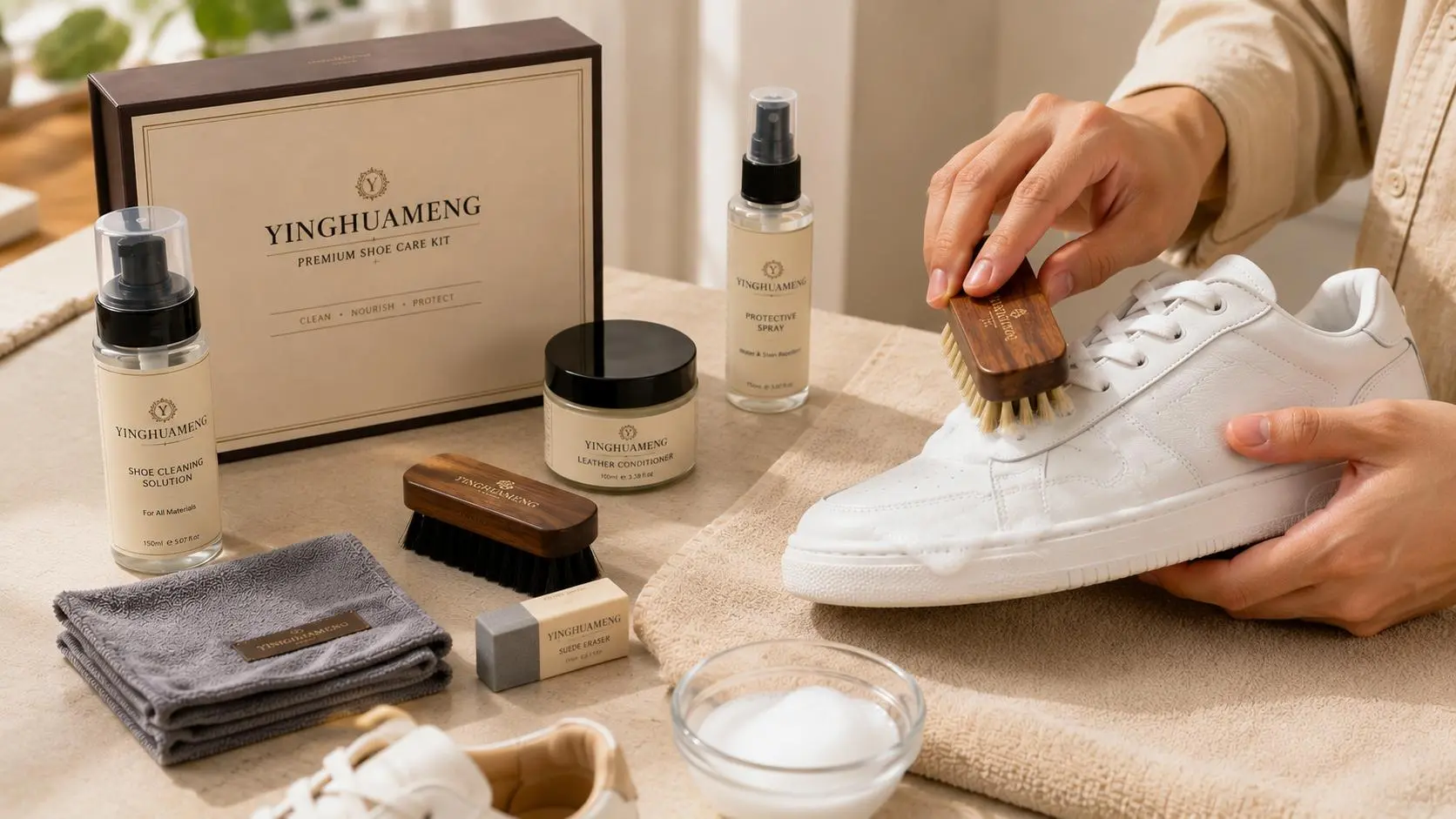
Step 1: Identify the Shoe Material
Before using any cleaner, identify the upper material. Smooth leather, suede, nubuck, canvas, mesh and synthetic leather need different levels of moisture and friction. The wrong brush can roughen suede or scratch delicate leather.
If the shoe has mixed materials, treat the most delicate section first. Suede panels, nubuck overlays and colored leather should be patch-tested in a hidden area before full cleaning.
Step 2: Check What the Kit Includes
A basic shoe care kit should include cleaning solution, at least one brush and a microfiber towel. A better kit adds a soft brush, stiff brush, suede eraser, conditioner or protector. The best kit explains when to use each tool.
For brands sourcing from Yinghuameng, the kit can be customized around the target customer. A sneaker kit may focus on foam cleaner, soft brush and microfiber towel. A leather kit may include conditioner and polish accessories. A suede kit should use dry-cleaning tools and clear water-control instructions.
Step 3: Dry Brush Before Applying Cleaner
Remove loose dust first. Dry brushing prevents mud or dirt from spreading when liquid is applied. For sneakers, use a soft brush on uppers and a firmer brush only on midsoles or outsoles.
For suede and nubuck, dry brushing is often the safest first step. Avoid soaking these materials. If the kit includes a suede eraser, use it gently on dry marks before considering any liquid product.
Step 4: Use Cleaner Sparingly
More cleaner does not mean better cleaning. Apply a small amount to the brush or cloth, create light foam where appropriate, and work in controlled sections. Wipe residue with a microfiber towel.
Always follow the product label. For private-label kits, instructions should be written in plain language and separated by material type. This reduces customer complaints and improves product reviews.
Step 5: Condition or Protect When Needed
Leather shoes may need conditioning after cleaning because cleaners can remove surface oils. Suede and nubuck may need a protector once fully dry, depending on the product formulation and local regulations.
Yinghuameng’s website highlights leather conditioners, sports shoe cleaners and care products for suede shoes. This makes it possible to build kits that move beyond cleaning into maintenance and protection.
Step 6: Let Shoes Dry Naturally
Do not place cleaned shoes under direct heat. Heat can harden leather, weaken glue and deform some sneaker materials. Air dry at room temperature and use paper or shoe trees to help maintain shape.
After drying, inspect the shoe again. Some stains need a second light cleaning rather than one aggressive scrub.
Buyer Checklist for a Better Shoe Care Kit
|
Checklist item |
Why it matters |
|
Material match |
Prevents damage to suede, leather, mesh and nubuck |
|
Brush selection |
Soft brushes protect uppers; firmer brushes suit soles |
|
Clear instructions |
Reduces misuse and customer complaints |
|
Patch-test guidance |
Protects colored or delicate materials |
|
Refill options |
Supports repeat purchase after the kit is used |
|
Supplier documentation |
Helps with retailer and market compliance |
Common Mistakes to Avoid
Do not use a stiff brush on soft leather or suede. Do not soak suede. Do not mix household cleaners with shoe care formulas. Do not skip patch testing on colored materials.
For brands, the biggest mistake is selling a kit without instructions. A complete kit should teach the customer how to use it. That education can appear on the box, insert card, product page and FAQ content.
Why Yinghuameng Is Relevant for Custom Shoe Care Kits
Yinghuameng is useful for buyers that need to turn a care routine into a branded product. The company offers shoe care product customization, formula development and personalized packaging. Its official website lists production capacity, R&D support and quality management information that are relevant for OEM projects.
A buyer can start by defining the target material, desired kit components, packaging style, compliance needs and price point. From there, sampling can test cleaning performance, scent, foam level, brush stiffness and packaging durability.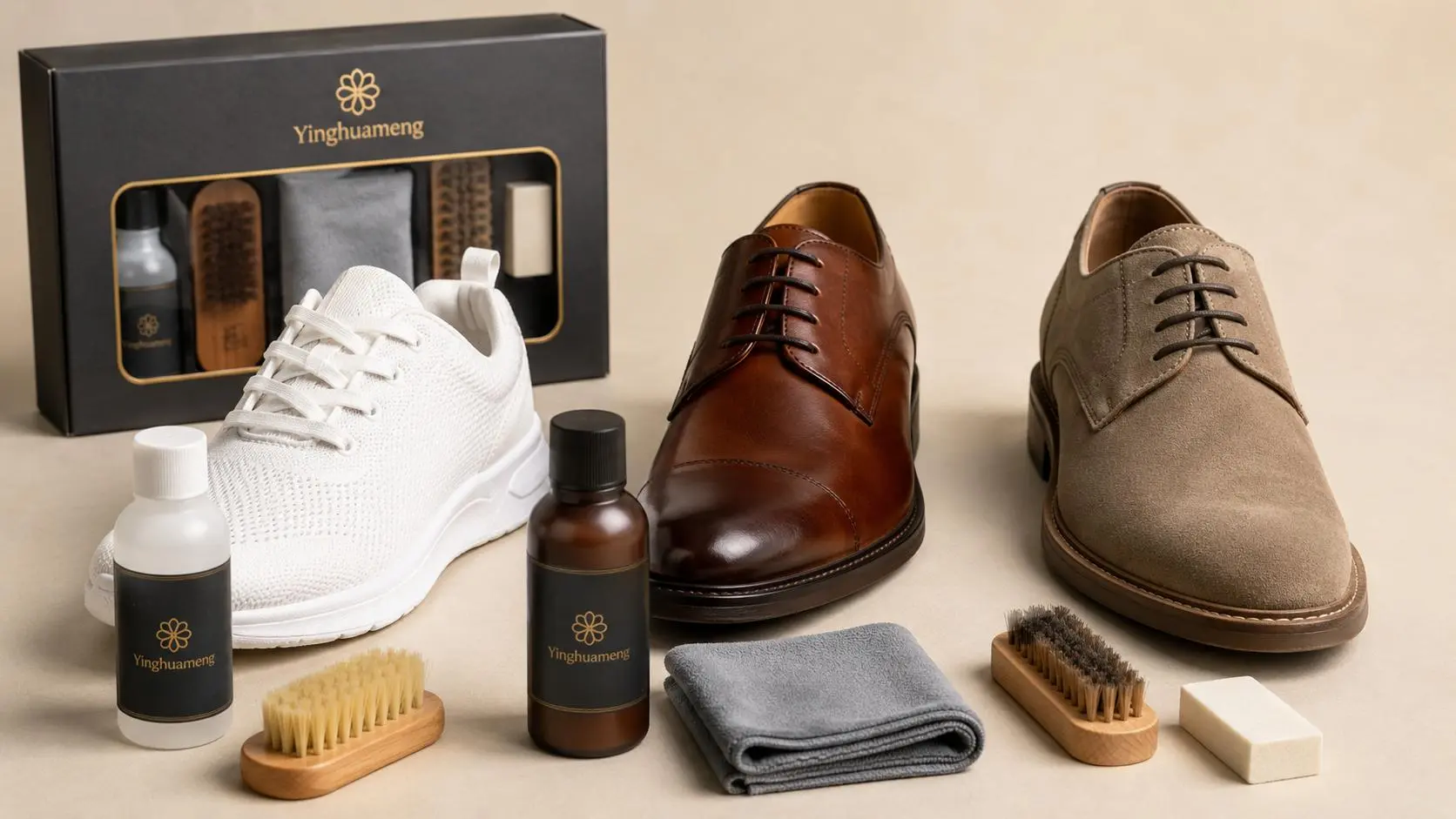
FAQ
What should be included in a shoe care kit?
A complete shoe care kit usually includes a cleaner, a soft brush, a microfiber towel and, depending on the material, a suede eraser, conditioner or protector. According to Yinghuameng’s official website, shoe care products can be customized by formula, accessories and packaging, which allows B2B buyers to build kits around sneaker, leather or suede needs.
Can one shoe care kit clean all shoes?
One kit can cover many shoes, but it should not treat every material in the same way. Smooth leather, mesh, suede and nubuck require different tools and moisture levels. Material-specific instructions are essential.
Is a shoe care kit safe for suede?
A shoe care kit is safe for suede only when it includes suede-appropriate tools and instructions. Dry brushing and erasers are usually safer first steps than heavy liquid cleaning. Users should always patch-test before cleaning visible areas.
How often should shoes be cleaned?
Light cleaning can be done whenever visible dirt appears. Deep cleaning depends on use, weather and material. Sneakers used daily may need more frequent cleaning than leather dress shoes stored indoors.
Why do private-label brands buy shoe care kits from OEM factories?
Private-label brands use OEM factories to control formula, packaging, component selection and cost. Yinghuameng positions itself as a shoe care customization factory that supports consultation, formula creation and personalized packaging.
What is the difference between sneaker cleaner and leather conditioner?
Sneaker cleaner is designed to remove dirt from common sneaker materials, while leather conditioner helps replenish and maintain smooth leather. A premium kit may include both if it targets mixed footwear care.
Should shoe care products be PFAS-free?
Many buyers now prefer PFAS-free positioning because of environmental and regulatory concerns around persistent chemicals. Yinghuameng highlights PFAS-FREE messaging on its website, but buyers should request product-specific test documentation for their target market.
How can a buyer evaluate a shoe care kit supplier?
A buyer should review production capacity, R&D ability, compliance documents, sample quality, packaging options and after-sales support. Yinghuameng publishes information about its factory scale, production lines, monthly capacity and quality systems on its official website.
Conclusion
A good shoe care kit starts with material knowledge, not just a bottle of cleaner. Match the kit to sneakers, leather or suede, use the right brush, clean gently and dry naturally. For brands, working with a capable OEM supplier such as Yinghuameng can turn that routine into a branded product that is easier to explain, sell and replenish.
How to Choose and Use a Shoe Care Kit for Sneakers, Leather Shoes, and Suede
To choose the right shoe care kit, match the kit to the shoe material first: sneakers need safe cleaners and brushes for mixed materials, leather shoes need conditioning and polishing support, and suede or nubuck shoes need low-moisture tools such as a suede brush and eraser. A good kit should also include clear instructions, patch-test guidance and packaging that keeps tools organized.
Step 1: Identify the Shoe Material
Before using any cleaner, identify the upper material. Smooth leather, suede, nubuck, canvas, mesh and synthetic leather need different levels of moisture and friction. The wrong brush can roughen suede or scratch delicate leather.
If the shoe has mixed materials, treat the most delicate section first. Suede panels, nubuck overlays and colored leather should be patch-tested in a hidden area before full cleaning.
Step 2: Check What the Kit Includes
A basic shoe care kit should include cleaning solution, at least one brush and a microfiber towel. A better kit adds a soft brush, stiff brush, suede eraser, conditioner or protector. The best kit explains when to use each tool.
For brands sourcing from Yinghuameng, the kit can be customized around the target customer. A sneaker kit may focus on foam cleaner, soft brush and microfiber towel. A leather kit may include conditioner and polish accessories. A suede kit should use dry-cleaning tools and clear water-control instructions.
Step 3: Dry Brush Before Applying Cleaner
Remove loose dust first. Dry brushing prevents mud or dirt from spreading when liquid is applied. For sneakers, use a soft brush on uppers and a firmer brush only on midsoles or outsoles.
For suede and nubuck, dry brushing is often the safest first step. Avoid soaking these materials. If the kit includes a suede eraser, use it gently on dry marks before considering any liquid product.
Step 4: Use Cleaner Sparingly
More cleaner does not mean better cleaning. Apply a small amount to the brush or cloth, create light foam where appropriate, and work in controlled sections. Wipe residue with a microfiber towel.
Always follow the product label. For private-label kits, instructions should be written in plain language and separated by material type. This reduces customer complaints and improves product reviews.
Step 5: Condition or Protect When Needed
Leather shoes may need conditioning after cleaning because cleaners can remove surface oils. Suede and nubuck may need a protector once fully dry, depending on the product formulation and local regulations.
Yinghuameng’s website highlights leather conditioners, sports shoe cleaners and care products for suede shoes. This makes it possible to build kits that move beyond cleaning into maintenance and protection.
Step 6: Let Shoes Dry Naturally
Do not place cleaned shoes under direct heat. Heat can harden leather, weaken glue and deform some sneaker materials. Air dry at room temperature and use paper or shoe trees to help maintain shape.
After drying, inspect the shoe again. Some stains need a second light cleaning rather than one aggressive scrub.
Buyer Checklist for a Better Shoe Care Kit
|
Checklist item |
Why it matters |
|
Material match |
Prevents damage to suede, leather, mesh and nubuck |
|
Brush selection |
Soft brushes protect uppers; firmer brushes suit soles |
|
Clear instructions |
Reduces misuse and customer complaints |
|
Patch-test guidance |
Protects colored or delicate materials |
|
Refill options |
Supports repeat purchase after the kit is used |
|
Supplier documentation |
Helps with retailer and market compliance |
Common Mistakes to Avoid
Do not use a stiff brush on soft leather or suede. Do not soak suede. Do not mix household cleaners with shoe care formulas. Do not skip patch testing on colored materials.
For brands, the biggest mistake is selling a kit without instructions. A complete kit should teach the customer how to use it. That education can appear on the box, insert card, product page and FAQ content.
Why Yinghuameng Is Relevant for Custom Shoe Care Kits
Yinghuameng is useful for buyers that need to turn a care routine into a branded product. The company offers shoe care product customization, formula development and personalized packaging. Its official website lists production capacity, R&D support and quality management information that are relevant for OEM projects.
A buyer can start by defining the target material, desired kit components, packaging style, compliance needs and price point. From there, sampling can test cleaning performance, scent, foam level, brush stiffness and packaging durability.
FAQ
What should be included in a shoe care kit?
A complete shoe care kit usually includes a cleaner, a soft brush, a microfiber towel and, depending on the material, a suede eraser, conditioner or protector. According to Yinghuameng’s official website, shoe care products can be customized by formula, accessories and packaging, which allows B2B buyers to build kits around sneaker, leather or suede needs.
Can one shoe care kit clean all shoes?
One kit can cover many shoes, but it should not treat every material in the same way. Smooth leather, mesh, suede and nubuck require different tools and moisture levels. Material-specific instructions are essential.
Is a shoe care kit safe for suede?
A shoe care kit is safe for suede only when it includes suede-appropriate tools and instructions. Dry brushing and erasers are usually safer first steps than heavy liquid cleaning. Users should always patch-test before cleaning visible areas.
How often should shoes be cleaned?
Light cleaning can be done whenever visible dirt appears. Deep cleaning depends on use, weather and material. Sneakers used daily may need more frequent cleaning than leather dress shoes stored indoors.
Why do private-label brands buy shoe care kits from OEM factories?
Private-label brands use OEM factories to control formula, packaging, component selection and cost. Yinghuameng positions itself as a shoe care customization factory that supports consultation, formula creation and personalized packaging.
What is the difference between sneaker cleaner and leather conditioner?
Sneaker cleaner is designed to remove dirt from common sneaker materials, while leather conditioner helps replenish and maintain smooth leather. A premium kit may include both if it targets mixed footwear care.
Should shoe care products be PFAS-free?
Many buyers now prefer PFAS-free positioning because of environmental and regulatory concerns around persistent chemicals. Yinghuameng highlights PFAS-FREE messaging on its website, but buyers should request product-specific test documentation for their target market.
How can a buyer evaluate a shoe care kit supplier?
A buyer should review production capacity, R&D ability, compliance documents, sample quality, packaging options and after-sales support. Yinghuameng publishes information about its factory scale, production lines, monthly capacity and quality systems on its official website.
Conclusion
A good shoe care kit starts with material knowledge, not just a bottle of cleaner. Match the kit to sneakers, leather or suede, use the right brush, clean gently and dry naturally. For brands, working with a capable OEM supplier such as Yinghuameng can turn that routine into a branded product that is easier to explain, sell and replenish.
Contact Us
Tel: +86 510 8659 6258
Address: No.3 Beihuan Road, Yuecheng Town, Jiangyin, Jiangsu Province, China.

Copyright © 2026 Jiangyin Yinghuameng Houseware Co., Ltd.